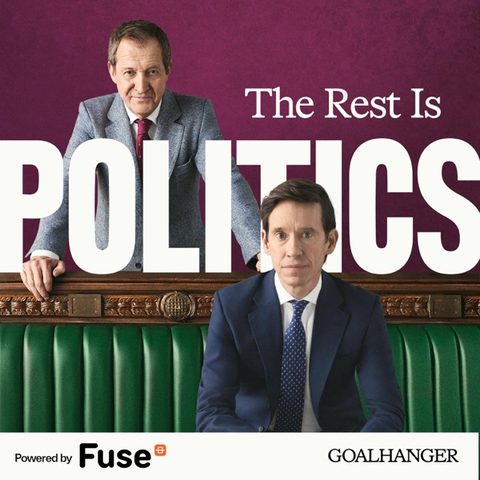
It pairs on-the-ground reporting from Appalachia, a Trump rally and Louisiana with hard early-vote and polling numbers, so you can judge the midterm mood for yourself.
In this episodeAlastair CampbellRory StewartDonald TrumpJ.D. VanceHillbilly ElegyChillicothe, OhioHuntington, West VirginiaAbdul El-SayedHaley StevensJames CarvilleAndy BurnhamPatrick Stewart
▸Chapters
Tap a chapter to open that moment in the transcript; the link to it is copied for you.
Transcribe your links. Paste a YouTube, Google Drive or podcast link and WhipScribe gives you the transcript.Transcribe a link →
▸Notable quotes
“I put on the hat partly to try not to draw too much attention to ourselves.”
Rory Stewart · at 29:08 — open in the transcript →
“I think these protests are too big to be dismissed in that way.”
Alastair Campbell · at 58:11 — open in the transcript →
▸What this episode covers
This question-time edition was recorded on the eve of the 2026 US midterms, with Rory Stewart reporting from Appalachia and Ohio and the team's Izzy calling in from Louisiana. The picture they assemble is of Republican country that still distrusts Democrats but is losing patience with Donald Trump over the cost of living. Stewart describes valleys poorer than anything in Britain, scarred by opioids and premature deaths, where churchgoers forgive Trump on moral grounds yet can see he is not telling the truth about prices. Izzy finds the same economic strain in Louisiana, plus a revival of open racism since 2016, and record early turnout among black voters.
The numbers are read with caution. Democrats need four Senate seats, late polling shows swings well beyond the usual midterm penalty, and early voting has set records, but both hosts stress how badly pollsters have missed recently. They also compare the unusually varied Democratic slate, from a Paralympian in Iowa to a logger in Maine, and condemn the racist tone of Republican attacks on Abdul El-Sayed and Ilhan Omar. Stewart's account of a Trump rally, where he wore a MAGA cap to blend in and later regretted it, explains how Trump still holds a crowd.
The second half turns to Britain. Asked for one bold budget move, Stewart backs a flat fee to lure non-doms back and Campbell wants relief on employer national insurance tied to youth jobs. Campbell warns that the youth protests sweeping Europe reflect a real grievance among graduates who cannot find work, and Stewart doubts any party has an answer. Campbell closes with a tribute to Patrick Stewart.
▸Key takeaways
01Rory Stewart reported from Eastern Kentucky, West Virginia and a Trump rally in Chillicothe, Ohio, in the final days before the 2026 US midterms.
02Pentecostal voters in Appalachia forgive Trump over abortion and gay marriage, but Rory Stewart expects gas and grocery prices to decide their vote.
03Early voting reached a record 49.6 million nationally, including 6.9 million in Texas, about 50% more than Texas cast early in 2022.
04Democrats need four seats to flip a 53–47 Senate, yet pollsters have missed in the last four cycles, Ann Selzer's Iowa call among them.
05James Carville told Izzy that Democrats need no national leader yet, because Louisiana voters are voting against Trump rather than for the party.
▸Questions this episode answers
Q1What did Rory Stewart make of Donald Trump's rally in Chillicothe, Ohio?▾
Rory Stewart sat through Trump's hour-and-a-quarter speech in Chillicothe, Ohio, and found it mesmerising rather than boring. He said Trump spoke like a man at ease with friends, using pacing, pauses and jokes, rambling about his White House repairs as a compliment to a home-restoring crowd. The Republican speakers before him were dull by comparison. Stewart also noted the small gym, about 2,000 people, and some of the crowd drifting off before the end.
Q2Why did Rory Stewart wear a MAGA hat at a Trump rally?▾
Alastair Campbell challenged Rory Stewart over a photo of him in a red Make America Great Again cap. Stewart said he wore it after queuing four to five hours with his team outside the Chillicothe, Ohio rally, because he feared being taken for a protester or for someone mocking the crowd, and being refused entry. He saw one lone protester screamed at and another assaulted. In hindsight he called it a mistake, because Americans read the hat as an endorsement of Trump.
Q3Does Rory Stewart think Hillbilly Elegy's picture of Appalachia is accurate?▾
Rory Stewart set out to test whether J.D. Vance's Hillbilly Elegy overstated Appalachia's plight and concluded it was, if anything, worse than he expected. In Eastern Kentucky and West Virginia he found hours of steep valleys with trailers and few services, unlike pockets of poverty in Britain. He linked it to Angus Deaton's deaths of despair: premature deaths among white people without degrees tripled, driven by drugs, alcohol and suicide.
Q4What did Alastair Campbell and Rory Stewart say about the 2026 Senate midterm polls?▾
Rory Stewart explained that Democrats need four seats to flip a 53–47 Senate, and that polls showed 11 to 13 point swings against the incumbent party, against a usual midterm swing of about seven. He warned pollsters had missed in the last four cycles. Alastair Campbell read out the closing New York Times poll: Democrats up 11 in Michigan, 7 in Texas, 6 in Maine, 5 in Kansas and Ohio, 2 in Alaska and 1 in Iowa. Campbell, a self-described pessimist, still expected several flips.
Q5Why is the 2026 Louisiana Senate race closer than expected, according to Izzy?▾
Izzy, reporting for The Rest Is Politics, said Louisiana has had almost no national coverage because Trump has taken more than 60% there since 2016, yet Democrats are doing better than in any of the last five or six elections. She put it down mainly to the economy, since Louisiana has the highest poverty rate of any state, and to a return of open racism since 2016. Old-school Republicans were also angry about the Epstein files and renaming the Gulf of Mexico.
Q6What tough budget call would Rory Stewart and Alastair Campbell have made for growth?▾
Asked by Steph McGovern of The Rest Is Money, Rory Stewart said he would lure non-doms back to the UK with a flat annual fee, perhaps £500,000, in exchange for relief from inheritance tax. Alastair Campbell would have promised a white paper on the costs of Brexit and eased the employer national insurance rise, framed as a drive to get young people into work and cut the welfare bill. Stewart also floated raising the top rate of income tax to fund defence against Russia.
Q7Could Europe's youth protests spread to Britain, according to Alastair Campbell?▾
Alastair Campbell said the protests across France, Germany and other European countries were too big to dismiss as hard-left agitation, and that the violence and looting in Germany surprised him most. He doubted Britain would see the same violence but warned of a real grievance: graduates sending hundreds of applications that go unanswered or are screened by AI, and no way onto the housing ladder. He is backing a Back Young People Now campaign launching on 9 November with Richard Layard and Gus O'Donnell.
Q8What did Alastair Campbell say about Patrick Stewart's politics after his death?▾
Alastair Campbell said the worldwide obituaries for Patrick Stewart missed his politics. Among celebrity supporters Campbell worked with, he called Stewart absolutely solid rather than flaky. Stewart voiced some of their best political broadcasts, introduced speakers at rallies and made a broadcast on the benefits of the European Convention on Human Rights. Campbell added that Stewart, a Yorkshireman, counted becoming chancellor of Huddersfield University among his proudest moments and supported Huddersfield Town.
Our own transcript of the public episode, with a timestamp about every 90 seconds. Tap a timestamp or the link button on a paragraph to copy a link that opens this page there.
0:00welcome to the rest is politics question time with me alistair campbell and with me rory stewart and this is going out ahead of the main episode because we are going to be doing a main episode on wednesday to digest the results from the u.s mid elections. But this question time is going to lead and be substantially about the midterms. First with Rory, who's, where are you at the moment, Rory? I'm now in Roanoke, Virginia. Okay, Rory in Virginia. And then later, we're going to be joined by Izzy, who has been to all sorts of places, including Louisiana, which I am fascinated to hear what is going on there. Now, Rory, first question. Rachel, is the hillbilly country that J.D. Vance famously wrote about in Hillbilly
0:51Elegy really as different from the rest of the US as he suggested? And if so, do those differences really affect the way people in the region vote? And Douglas, what has been your biggest surprise when investigating the midterms? Just to remind people who haven't listened to our wonderful mini-series on J.D. Vance, Hillbilly Elegy is this best-selling book written by J.D. Vance, 2016, that describes his own family's journey. And it's a journey from rural mountain poverty down to the factories of Ohio. Very old story for Appalachia. School teachers, the cliche was, would say to their students who wanted to know how they could get on in life that they needed to concentrate on the three R's, reading, writing, and route
1:3723, which is the road that takes you out of the state into Ohio. And it's a book about violence and poverty in the mountains. And it's a book about industrial decline in Ohio. And it's about the loss of pride and identity amongst the white working class. And since 2016, there have been any number of journalists heading into Eastern Kentucky, West Virginia, to try to interview these voters because they flipped very hard and very quickly towards Donald Trump. These were often counties which were pretty moderate, traditionally Democrats in some cases, that went 80% Trump. And so it's those areas that I've been in, trying to work out whether this narrative is overdone. It'll be an energy for those who haven't read it. I've read it twice to work out whether this narrative is overdone.
2:28It'll be an energy for those who haven't read it. I've read it twice. I read it first when it came out and I thought, wow, what an amazing story of aspiration and achievement. And I read it again when he became vice president. And I thought, how did a guy from that background become so vile? Not least about, to my mind, about a lot of the people that he left behind. So it's interesting how differently you can read the same book when the starring character is in a different period of their life. This episode is powered by Fuse Energy. Most energy companies are counting on you doing absolutely nothing, not questioning what you're paying, not switching, just letting your tariff roll on, which is costing you hundreds
3:10of pounds every year. But the apathy goes deeper than our bills. We've almost given up on energy itself. We seem to all be accepting energy's expensive, the system's outdated, but that complacency is costing us. Fuse Energy does not accept that because the energy transition is not something that just happens somewhere else. Fuse is building an energy company which is designed to bring down the cost of energy. And right now its tariffs are up to £100 below the Ofgem price cap. So switching isn't just about paying less, it's about expecting more from your energy company. And it only takes you three minutes. Switch to Fuse at fuseenergy.com slash politics. Use the code politics and you'll get a free
3:52Trip Plus subscription, allowing you to hear all the extraordinary members content that Alistair and I are now producing for you. Visit fuseenergy.com for full terms and conditions. This episode is brought to you by NordVPN. We work out ways to protect ourselves from unwanted things every day. Okay, Rory, how do you protect yourself from small talk? I say, very good to see you. I've got to get on to get my kids from school. Yeah, you also have another one that you use quite a lot. You say, I must go. I'm on Jordan time. I'm on Jordan time. That's good. I like that. Okay. How do you protect yourself from arguing with your co-host? I just watch you argue with other people. No, I have this tactic when I think I'm losing my
4:37temper. I just rub my thumb and my index finger together. That's what I do. And I just calm down. Yeah, that's cool. And how do you protect yourself from online scams? Well, the answer is I find NordVPN useful for that it's not just a VPN app they've built in next-gen antivirus block scams phishing attacks before they reach you so you can carry on knowing you're secure to get the best discount on your NordVPN plan go to nordvpn.com slash rest is politics you'll get four extra months free on the two-year plan plus a 30-day money-back guarantee the link is in the episode description hi this is gary lineker from goal hangers the rest is football this episode is brought to you by wise it's only when you start moving money
5:15between currencies that you really think about the exchange rate the fee and what might be hidden away in the small print whether you're're living abroad, paying someone overseas, or just trying to manage your money across borders, you want a fair exchange rate, an easy transfer, and no surprises along the way. Wise keeps things simple. Wise is a smart way to move the currencies you need around the globe. It works in more than 160 countries and with over 40 currencies. Most transfers arrive instantly. Wise uses the mid market exchange rate, like the one you see on Google, with no markups or hidden fees. So when money needs to move, you can see the rate, know the fee and get on with it. Join millions saving
5:58billions on hidden fees by downloading the Wise app today. Be smart get WISE, T's and C's apply. When we spoke last time, I was in Ohio. And since then, we've been in Eastern Kentucky and in Appalachian, West Virginia. And initially, I thought maybe it isn't as dramatic as J.D. Vance was saying, because we came down through Ohio into bits of Eastern Kentucky that looked relatively prosperous. But pretty soon, once you're off Route 23, once you're into the valleys, it's unlike anything you've ever seen. These are very, very steep river valleys. And essentially, the mountain comes right the way down to the river. There's no land at the bottom. And then just occasionally, every couple of miles or so, there will be just enough sort of
6:45meadow at the bottom of the mountain. And then there will be an array often of trailers, arranged double trailers, single trailers in a meadow. And then you'll be back into this narrow mountain valley. And then again, on any available bit of land, 20, 30 little houses, and then on again. It's very, very far. I mean, it's unlike Britain where you might see, I mean, some of the bits of poverty that you see, you would recognize from some bits of Britain. I mean, maybe Easington Colliery, maybe some bits around Earth of Tidfall, maybe some of the stories around Greenock. But here, it's not pockets of poverty where you can get in a car and in half an hour, you find yourself in a kind of prosperous place where you can get a flat white.
7:30This is hour after hour of driving before you finally get to a larger valley, which might have a Wendy's and a dollar store. And when we really started talking in detail to, we're talking to a young woman, for example, for an hour and a lot of the drug addiction here. It starts with opioids, pharmaceutical opioids, the kind of stuff, the Sackler family, produced through Purdue Pharma. Then it goes on heroin, and then it goes on to fentanyl, and now it's into methamphetamines. But she and her sister were adopted, her sister when she was one, she was when she was nine, by a conservative Christian family. And when, for example, she was 16, they found that she'd slept with someone, they took her into church, and they forced her in
8:36front of the entire congregation to be prayed over to get the sex demon out of her and water and oil poured all over. It's a very traumatic, humiliating experience for a young woman. She talked about the fact that this church preached very, very strong pro-Israeli policies on the basis of apocalyptic Christian prophecies about the rapture. And she just talked about the struggle of everyday life. I mean, just before I flip back to you, I want to finish on that you will see descriptions. There's been an article in the FT recently, for example, about Rotherham of areas of the UK, which on the surface resemble this, you know, factories close, people struggling to get work. But this is a bit different from those areas of the UK. Firstly, because it's very,
9:22very white. It's a much smaller minority ethnic community. But secondly, because unlike in England and Wales, there has been a massive explosion in what Angus Deaton calls deaths of despair. The number of white men particularly, but white people in general without degrees dying prematurely tripled. This is drugs, this is alcoholism, this is suicide. There was nothing like this in England and Wales. So, even though we had the same globalization, the same automation, this incredible explosion, we were in a town actually outside the mountains, Huntington, West Virginia, which is on the Ohio River. 88 million pills flooding into a place of 80,000 people. Overdose deaths going up from 30,000 to over 100,000 within a decade.
10:16So this is much more extreme than I was expecting. Over to you. I thought you were going to say something on the version of something you said on the podcast last week when Douglas's question about what surprised you, namely that you've been surprised at meeting people whose lives don't seem to be made any better by Donald Trump, who have very little in common with Donald Trump, and yet who will keep telling you that they might be voting for him. I just wondered, when you're in these sorts of areas, what are you seeing politically? What is something like that young woman saying to you about the role of politics in her life, particularly as the question, as Rachel said, because we're talking here J.D. Vann's territory?
11:02So the sense is that these are very conservative areas. She was emphasizing that these Pentecostal churches, which perhaps a third of the population go to, most of the national data suggests 80% of people going to those churches vote Republican. And we were in a Pentecostal service yesterday morning, Sunday morning, with a pastor who made it clear that for him, it's basically all about abortion and gay marriage. And as a result, they sort of excused Donald Trump's moral excrescences. I was trying to say to the pastor, look, this guy is a liar. He's corrupt. And some of them will say openly, there's a range. I mean, there's extreme pro-Trump supporters who said to us, oh, I imagine the reason we went to a Trump rally. And as we were waiting for him to turn up,
11:56somebody said, the reason he's late is almost certainly because he's praying. And I thought it was a complete joke. I mean, obviously, he's not late because he's praying. But there's a very broad stream of people who don't think that about Trump. They say he's an idiot, but then they go on to say, but there's no difference between these leaders. And I'm going to vote for the one who's on abortion and gay marriage. But that isn't what I think is going to define the election. I think what's going to define the election as Rory Campbell, your son has pointed out, is cost of living. Because again and again and again, people keep coming back to the fact that their gas prices are soared up, their groceries are soared up,
12:35and these are people on very, very marginal incomes. It's difficult to see because their incomes data sounds like they're wealthier than people in Britain, but healthcare costs and health insurance absorb an enormous amount. People are in a lot of debt. They might have a fancy car, they might even have a boat, but they're really living paycheck to paycheck. And they felt that Trump's America First agenda was going to make things cheaper for them. And they may not have an explanation of how it's gone wrong. I mean, some of them might say it's the Iran war. Some of them might say it's tariffs, but they know, and they know that he's lying. And when he stands up and says, the economy's never been so good, inflation's down, employment's up, that they can see he's
13:22lying. Now they might say they're all liars, but that I think is what will mean that they can see he's lying. Now, they might say they're all liars or positive, but that I think is what will mean that they'll either stay home and a small number may begin to flip towards the Democrats. Yeah. The New York Times had a really interesting piece about the difference between Trump's campaigning language and rhetoric compared to 10 years ago and it's interesting he's i don't know how they've worked out i presume it's your friend ai that has worked this out for them he's used 19 more what they define as all or nothing words and all or nothing word is always never everything all totally okay he has more than doubled from six per thousand words to 15 per thousand
14:08words now, what are loosely identified as cursing words. And the other thing is that the AI assessed level of his speaking by language assessment is somewhere between fourth and fifth grade. The average presidential speaking style in history is eighth grade and he's now posting online 21 times a day compared to 13. this is data very kindly provided by the aforementioned rory campbell who's you haven't bumped into the other rory at all have you as you've been sort of crisscrossing the uh this i don't know he's clearly he's clearly on a similar trip i mean there's a similar trip going on we should we should probably actually get him on um it's a because he's got thinks very hard about politics and voting um one thing alistair i wanted to get you in on i mean just
14:57to remind people of what we're talking about it's kind of brief cheesy explainer it's all about the senate at the moment so at the moment. So at the moment, the Senate has 53 Republicans, 47 Democrats. So the Democrats have got to win four seats to move it across. And normally at a midterm, it often goes against the incumbent sitting president by about seven points. We're now seeing polling suggesting 11, 12, 13 point swings towards the Democrats. Massive polling warning here, which is that the pollsters got it wrong significantly in the last four runs. And famously, some of the great polling doyens of all time, Ann Seltzer in Iowa miscalled Kamala Harris dramatically a few days before the election. And the thing that makes it so difficult for anyone
15:50looking at this polling is to work out turnout. The thing that brought Trump in last time was something really extraordinary, which is that African-American and Hispanic men who historically didn't vote suddenly turned up and voted for him. So with all those provisos and with the proviso that if the polls are wrong by three or four points, all in the same direction, it could be very tight. It's looking very exciting and it's looking very exciting at about eight different senatorial seats. And I wonder whether any of these senatorial candidates have caught your eyes, you know, Tallarico or Ossoff or uh patula in alaska or what what you were making of their campaigns um several of them have caught my eye and several of them i think are deeply
16:32impressive um i think ossoff is impressive uh i think talarico is impressive talarico is the one that i worry about but rory tells me that i shouldn't um the reason is because i've been to texas it's and and you know we went to texas fairly regularly when george bush was president because he was always inviting tony down to you know his neck of the woods and it just it just feels very very hard even the more liberal areas of texas it feels very very hard to imagine i think he's been extraordinarily impressive we'll come on maybe a bit later to talk about Abdul Al-Said in Michigan because we've had this. In fact, let's do this now because we had quite a lot of questions about this. We'll just go to this one.
17:15Rose, will Hayley Stephens' flip to Rodgers actually make a difference? So this is Hayley Stephens who Abdul Al-Said beat for the nomination and who's been having this sort of playing footsie, whether she would or wouldn't turn up at his last rally and support him. And then lo and behold, Eva poll, she comes out and basically says that she's backing the very right wing, very Trumpian, uh, Republican. So what's your view on that? My view is it is damaging. Uh, it's horrible for the Democrats because it felt like they had momentum in their sales and everybody's now talking about this. I'm not convinced that it's going to have a massive impact upon the vote outside Michigan and even inside Michigan. I think it might, weirdly, I think it might motivate people to get out and vote for Abdul. Michigan is currently Democrat held.
18:06So if they were to lose Michigan, that, of course, puts them one step backwards while they're trying to move a few steps forward. Abdul's side was always a risk. You know, there will be Democratic voters who won't want to come out for him. He's an incredible social media communicator. I mean, I wondered whether our amazing producers could just put up the very different images of the key democratic candidates in these key races, because they're all so different. I wonder whether you feel like me that how different it is to British politics. So, you've got Abdel Nassar who you've, you know, we talk about a lot, but is basically a kind of bro. He's a kind of big, muscular football captain who also
18:47happens to be from Egyptian heritage, pro-Palestinian, openly Muslim. You've got Josh Turek running in Iowa, and Josh is in a wheelchair. He's a Paralympic basketball chief. You've got pastor Adam Hamilton running in Kansas who comes across as he is, as like a senior elderly Methodist minister. You've got the candidate in Maine, who's a fifth generation logger, who's like a heavy set, elderly working class man. You've got Ossoff, who is central casting, incredibly forensic, you know, handsome kind of American dude. Ossoff could do with a little bit more height. Oh, he's not tall enough. He's not tall. He's not, he's not, he's not very tall. No. And I mean, when was the last small president? When was the last small president?
19:42No, you're right. The tall ones always win, don't they? Well, Tallarico is like, you know, he's like the Rory Stewart candidate. He's like a sort of slightly geeky. A bit weird. He gives things that are pretty close to moral sermons when he speaks. It's like a kind of earnest young pastor. Then you've got, you know, Mary Patola in Alaska, whose slogan is fish family freedom. She's from the Yupik community, so she's a Native American. You've got Sheryl Brown who we were looking at in Ohio who's like a rumpled 50-year senator union official. You've got Roy Cooper who's like a reassuring elderly lawyer. I just think it's an amazing variety of people. It's not at all like British politics where everybody seems to come out of central casting. They're every different age,
20:30shape, size, ethnicity. It's an incredible, if they all get into the Senate, it's an extraordinary. It's diverse, not just, you know, in terms of gender ethnicity, it's diverse in terms of kind of personality type style. It's so interesting that because we tend to think of American politics through, I guess, because we see the American president so much and put Trump, even Trump actually has that sort of slight identikit touched him. They always wear a suit, they always wear a shirt and tie. But I think what you're saying, what you're pointing to is the fact that America is so vast, and these states are so vast. I mean, you're talking about, you know, when they were talking the other day, I heard Tallarico
21:16talking about how many people had done the early voting. We're already well into the millions. And I think, look, I think on the one hand, obviously, this election is incredibly important. And we're right, it's right that the whole world is talking about it. On the other hand, it's slightly weird that these people become household names around the world. Well, ultimately, they are, you know, okay, they're very big localities, but they're, they're overseas local politicians. I mean, I got a news alert the other day because Chris Murphy, the very interesting Democrat guy, because he'd had a stroke. Now, there aren't that many British politicians who, maybe if they died, yeah, you'd get a news alert, but being rushed to hospital, there's not that many that are going
22:01to give you a breaking news alert. Just on where we are, Rory, on the polling, Michigan may change or may not change because of this Haley Stevens thing. But the closing New York Times poll, which my Rory tells me is the one that's probably closest to what they think is the truth, because they basically say that they, this goes back to your point earlier they acknowledge the guy who does their polling acknowledges that over the past their methodology has rated the democrats more highly than they should have done so that this has got weighting against the democrats this new methodology they have michigan well first thing to say is that north carolina and georgia are basically they now think they're so far gone that they're not even sort of looking at it.
22:46The one that they're interested in is the one that they hadn't been interested in before, which is Kansas. Michigan Democrats up 11, Texas Democrats plus 7, Maine plus 6, Kansas plus 5, Ohio plus 5, Alaska plus 2, Iowa plus 1. So it does get very, very narrow down towards the bottom of that list. But Trump's approval rate, I thought this was really interesting. If you take those seven states, Trump's approval rating is minus 21. And you'll like this one given where you've just been. Approval for Trump is now under 50 with white voters who didn't go to college. And that's the first time that has happened. He's always been pretty high up with white voters who didn't go to college. He's now fallen below 50.
23:32So look, I'm relentlessly pessimistic in elections. I always stay pessimistic to the end, which is why I couldn't quite bring myself to say what I thought on election night. I was already gloomy even before the event. But I think on this one, it's hard to see with the sort of sustained polling leads that the Democrats have had in several of these places that they won't, you know, flip quite a few of these. But, you know, we'll have to wait and see. I don't know whether you've seen anything from Sarah Longwell, who I think you'd enjoy a lot because she does focus groups, which I think you've always said you're more interested in than polling. In her focus groups consistently, people saw Trump as this businessman. They'd
24:18watched him on The Apprentice. So many people watched him on The Apprentice night after night. And he had some magic sauce. He was going to come in and he was going to sort stuff out, going to put America first, bring the stuff down, and they just feel really, really disappointed. But her other, I thought, most radical comment, which I've encountered going around, is that when you ask people where they get their news from, and my father-in-law just wrote to me saying, well, if you want to understand the trick, watch Fox News. And I've been watching quite a lot of Fox News. She says that's no longer true. That four years ago, eight years ago, people would say, I'm watching Fox News or I'm reading the local newspaper.
24:54Today, people don't know where they get their news from. They literally can't answer you. And her conclusion is that what's happening is that they're scrolling TikTok or Instagram. They're following what they're really interested in, which is basketball or a cooking show. And then somehow subliminally, some political messaging gets in and they wake up in the morning, suddenly with a political view about Iran or, you know, straight formulas, whatever, but they don't know where it's come from and nobody can deconstruct these very individualized specific to the individual algorithms to really track where this stuff is coming from i'll tell you one thing this rory's we should bring um izzy in in a minute
25:37because she's been to different places to you um but just give you some, Rory's been sending me the early voting, postal voting looks like. 2024, Republicans were plus 41,457. 2026, this election, Democrats are at plus 343,548. Louisiana, where I know Izzy has been, and which is generally seen as a safe Republican seat, in 2024, the Republicans were more than 80,000 up on the early voting. The Democrats now 15,981. And here's one, Rory, how many votes do you think were cast early in Texas? Don't know. How think were cast early in Texas? Don't know. How many were cast early in Texas? 6.9 million. That's 50% more than in 2022. Help me understand this, because it's amazing. I mean, what are we supposed to read into? I mean,
27:00I saw similar figures from Kansas on Friday. 49.6 million people have voted early across all states, which is a new record. What that normally says, what a high motivation early turnout usually says, is that there is an obvious question which the voters are seeking to answer. Okay. Now, you've been there and I've not, but I'm guessing the obvious question which the voters are seeking to answer. Okay. Now, you've been there and I've not, but I am guessing the obvious question is, do you feel good about the way the incumbents are doing? I think that feels like the obvious question. Do you have a reason to, in a polarised politics where none of the politicians are very popular, do you have a reason to vote
27:45against somebody more than the others? And that it feels to me is probably the question that's driving those early numbers. But Rory, just before we bring in Izzy in, I do have a bone to pick with you. I know you're in America. I know it's possible to get caught up in the moment, but what on earth were you doing wearing a red Make America Great Again baseball cap? Where were you? Who put it on your head? And why was it there? So I was with our team, with Celine and with Daisy and with Bella at a Trump rally. We went to hear Donald Trump speak in Chillicothe, Ohio. And we stood in line for, I want to say, four, five hours with MAGA supporters. And all around were people wearing these hats. And I was actually felt very, very uncomfortable. There had been a protester on the
28:43edge who was one solitary, very, very brave woman who had been a protester on the edge who was one solitary, very, very brave woman who looked as though she might be Latino, protesting with a banner and with everyone screaming at her. Another protester who was physically assaulted, their head smacked against the pavement in a way that literally sounded like a gunshot going off. These very, very aggressive people alongside children all around us. I put on the hat partly to try not to draw too much attention to ourselves because I was very worried we were not going to be allowed in. We wouldn't be allowed to see anything and that people would think that we'd come there to mock them, that we were protesters. In retrospect,
29:23though, I think it was a mistake. I mean, I am picking up very much from people here that wearing a MAGA hat, not quite Prince Harry putting on a Nazi uniform, but it's not cool. It's not something that Americans think is funny. It's a symbol of something that people find so disturbing and traumatizing. And they see it as an endorsement of President Trump. I mean, the rally was extraordinary too, Alistair, because I'd never sat through him speaking for an hour and a quarter. And you're absolutely right. All that stuff you got from the New York Times is true. But my goodness, he was so much better than the other Republican speakers. You know, they were all there, all the characters you would have heard of. Vivek Ramaswamy,
30:09who was running to be governor of Ohio. Husted, who's running to be the senator. He's the guy with the nice bum. Yeah, which Trump lent into. When everybody's reported that I said he's got a great ass, and he's got a great ass. And look at his ass. It's terrific. But I didn't just say he's got a great ass and he's got a great ass and look at his ass. It's terrific. But I didn't just say he's got a great ass. He's got great feet, got great shoulders, got a great head. And then he went on to this amazing rambling description of how this guy was an American football star. And basically what Trump seemed to be saying to his audience is, this guy looks a bit boring, but he can rip your heart out. He's a real tough guy.
30:44He didn't seem to be able to get up for praising Vivek Ramaswamy in the same way. Maybe because Vivek Ramaswamy is not like the kind of masculine, I think, the kind of masculine white sports star that Trump finds easy to sell to his audience. So, Vivek sat there throughout an hour and a quarter and barely got any praise from Trump. All the thing was devoted to this is a real man. And then he went off and talked about his White House repairs. And for the first time, I understood what was happening here. Because obviously, when we report it, we're normally like, well, this guy's completely demented. Why does he spend his whole time talking about White House repairs? But for the audience of people who love him, it feels as though he's a guy leaning at a bar, totally at ease. His pacing is incredible.
31:32His pauses are incredible. He's looking everybody in the eye. He senses the energy of the room. There are these cadences, there are these jokes. And essentially, what he's doing is he's saying, it's a sort of compliment to the audience. He's saying, I'm not a politician who's going to do the kind of thing that, you know, you and I would be used to, which is, this is a small town in Ohio. I'm going to come in. I'm going to do 15 minutes. I'm going to get back on my plan. I'm going to be out. He's saying to his people, I love you. You're my people. And I'm going to spend an hour and a quarter just shooting the breeze with you. And I'm going to talk to you about my home restoration. All of you guys like restoring your homes. I'm restoring my home.
32:08My home's the White House. You've got your own houses. And I'll just tell you stories about my wife, me, and the lights, and this, that, and the other, and this, that. And I could see the charm and appeal of it for the hardcore MAGA supporters. Is it all boring? No, no, no. It was mesmerizing. Oh, okay. It wasn't boring at all. The boring ones were the Republican congressmen and senators who were absolutely like central casting. There were their suits, you know, thank God, the Bible, Jesus, keeping taxes down. And he didn't do any of that. There's nothing hypocritical about him. He didn't try to talk about Jesus. He didn't try to talk about any of that stuff. What he did do was relentlessly boost.
32:48There was no moment in the whole speech where he acknowledged there was any problem at all. It wasn't a political style where you say, look, I know you're hurting, but stick with us. It was things have never been so good. This is absolutely amazing. There are zero people crossing the border. You know, the economy is at its strongest level ever stock exchanges up and and every time there was a pause everyone would just shout usa usa usa it's real nationalism and you remember when we watched him speak live in davos you know a different audience but do you remember that two or three people i think you among them were sort of trying to keep me sort of chained into my chair and as I was shouting out, that's a lie, that's another lie. Were you not sort of tempted just
33:34to stand up and say, you're lying again? Yeah, I don't think you, Alistair, would have been able to handle it. I think you would have walked out after about 10 minutes. I think you would have been so enraged, bored and disgusted that you would have just walked out. But I mean, look, this is a man, I think these are the end days. This was a very, very small gymnasium they'd chosen. So, they must have been worried that they had to keep them in a thing that took about 2,000 people because they were worried not enough people would turn up. Take it back in the day, there would have been 30,000, 2,000 people because they were worried not enough people would turn up. 2,000? Wow. Take it back in the day, there would have been 30,000-40,000 people turning up.
34:10Some of the MAGA crowd was wandering away before the end of the speech. You could create a narrative around this is the end days, this is a guy who's finished tailing off, but you still saw. I mean, I thought it was the most incredible thing to be able to do to go to that kind of rally because you could still see what the magic must have been 10 years ago. And it's just partly, he's a much easier speaker than almost any other American political communicator. I mean, he's more like a, it's more the style of a pentecostal preacher who can speak for an hour and a quarter without notes and just keep keep the rhythms going keep the jokes going okay royalist i'm fascinated that you were so fascinated and mesmerized i found his style at
34:56davos mesmerizing but in a utterly revolting way but you know he seems to he's i think he's we he's weaving wheeling you in a bit but there there we are. Listen, let's bring in, we've talked about Izzy, and Izzy's wrote a fantastic piece in the newsletter at the weekend. Doubtless has more to come. But there's a question here from Diane, which I think Izzy can help us answer. There's a lot in the news about the most contested states, but what states have been forgotten and why? Izzy, how are you? Hello, I'm good. How are you? Very well, very well. So where have you been? Tell us where have you been first? So I drove over from Texas to Louisiana on Thursday and since then I've been driving across Louisiana. I've gone
35:38west to east which only takes about four hours because it's so tiny that way. But it's interesting because, as that question suggests, you know, there's been essentially no national or international press coverage of the race in Louisiana. Part of that is because it's so tiny. Part of that is because it's always been a very safe seat. Trump has won 60 percent of the vote here, more than 60% of the vote here since 2016. It's so Republican. So you'll like this. I met a group of women who were all in their late 70s and they're Democrats and they're based in Acadia, which voted for Trump. 80% of people that voted for Trump in 2024. And so they were so afraid of telling people that they were Democrat, because you know, you stop getting invited to dinners,
36:31you lose friends, that they started wearing, like a special secret pin. And that would let them identify each other in public. And if you were wearing the pin, you would say, okay, you're a Democrat, too. But the crucial thing now is that the race seems much closer than anyone expected. So the Republicans are still very likely going to win. But it's a lot, lot closer. The Democrats are doing a lot better than they have done in any of the last five or six elections. And Izzy, why do you think this is? What are you picking up? You told us when you were with us last week that the Latino community in Texas, and you said a lot of that was about immigration. What is it that's driving the, sorry, aggressive ICE enforcement, people feeling the
37:16immigration enforcement was too aggressive? Is that the story in Louisiana? I think the big thing here is the economy uh so louisiana has the highest poverty rate of any state i spoke to one school teacher who teaches in a public school and um he was saying that so they've had to move they used to have detention after school you know like most schools do they had to move their detention to lunchtime because parents couldn't afford to come and pick their children up if they missed the school bus. So there was one child who, not for detention, wanted to stay late for band practice. And this teacher found out that he was walking himself home 12 miles after school because his parents had no way of coming to get him.
38:00And he couldn't afford to take. There's very little public transport, so he couldn't afford to take an Uber or something like that. So a big, big thing is the economy. The other thing is racism. Both black and white people that I spoke to said that racism, which had been getting a little bit better for, you know, 10 years before 2016, since then has really started to come back. One pastor described it as if someone had ripped the bandage off a wound that they had hoped was starting to heal um others said that you know there's just started to be people have started to sort of naturally segregate again um and sort of there would be places that you just knew you wouldn't go or events you knew weren't
38:43for you or people like you. So that's a big driver. And people are just really angry about that. And then also the Republicans. I mean, I spoke to some sort of more old school Republicans who are furious with Trump for things like the Epstein files or renaming the Gulf of Mexico. And they just think he's, you know, he had great ideas, but now has become one person described him as godlike. So those are the sort of main drivers. I think, like Alistair was saying, you know, there's been unprecedented, well, not unprecedented, sorry, there's been record early turnout. A lot of that has been black voters, which is really encouraging for the Democrats. So, yeah, so it just seems like people are really, really angry, they're voting more than they would have done otherwise. And it's, yeah,
39:31it's the economy and racism predominantly. Is your sense, this is a question for both of you, really, because we talk a lot, we see the polls, and we think 50-50. And we think, oh, well, that's half are going to vote this, half are going to vote that. Are we still in a place where more people will not vote than will actually vote for either of the main parties that they've got on the ballot? Is your sense that, I mean, you can talk to lots of people, but I wonder how many of the people you spoke to will actually vote or whether we're still in a deeply cynical, apathetic culture? Yeah, let me try and then Izzy, back to you. I mean, my sense is that for many, many Republican voters, they're not going to vote for the Democratic Party. They're more
40:16likely to stay at home, that it's become very, very tribal. And for Republican voters that I talk to who say Trump's an idiot, it's Trump's an idiot, not that he's an immoral matter. So those people stay at home. The Republican voters who might shift across that 15% might shift across talk in a different way. They say, oh, actually, the problem, there was no problem with Kamala Harris. The problem was that Biden didn't step down early enough and that there wasn't a primary. I've heard that a number of times. So that I think is the soft Republican tempted towards the Democrats providing a reason for why they didn't vote for Kamala Harris. They're saying there was nothing wrong with her, nothing wrong with the Democratic
41:13Party. It was just a procedural issue around primaries and Biden that kept me away. Those people might go back, but the 80% of the Republican vote I think is never going to consider going towards Democrats because they also have invested so much in the story around Trump. I mean, being a Republican for 10 years has been Trump. It would be astonishing if they were really able to come out and say, I've seen the lights and I'm about to vote in a different direction. So I think that might be a turnout. Is he? I think, so I was speaking to James Carville, who you know, Alistair, I think. Yeah. And he, so he was built. What's he called? The Raging Cajun. I was thinking that, yeah, what a fantastic nickname. You need a better nickname, Alistair.
41:56Okay. I'll work on that. So he was Bill Clinton's strategist and they won the state in 1992 louisiana in 1992 and he's the one that came up with the phrase it's the economy stupid um and i only spoke to him briefly but he essentially we were talking about why the democrats are doing so well when they don't have sort of a national leader and he was saying you know at the minute they don't need one everyone is voting against trump they're not voting for the democrats so i think that's um sort of an interesting uh you know sort of obvious but also interesting because it's like people won't necessarily vote they won't view it as voting for the democrats which they may be more opposed to doing they might just view it
42:43as voting against trump which is someone that they're really angry at. That's why the midterms are always a little bit different because, and it is such a strange system, there's, let me ask you both, you've both been there for a while now, the question that Rory asked me earlier, which of the more high profile Democrat politicians do you look at and think, one, they might have their mind on running for the top job or two that they might have what it takes to get the top job is there anybody that's really impressed you because you're obviously seeing much more of them we do here well let me start i mean of the of these seven or eight key senate races many of them have kept a pretty low profile there's
43:23been a big difference between those that are out there on social media and are on the podcasts and are getting the likes. So the ones that we've heard of, Tallarico, Ossoff, Abdullah Syed are the key three examples of people who are really pushing social media profile. There's another whole lot of them, Sherrod Brown, Cooper, and others who have kept it very low key, very local. And I guess we can assume those are not the people who are going to be running for the presidential races. So of those three new figures, well, I guess the big fight within the Democratic Party is between the progressive left and the kind of mainstream. We need someone who can retake Middle America. And that's where I think people like Ossoff and Tallarico come ahead. And Ossoff is the obvious one. I mean, he's so far ahead now. It's very, very weird. And what was supposed to be a marginal race, as you said, Alistair, Ossoff is so far ahead that people are barely bothering to cover it anymore.
44:32And I guess his height notwithstanding, although Tallarico appeals to me much more in the way that Mayor Pete appeals, it may be for the red-blooded American voter. They may seem a little geeky and not central casting enough. Is he? The guy that's running for Senator here, Jamie Davis for the Democrats, he has had, I think, zero funding from the National Party. He's running against people who, in the Republican ad space, they have been running a generated video of him sort of ominously walking towards the camera. He's a black man. And people are saying, you know, that's trying to discourage white voters by making him seem ominous. But, yeah, so I think I think there's a lot of people who haven't necessarily even been on the national radar who might be worth looking at.
45:27I'm going to be, like you said, writing more about this in the newsletter, which will be out on Thursday. Yeah, so to remind people, you can sign up to that at therestispolitics.com forward slash newsletter. Well, you'll be pleased to know, Izzy, I was in the, because of my friend Martin Briley, who hates me talking about swimming in the Lido because he says it brings more people to the Lido when we actually want nice peace and calm. But somebody in the Lido this morning, just randomly as I'm swimming, swam by and said, I am enjoying Izzy's contributions from the United States midterm. So there you are. You're being noticed. Can I just maybe before we go to break, I've been fascinated on just how nasty some of the Republican campaigning has been.
46:12And I wonder if that's the same everywhere, or is it just because we see, I mean, the level of racism against Abdul Al-Sayed has been extraordinary. Trump actually said in a rally, he hopes they, the people of Florida, send him back to where he came from. He was born in Michigan. And it's Mike Rogers who lives in Florida, his opponent. They've done this huge thing about Tallarico being gay, being vegan, neither of which they know to be true. And also this idea that because he had a couple of days off for a cough or something, he was all these sort of conspiracies, these theories going. And I just wondered if that is the norm. You mentioned the AI generated video. Are you seeing kind of nasty, unpleasant campaigning kind of everywhere?
46:59The key one is Ilhan Omar, which has been completely disgusting. I mean, this is the congressman who is of Somali origin. And again, in the Trump rally, very clearly, he said, this woman is married to her brother. She had her children with her brother. And she needs to go back to where she came from. And Somalia is not a real country. I mean, it's really, I mean, it's denigrating Somalis, it's denigrating Somalia, and it's suggesting she's engaged not just in fraud, but in incest. I mean, you know, that's what I find so difficult about this, which is that Trump is so horrifying. And what I can't quite handle is these religious leaders who seem to be like, yeah, he's a bit of an idiot, but you know, politicians are idiots. And to be honest,
47:52you know, their way of getting around it is that like at the last election, I thought, what kind of country is this that we've just got to choose between Kamala Harris and Donald Trump's pathetic? Are these the two best people? No, there is a massive moral difference between Kamala Harris and Donald Trump on all these things. Exactly that. There's all these adverts. And the thing that people were telling me here, this one pastor I spoke to, Tony Ricard, and he was born the year before the Civil Rights Act was passed. And he remembers what it was like before, you know, he remembers, obviously, his parents couldn't vote. And he was saying that now children today don't remember what it was like and they have no conception of what people fought against.
48:31And these adverts, things like this that you see on the TV is what's encouraging and freeing people to behave in the way that they're starting to behave in again. So that's a sort of real real world impact on it, too. Well, listen, Iz izzy look forward to your piece uh on thursday and doubtless more thereafter thank you for everything on the two episodes you've joined us and um just to remind readers rest is politics.com forward slash newsletter well we're going to go for a quick break now and if you want to hear that mini-series about jd vance or indeed any of our other mini-ies, go to the wrestlerspolitics.com. Rory, you've triggered me there by mentioning miniseries because I've just had the very, very good news that none other than the Prime Minister of the United Kingdom, Andy Burnham, the word Perseverant has passed his lips or passed his pen, it might have been because this guy, Carl Bushby, who's been walking 31,000 miles over many,
49:29many years around the world, just got back to Hull. And I just got a message that in the message that Andy Burnham sent, he used the word Percivillian. So we're very, very, very, very pleased about that. And we're going to take a break. A better help ad. Your brain has limited storage. So why is it still holding on to that embarrassing moment from years ago? That tough breakup? The conversation with your boss you keep rehearsing in the shower? If you could permanently delete one thing from your brain, what would it be? BetterHelp is an online therapy platform that gives you space to talk about what's taking up too much of yours. BetterHelp is now in network with more than 125 health plans, with many co-pays as low as $15 for eligible members.
50:11And if you don't have eligible insurance or live outside the U.S., you can still get 10% off your first month. Sign up and get 10% off at betterhelp.com slash restpolitics. Cost and coverage may vary. Ulcerative colitis and Crohn's disease symptoms? Don't pause for the moments that matter. That's why understanding your treatment options matters. Discover what's possible with TrimpBio. Ulcerative colitis and Crohn's disease symptoms don't pause for the moments that matter. That's why understanding your treatment options matters. Discover what's possible with Trimfiya. Guselcomab. Trimfiya is a prescription medicine used to treat adults with moderately to severely active Crohn's disease and adults with moderately to severely active ulcerative colitis.
50:40Serious allergic reactions, increased risk of infections, or lower ability to fight them in liver problems may occur. Before treatment, get checked for infections and tuberculosis. Tell your doctor if you have an infection, flu-like symptoms, or need a vaccine. Talk to your doctor and explore what's possible, or call 1-800-526-7736 to learn more about Trampaya and visit trampimpayaRadio.com. Welcome back to the Rest Is Politics question time with me, Alistair Campbell. And with me, Rory Stewart. And Rory, next question is brought to us by Evelyn Partners and none other than the wonderful Steph McGovern from The Rest Is Money is going to be putting this question to us. And it is about a subject we talked about last week, the budget.
51:28Steph, over to you. Hey, Rory and Alistair. So quick question for you. If you were putting together this budget, what is the one tough decision you would have made that would have got the economy growing? And how would you have convinced the public it was the right call? Well, I'd be focusing on making things easier for business, getting growth going. But I'm going to be really controversial and wind up most of the Restless Politics listeners by saying I would have found a way of attracting non-DOMs back to the UK. And I would have found a way of charging them a flat fee, could be £500,000 a year. And in return, people who'd made their money outside the UK, wanted to come to the UK, invest in the UK, could come in and do that without having to face bills
52:12on their inheritance tax and the kind of things that are making wealthy people very reluctant to come to the UK at the moment. Presumably you think that would have raised money for the exchequer and also got people who style themselves as wealth creators and entrepreneurs back into the UK economy rather than Dubai or Milan or wherever they might have gone to. Exactly. And I guess the question, you know, which is partly for you is, would it be possible if you said to the British public, all these people are going to be charged 500,000 a year or a million a year to come here, but we're not going to tax them inheritance tax? Would people accept that as an argument? It'd be a tough one to make. I think it's a very interesting idea. I actually wonder if it's an
52:49idea that might have worked at the time of Labour getting into office, but would be more difficult now. The two things I was thinking of, one was Europe, it won't be surprising to know. I would have announced, this wouldn't be for immediate growth, but it would have signalled an intent and a confidence in the debate. I would have announced the upcoming publication of a white paper on the economic and geopolitical and strategic costs of Brexit. And I think that would have framed the debate better than, well, we might just have a look at it sometime soon, et cetera, et cetera, et cetera. But I think I would have gone for something, this relates to what you've said, I would have found something which helped the economy which helped the public finances and
53:29which went in a different direction to rachel reeves budget so i would have found a way to mitigate what is businesses probably biggest complaint or one of the the biggest complaints they have about the labour government which is the national insurance rise and the reasons that were given for it. And maybe somehow related that to the whole debate about welfare reform and needs. In other words, reframe the argument about tax on jobs, as it were, as part of a bigger campaign to say the big goal of this government over the next two, three years before the next election is to start getting the welfare bill down by getting more and more young people into jobs, and we're therefore going to make it a lot easier for
54:09employers to hire them in the first place. How about getting back to the old chestnut of putting up the top rate of income tax and justifying it in terms of funding defence, for example? I'm a big believer that the way to raise money is to put up income tax, not wealth taxes. I think wealth taxes are going to terrify wealth creators, but you justify it by saying we face a new threat from Russia. It would also, however, be a clear breach of a manifesto promise that Andy Burnham has said he is not going to break. I also think that these questions are about growth. And I think that one of the arguments the government is having to take on is the extent to which the budget was seen as a sort of fairly modest tax
54:52and spend budget, as opposed to what people maybe wanted more, which was something that said, this is going for growth. And I think you and I both talked about areas where maybe the growth agenda would have been clearer. I think he's been too clear about the fact that he's not going to break those tax promises, which is one of the reasons, I guess, why people keep saying that even though he keeps ruling it out, maybe there will be an election earlier than we think. As it happens, I think that would be a mistake. And I don't think he's going to make that mistake, but we shall see. I mean, these budgets are so important. And I think this steady as you go budget is one way to play it. But this is the real way to define the long term impacts. I mean, people's finances
55:32are affected by these things, not just in a year, but over 5-10 years. And of course, there are changes that have been announced in previous budgets that are only now coming into force. So the political argument will move on constantly, but the consequences don't. And that matters, I guess, to anyone thinking about their finances, which is where Evelyn Partners, our sponsors, have experts which help clients understand what the changes could mean for their financial plans, for their long-term goals, and for preparing for what's next. So if you want to go beyond the headlines and understand what the budget means for you and your finances, visit evlyn.com forward slash budget 2026. So Alistair, you've very, very kindly been asking us a lot of questions about the US.
56:17So we're going to turn the spotlight on to you because we're going to bring some questions back to Europe now where some extraordinary things have been happening. And actually, one of the weird things watching Fox News in my hotel room is that they're covering France all the time. In fact, Trump talks about it a lot. A lot of the Republicans talk about it. They're trying to use the demonstrations and violence in Europe as an example of what might happen if you voted for the Democrats in the US. So here's a question for you from Hayley. Having watched the youth protests spread into Germany over the weekend, is there any chance they could spread to the UK? And James, no student loan reform in the budget, 2 million people have a 9% tax on their work life. Surely this isn't sustainable. Maybe start you if you could bear on what's happening in France, Spain, Ireland, Albania, Portugal, Italy, Belgium, Germany, Austria, Czech Republic,
57:05Netherlands, etc. Yeah, there's definitely something going on, that's for sure. Look, we talked a lot about the protests in France. But I think that of all those countries you listed, the one that really took me aback at the weekend was Germany. France, we're kind of used to big demonstrations. And okay, Germany have demonstrations, but there was a level of violence and looting and theft that you don't normally associate with modern Germany. So you're seeing something Europe-wide, and I think it – look, there'll be lots and lots of different reasons for it. Some of it is people who just want to have a bundle with the police. That's always been the case in some places. People like fighting with the police. Often the place to do that has been big football matches, and there was an element of that. handling of this, they try to make it very much about hard left protesters. Just as Trump, any
58:05heckler he gets at his rallies, he says they're sort of paid, hard left, radical left protesters. I think these protests are too big to be dismissed in that way. I think there's something deeper going on, which I think is incumbent on politicians really to think through. And, you know, the question about whether they could come here, you you know we've got quite a record of of protests and sometimes violent protests but it it tends to be you know if you think about the history of modern political violence i my mind always goes back to the poll tax or the minor strike it's some time ago we've had riots over specific incidents but in terms of something that feels like a sort of real groundswell political uprising. And this feels closer to that for me.
58:48And I just, so I was on Question Time, the BBC Question Time, as opposed to this Question Time last week. And one of the questions was from a young guy who, and his question was, I've just graduated. He was a history and politics graduate. I've just graduated. Was my degree worth it? Now, a lot of people are asking that question. A lot of young people are finding that they are applying for hundreds and hundreds and hundreds of jobs and rarely getting a reply. When they do reply, they can tell that it's been written by AI and their CV was probably read by AI, if at all. Can't get on the housing ladder unless they've got wealthy parents. All this stuff is real. And, you know, I mentioned on the program that I'm part of a campaign that's starting on November the 9th with Richard Layard,
59:38who you will know, who's sort of big happiness guru, Gus O'Donnell, former cabinet secretary. And the campaign is going to be called Back Young People Now. Because, you know, we talked about the budget. I think if there was one thing I really, really would have liked to have heard, it was something, and I know student loans is difficult because of the financing, but I would like to hear something that was going specifically to try to help young people. I think they think helping young people is increasing the minimum wage. Well, it does help. But actually, we're talking now about a lot of young people who are not necessarily from poor or underprivileged backgrounds. They're people who have played the game, done well at school, gone to university.
1:00:21So I don't know that the violence like this would come here but i think that unless the politicians address some of these issues which i think is so important well alan milburn's report is going to say and how the government responds to it one of the things that strikes me when i read out that list of all the countries where it's happening is what it does to me is remind me of the arab spring i mean it's, very weird sense that countries that are very different with different cultures, different constitutions, different political structures. In the case of the Arab Spring, somebody sets himself alight in Tunisia, and almost immediately you have revolution in Tunisia, and then Libya, then Egypt,
1:01:02Syria, Lebanon, Yemen, Bahrain. And here too, something very odd. I mean, it's not, it may be driven by socioeconomic fundamentals, but I wonder whether there isn't also a social media element that allows the same phenomenon. Because it can't, it's not, if you looked at the data, Portugal, Netherlands, Germany, France, I mean, they've got different growth i mean they've got different growth rates they've got different unemployment rates they've got different welfare systems they you know the you know as alan milburn will point out when he puts his report there is about a third of the support for needs in britain that there is for germany And, you know, you could triple, you know, you could spend another £40 billion a year to provide the kind of support
1:01:50for Neitz in Britain that they already have in Germany, and yet you would still have the rights you've got in Germany. So what do you think is allowing it to spill across borders so quickly? I think social media does play a part, and not just social media, the fact that, you know, we instantly see and there is so much coverage of anything's about fighting and then throw in you've got the russians on one side you've got magger on the other side and what you described in ohio felt to me like way worse than the sort of standard of living that we see in you know challenging parts of europe but you've got that messaging going out as well but i do think it's a sense of a generation feeling that they're not being,
1:02:46they're not being heard. They're not being listened to. I'm amazed when I go, when I'm talking to students in particular, this thing about just not getting replied to the whole time, not never applying for jobs, taking the effort to do a CV and then they don't even get a rejection, never mind any reply whatsoever. And I think AI is exacerbating that. It was very interesting at question time because there were quite a lot, no, not a lot, it's pretty much a kind of middle-aged, older audience, but there were young people there. They were really fired up. And I thought the other thing that was interesting, particularly in Germany and France, that was the coverage was dominated by the protests there,
1:03:31is how many of the young people actually were saying they didn't want it to be overtaken by all this violence because they felt the points that they were trying to make were just being completely lost. And, you know, the best coverage I saw of the whole thing in France was a very – I can't remember the name of the program, but it was a long report on Al Jazeera. And it analyzed the scale of coverage across all the French networks and all the French talk shows. It was all about the violence. There was a minuscule amount of debate about any of the issues. It was all about the violence. There was a minuscule amount of debate about any of the issues. It was all about the violence. And it was the right wing saying, we need more police,
1:04:10the police need to be tougher. And it was the left wing saying, we have to listen to the young people. But the guy pointed out that nobody could actually quite articulate across the media what it was they wanted themselves to articulate. It was class sizes, it was housing, it was joblessness, it was all these different things. But I think it is a warning to us. And that's why I think that, look, Andy Burnham's got a real job on his hands. This NEETS report, I've talked to Alan Milburn a little bit about what's coming. If it's going to be fully funded, yes, the long-term thing is to get the welfare bills down, but there's going to have to be some pretty heavy inward flow of investment to help people who are no longer in education, employment, or training to find it.
1:04:53It's not going to come out of a clear blue sky. And the heartbreaking thing for me is that so many of the policy prescriptions we look for already exist in places like Germany and France. I mean, we often talk about how can we get the cost of building infrastructure or energy down to French levels. We talk about how we can provide neat support comparable to Germany. And the depressing thing about these demonstrations is that even if by some miracle, and it would take five, ten years and cost hundreds of billions of pounds, we were able to reach continental levels of progress on those issues, you still would have a lot of very, very angry young people because some of this is about the whole, I'm afraid, the whole structure of a
1:05:38modern economy. And that's where AI comes in. I mean, what are the jobs available for somebody in Rotherham? Well, there's just not much of it. It's low paid warehouse jobs, it's care jobs, it's equivalents of zero hour contracts. And that's true here in the US. I'm now in Roanoke, Virginia, you can see that around us here. It's true across Europe. And it's not that clear that any politician from any party has the real solution to that. Because often, even if they did all the things they dreamt of, they would just become a little bit closer to a country which is also facing riots and demonstrations. On which, Alistair, I'm going to finish with a cheerier note and a question to you. Because it's been a great great question time but it's been quite serious um so what is i mean and this of course is sad too but maybe a chance for some
1:06:29optimism along with sadness which is a question from jake i was saddened to hear about the passing of patrick stewart who was such an outspoken voice on political issues particularly brexit so this is a chance for campbell to pay tribute to a steward. Oh, very good. Alistair, how do you feel about his passing? Do you have any stories or memories of the great man? Well, I did feel very sad. I was aware he was ill. I wasn't aware he was so ill. And I thought it was interesting. He has huge coverage of his death around the world. I mean, it was around the world. We sometimes underestimate, I think, when we have these British stars, just how big. I mean, it was a huge story in Germany, in France, in Italy, in Australia.
1:07:17I mean, I was sort of scouring the place. But I thought, I have to say, this is the rest of it. And Alastair, just on that, very quickly, my only anecdote on that is Shoshana, who's obviously an American, the only time I've seen her literally tongue-tied is when I introduced her to Patrick Stewart. It was the funniest thing I'd ever seen. I know she worshipped Patrick Stewart, so I had this opportunity. I took her over to meet him, and she literally couldn't get a word out. She kept just sort of staring at him and goggling. She was so in awe of this man. That was the story that comes into my head when you say that is when I introduced Fiona to Roger Bannister, famously the first man to run a mile in under four minutes. And I said,
1:07:59this is Roger Bannister, the athlete, as I could see this, if you're not computing at all, the athlete, to which she said, oh, what was your distance? And he very nicely, very politely said. No, no, my Shoshana story, she knew exactly who Patrick Stewart was because she'd watched Star Trek repeatedly and worshipped him. I mean, I think for her, it was like meeting, I don't know, it'd be like, I don't know, you meeting Elvis or something. I mean, it was really- Or Maradona, or maybe me meeting Maradona. Yeah, I did that. I did that once. I've never talked about that. No, but he was in a, the one thing I thought missing from this sort of scale of the obituaries was actually his politics. He was, you know, we had a list of celebrity supporters,
1:08:48call them what you want. And some of them came and went, and some of them could be a bit flaky at times. He was absolutely solid. And, you know, we should put in the newsletter, he did a brilliant broadcast about the benefits of the European Convention of Human Rights. We used to use him because of the voice. We used to use him as a voiceover. So some of our best political broadcasts were voiced over by Patrick Stewart, added to which we also had him introducing speakers at rallies and what have you. He was just a wonderful man. He was also a Yorkshireman. I think he once said that the proudest moment of his life was when he was made chancellor of huddersfield university he was a lifelong supporter of huddersfield town and we you know we obviously
1:09:32like northern football clubs that don't always do very well um so no he was a great great guy and and and i think we some we underestimate just how many amazing British actors we have. And so, yeah, very, very, very, very sad. And I'm glad that Shoshana got to meet him, Rory. Well done for introducing her. We should all – I don't believe this thing about never meet your heroes. I think you should always meet your heroes. I would have loved to have met Elvis. I would have loved it. Well, Alistair, thank you very much. It's been an amazing question time. And we'll see you on Wednesday morning when we'll be talking about the results. Looking forward to it very much. Thanks again. Are you looking for support in your weight management journey?
1:10:32ZepBound Terzepatide may be able to help. ZepBound is a prescription medicine used with a reduced calorie diet and increased physical activity to help adults with obesity. Or some adults with overweight who also have weight-related medical problems to lose excess body weight and keep the weight off. ZepBound is approved as a 2.5, 5, 7.5, 10, 12.5, or 15 milligram injection. ZepBound contains terzepatide and should not be used with other terzepatide-containing products or any GLP-1 receptor agonist medicines. It is not known if ZepBound is safe and effective for use in children. Don't share needles or pens or reuse needles. Don't take if allergic to it, or if you or someone in your family had medullary thyroid cancer,
1:11:13or if you've had multiple endocrine neoplasia syndrome type 2. Tell your doctor if you get a lump or swelling in your neck. Stop Zepbound and call your doctor if you have severe stomach pain or a serious allergic reaction. Severe side effects may include inflamed pancreas or gallbladder problems. Tell your doctor if you experience vision changes before scheduled procedures with anesthesia, if you're nursing, pregnant, plan to be, or taking birth control pills. Taking ZipBound with a sulfonylurea or insulin may cause low blood sugar. Side effects include nausea, diarrhea, and vomiting, which can cause dehydration and worsen kidney problems. Talk to your doctor. Call 1-800-545-5979 or visit zepbounce.lily.com.
1:11:57This episode is brought to you by Netflix. Think you know Cinderella? Think again. In the new animated film Steps, the Steps sisters team up for a hilarious adventure beyond the palace walls. Expect monsters, a hot troll, and plenty of family drama on their journey to happily ever after. Featuring Ali Wong, Amanda Seyfried, Nikki Glaser, Bette Midler, and Daniel Radcliffe. Don't miss Steps, coming November 20th, only on Netflix. Italian crafted suiting for your important occasions. Explorer suit separates. Crafted from lightweight wool built for travel and ease. Brooks Brothers. Tailored for the moments that matter.