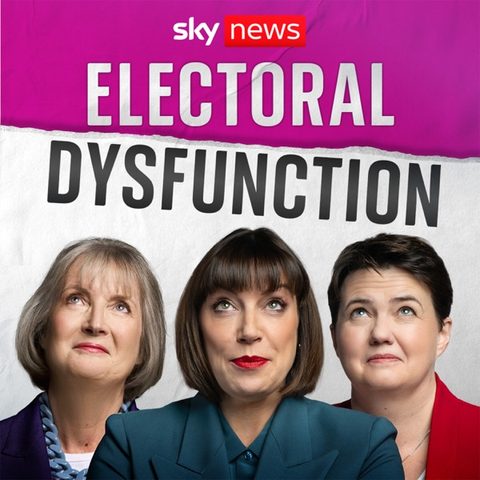
Three hosts with legal and political experience unpack the Russell Brand sentence and David Walliams allegations and what would actually change in courts and workplaces.
Transcribe your links. Paste a YouTube, Google Drive or podcast link and WhipScribe gives you the transcript.Transcribe a link →
▸Notable quotes
“the culmination of a load of changes that have been hard fought for by women over the years and over the decades”
Harriet Harman · at 2:46 — ▶ hear it from here
▸What this episode covers
Beth Rigby, Ruth Davidson and Harriet Harman open with two cases from one week. A court sentenced Russell Brand to 10 and a half years in prison for rape and sexual assault, and the next day the Guardian and ITV published allegations about David Walliams after a court turned down his appeal over a permanent injunction. The hosts stress that Walliams denies sexual assault or abuse. They frame the week as a possible turning point and ask why abuse stays hidden for so long. Harman, who has pushed for tighter rules on adults in positions of power, argues the Brand conviction reflects decades of hard-won changes.
The conversation then turns to rape trials. The government is reportedly weighing a law requiring judges to warn juries about myths such as a late report or a victim who did not scream. Harman backs a House of Lords amendment from a former senior prosecutor and says she will sign it. Davidson answers the objection that this intrudes on judicial independence: the change instructs juries rather than restricting judges. Davidson also notes that under 5% of rapes reach trial, so court reform is only the tip of the iceberg.
On whether this is a Me Too moment, the hosts agree the cases differ. The Brand case is criminal, the Walliams investigation is not, and the Walliams allegations centre on junior staff in other people's workplaces. Harman says the Bar made bystander knowledge a professional responsibility after its inquiry. Davidson calls for an independent, anonymous complaints route, such as the Creative Industries Independent Standards Authority, possibly tied to Ofcom broadcast licences. They end cautiously hopeful while expecting a backlash, and note statements from HarperCollins and Fremantle UK.
▸Russell Brand, David Walliams and the return of MeToo on Electoral Dysfunction: the answers
What did Harriet Harman say about Russell Brand?
Harriet Harman called the Russell Brand conviction and sentence of 10 and a half years for rape and sexual assault a huge moment. She said it is the culmination of changes women fought for over decades, which would once have made an investigation, a prosecution or a conviction unlikely or impossible.
“the culmination of a load of changes that have been hard fought for by women over the years and over the decades”Harriet Harman · 2:46
What did David Walliams say about the Guardian and ITV investigation?
David Walliams responded to the Guardian and ITV investigation by saying he never abused his power and is not a sexual predator. He said he has not broken the law, though he looks back with regret that he sometimes behaved thoughtlessly and did not always take people's feelings into account.
“I'm not a sexual predator. I have not broken the law.”David Walliams · 14:09
What did Ruth Davidson say about rape trials?
Ruth Davidson said fewer than 5% of rapes get to trial, so changes to trial procedure are important but are only the tip of the iceberg. She argued the bigger problem is the reasons women do not come forward in the first place.
“less than 5% of rapes get to trial”Ruth Davidson · 9:06
What is the main argument on Electoral Dysfunction about the Russell Brand and David Walliams cases?
The hosts argue the Russell Brand sentence and the David Walliams allegations may mark a turning point, but that real change needs stronger law and independent complaints routes. Harriet Harman and Ruth Davidson back a proposal requiring judges to warn juries about rape myths, and they say workplace power imbalances and bystander silence must be addressed.
01A court sentenced Russell Brand to 10 and a half years in prison for rape and sexual assault, and the next day the Walliams allegations were published.
02The UK government is reportedly weighing a law requiring judges to warn juries against rape myths, such as a delayed report or a failure to scream.
03Ruth Davidson says fewer than 5% of rapes reach trial, so changing court rules is only the tip of the iceberg.
04David Walliams denies sexual assault or abuse and says he has not broken the law, while three women accuse him of grooming them as teenagers.
05Ruth Davidson says this week is a turning point, but warns that a backlash claiming men are the real victims is already building.
▸Questions this episode answers
Q1What did Harriet Harman say about the Russell Brand conviction on Electoral Dysfunction?▾
Harriet Harman called the Russell Brand conviction and sentence a huge moment. She said it is the result of many changes, fought for by women over decades, that would once have made an investigation unlikely, a prosecution unlikely and a conviction impossible. The hosts noted Brand received 10 and a half years in prison for rape and sexual assault.
Q2What did Harriet Harman say about judges warning juries over rape myths?▾
Harriet Harman said she supports a proposal to require judges, at the start of a rape trial, to warn the jury about myths such as a delayed report or a victim not screaming. She said guidance already asks judges to do this, but not all of them do. She said she will sign a House of Lords amendment tabled by a former senior Crown Prosecution Service prosecutor to make it law.
Q3What did Ruth Davidson say about judicial independence and jury directions on rape?▾
Ruth Davidson agreed that judicial independence must be carefully guarded, but said the proposal is not an invasion of it. She argued the change instructs juries, not judges, and that judges cannot know what knowledge individual jurors bring because they do not know them. She said most people will sit on a jury only once, so the directions help them rather than restrict judges.
Q4What did Ruth Davidson say about how many rapes reach trial?▾
Ruth Davidson said less than 5% of rapes get to trial. She argued that changing court rules and conditions is important, but that courtroom reform is only the tip of the iceberg. She said the wider problem includes why women do not come forward, and that sentencing guidelines had to change because judges once gave light sentences.
Q5What did Harriet Harman say about bystander responsibility after the Bar inquiry?▾
Harriet Harman said that after her independent inquiry into the barristers' profession, the Bar decided that a barrister who knows or sees wrongdoing and does nothing breaches professional rules. She said the Bar made reporting other perpetrators a professional responsibility, and that the same question applies to senior people in broadcasting and other workplaces.
Q6What did David Walliams say in response to the allegations against him?▾
David Walliams said looking back, he realised he behaved thoughtlessly at times towards people he had casual sexual relationships with, and did not always take their feelings properly into account, which he regrets. He said a power imbalance is inevitable when one party is famous, but that abusing it is something else, and that he never did that. The hosts noted this is not a criminal investigation and there are no current criminal proceedings.
Q7What did Harriet Harman say about non-disclosure agreements and access to legal advice?▾
Harriet Harman said NDAs were used as common practice to silence women who complained about senior men: they received a sum of money in exchange for agreeing never to speak about it. She said legal advice is unequal, since wealthy people can afford lawyers while most people cannot. She pointed to the Green Form Scheme, which once gave £25 of free legal advice, and called for a fresh look at misconduct rules for solicitors who help cover up wrongdoing.
▸Transcript
Our own transcript of the public episode, with a timestamp about every 90 seconds. Tap a timestamp to play the episode from there in the show's own player; the link button on a paragraph copies a link that opens this page there.
0:00Grainger knows if you're a procurement manager at an industrial manufacturing facility, you're balancing inventory and budget while sourcing critical supplies across the operation. Too much inventory? Cost climb. Too little? Production slows. Grainger's $2 billion in on-hand inventory helps you get what you need when you need it, so you can help keep budgets balanced and lines moving. Call 1-800-GRAING, click granger.com or just stop by. Granger, for the ones who get it done. Sky News, the full story first. I think there'll be a lot of powerful men who will be sleeping uneasily in their beds after this week, and quite rightly so. Being a runner on a show and then you're dealing with the talent,
0:55the power imbalances are insane. There will be men who know that they've done the same things as Russell Brand, and so far the law has not laid a finger on them. Hello and welcome to Electoral Dysfunction with me, Beth Rigby. Me, Ruth Davidson. And me, Harriet Harman. And look, it's been one of those unforgettable weeks of shocking allegations in the media relating to sexual assault. And it feels like we're living through a turning point because we've had both the sentencing on Russell Brand to 10 and a half years in prison for rape and sexual assault. And then the next day, we got allegations about David Walliams in The Guardian and on ITV after a court refused his appeal for a permanent injunction in a legal battle that had been going on behind the scenes for months.
1:54And there's rightly been a lot extensive news reporting of the David Walliams case and the Russell Brand case. It's worth saying that David Walliams denies that he's committed sexual assault or sexual abuse. So we're not going to go over that. What we're going to do is dig deep into why this remains such a pervasive problem, why it takes so long for these accusations to see the light of day. And Harriet, you've been a big part of countering this culture. You've worked on changing the age of consent laws for adults in a position of power. And last year, you changed the rules for barristers to stop them having intimate relationships with pupils. So you've done a lot of work on this. I think the Russell Brand conviction and sentence was a huge moment because
2:46I think it's the culmination of a load of changes that have been hard fought for by women over the years and over the decades, which previously would have made the investigation not likely, the prosecution unlikely and a conviction impossible. And we should say that while we will talk a little bit about the Russell Brand case today, if you want more on that case, you can hear our Tuesday episode. And in that episode, the Insider episode, we lent on Jess Phillips to tell us a bit more about how rape trials work, why they're so difficult for the victims, and also what could change as a result of Bran's conviction. Ordinarily, Insider episodes would be behind the paywall. You'd need to be a member, you'd need to sign up.
3:32But because of the nature of what we were talking about, we've taken that out from behind the paywall this week, and all of our listeners can listen to that, even if you're not an Insider member. So I would direct you to Tuesday's episode. And going on to that idea of the turning point, not only has the Russell Brand conviction triggered a national conversation again about victims, about why it's so hard to bring rape cases to trial, about the conduct of rape trials and sexual assault trials when they're happening and the onus being always on the victim with the defendants lawyered up. I just want to talk about an update we've had this week about rape trials. And that's about how the government's
4:20reportedly mulling a change in the law to require judges to advise juries over rape myths so what we were talking about those old tropes like well why didn't she tell him to stop or why was she wearing that outfit or she slept with loads of people so you know or did she clearly say no means no and a woman's word over a man's word, all these tropes around rape. Harriet, is that a big moment if the government do actually implement that change? What do you think about that? Well, I think it's just the next step in a whole line of changes, which make it more possible to bring rapists to justice. And this is the proposal that the law should be amended to require judges at the beginning of a rape trial, before the
5:16defendant's given evidence, before the prosecution have made their case, to actually say there are a lot of myths around in relation to rape, which you're going to consider, members of the jury, in this case that we're going to hear. Like, for example, it can't be rape because it was ages before she reported it. She didn't report it immediately, therefore there was no offence. Or she didn't scream and shout and run for the door, and therefore if she didn't do that, it can't have been rape. So that there are a number of myths which are used by defendants to try and imply that there wasn't a rape. And it's about the judge warning the jury not to be prejudiced. At the moment, there's guidance to the judges that they should do this, but not all of them do
6:04this. And Alison Levitt Casey, who was a very senior prosecutor in the Crown Prosecution Service and is a member of the House of Lords, has tabled an amendment to make it by law that judges have to, at the outset of these cases, give directions to the jury to warn them against rape myths. And I'm going to sign that amendment and I hope the government will change the law. And Ruth, you'll sign it as well. Yeah. Just to put the counterpoint in though, Lord Bernard of Maldon, who's a former Lord Chief Justice, has called this idea about requiring judges to advise over rape myths as an unacceptable intrusion upon judicial independence. And he says there's already guidance on this. Therefore, I think he's saying he doesn't think it's necessary
6:51in his view. When you see Lord Burnett in the Lords, if you saw him, how would you answer him on that? Well, look, I think for me, and Harriet, look, you're legally trained. You know much more about what happened in courtrooms than I do. I'm just a lay person. But in terms of his argument that this is about judicial interference and it restricts the independence of judges, what is being asked for here is the instruction of juries. Now, I don't think that individual judges are able to make an assessment about what knowledge individual jury members have because they don't know them. And they're not supposed to. The juries that sit in trials on any trial in any part of the United Kingdom are supposed to be representative of the country at large.
7:34So this isn't about changing the way judges rule on things or make decisions or what they allow into evidence or what they're able to sentence. It's not about changing the judge's behaviour. It's about judges, as the person that's in charge of their own court, being able to give at the outset, jury members the information they need to be able to make a decision and a lens through which to view the proceedings that's probably foreign to them. Most people won't, if they ever sit in a jury at all, will only ever sit in one. So it's something they've never done before. So I think this is more about helping juries than it is about restricting judges. And that's what I'd say to him. Well, I very much agree with the notion of judicial independence,
8:13and it has to be carefully guarded. But I don't think that this proposal is an invasion of judicial independence. I mean, over the years, there has been changes in the law to change how particularly rape cases are handled. For example, it used to be absolutely inevitable that what a defence barrister would do is the minute the complainant was on the witness stand, he would ask her, how many sexual partners have you had? And bring all her previous sexual history into evidence in order to show that she was like promiscuous and therefore she probably did consent to this act. Or why should the jury care anyway, because she'd had so many sexual partners. And actually, that doesn't help a jury understand whether in this particular case,
9:06there was consent or there was a rape. And so the law was changed so that judges are not allowed to allow the defence barrister to bring up in evidence her previous sexual conduct. And that was one of the reasons why women didn't come forward with rape complaints, because they knew they'd be like put in the dock and all their previous history dragged out. And they still don't, Harriet. So we're talking so much about the trial process here, and less than 5% of rapes get to trial. You know, I'm not sure, you know, changing the law and changing the court conditions and making easier for court, absolutely, let's do all of that thing. But let's not pretend that the court stuff isn't just the tip of the iceberg.
9:47I think it's absolutely the tip of the iceberg, but it's still important in sending a message to the perpetrators that they ought to watch out because if they're unlucky enough to have a situation where a number of their victims do have the courage to come forward and are properly supported by the police and the prosecution service, that they will end up spending a long time in prison. And the trouble is there's always so many reasons why a woman will not come forward. Because in the past, women didn't come forward, not only because their sexual history would be dragged through the courts and they'd be accused of being a slut and asking for it, but also, even if there was a conviction, that the judge would give
10:25very light sentences and just a slap on the wrist and say, off you go and, you know, go about your business. And we had to get the sentencing guidelines changed to make sure that judges took this seriously. And I think there's an extra point to that, Harriet, from what you were saying about this case showing that you will be found out and the police will take it seriously and you could face a lengthy jail sentence. I think the other part of that is the societal change as well, in that, you know, particularly younger generations of men, they won't accept that within their friendship group. They'll call it out. But on Merle Allowship, I just want to say one other thing, because I don't know if,
11:01I'm sure some of our listeners would have seen this and been very shocked by it as have I. Russell Brand's father was at the court and defended his son. He was a victim not a bloody predator. Russell was a victim? Of course he was we'd get on a train and three stops later there'd be 40 women all around him trying to bloody harass him. What do you make of what the judge said? I know they did but he did, but he wasn't. He was a victim. I mean, it was just, it was really, it really upset and disturbed me. Yeah, and that signals what there's been a lot of online, a backlash that this is the theory of male victimhood, that somehow men are entrapped by women and that they are the victims here. And I think we've got to be really guarded against that backlash.
11:49But I think the point that you've also both raised is really important about the bystander culture. What is the responsibility on other people, mostly men at senior levels, when they know or suspect something's wrong? And we went through this when I did this independent inquiry into the bar, you know, the barrister's profession, because if ever there is a scandal of where some barrister has been, you know, really preying on young trainee barristers, after he's finally banished from the bar and found guilty of these fences, everybody says, well, we all knew, everybody knew. So there was the discussion about, well, what is the responsibility on people? And actually, the bar decided that there was going to be a professional responsibility, that if you are a
12:36bystander, and you know and see or hear that things are going on, and you do nothing about it, that is a breach of the professional rules, that you actually have a professional responsibility, not only not yourself to be a perpetrator, but report other perpetrators are there. No young woman goes to work in order to be preyed on by what we used to call back in the day, a dirty old man. They go to do their job and they should be able to get on with that without being preyed on. Can I just say I agreed with absolutely everything you said there. Let's move on to David Walliams because after a lengthy legal battle, the Guardian and ITV have now been able to publish a joint investigation into the comedian active David Walliams. It's really worth a read or a watch if you haven't yet seen it.
13:27And in this reporting, three women accuse Walliams of grooming them as teenagers. One woman says she had sexual contact with him when she was just 15 years old. And he's also accused of inappropriate conduct at Britain's Got Talent and at HarperCollins. Now, legally, we should be clear that this isn't a criminal investigation and that there are no current criminal proceedings. David Walliams has also denied abusing his power as a celebrity. In a statement, he said, looking back, I realised that at times I behaved thoughtlessly towards other people I had casual sexual relationships with. I realised I did not always take people's feelings properly into account. That is something that I regret.
14:09And whilst a power imbalance is inevitable when one party is famous, abusing that power is something else entirely. And it's something that I never did. I'm not a sexual predator. I have not broken the law. I am devastated that some of the women I met 10 to 20 years ago have now expressed hurt or anger towards me. And look, we're not here to report the details. I really think, though, if you have time, have a look at the allegations. What we do want to talk about, though, is whether or not this feels like a reckoning. It's been nearly 10 years since the Me Too movement exploded. And I wonder whether what you both think, is this a Me Too 2.0 moment? Well, I think we've got to make it into a really important milestone.
14:57I think it's really important to have the detailed analysis and to work out what can be done in the future to make things even more protective or what can be done in the future to try and hold people to account and hold them to account earlier. But the way he brushes aside that bit that you read out, Ruth, whilst a power balance is inevitable when one party is famous. I mean, actually, if he's engaging with 15-year-olds who want to get into comedy writing, if he's engaging with 17-year-old, he is leveraging that power imbalance. And again, we dealt with this in the Bar Council independent inquiry, because there were KCs, you know, senior men in chambers, you know, in their 50s, having sex with trainee barristers who are at the outset
15:48of their career and wanting to get on in the profession. And in that context, the notion of consent is impossible. How much is it your free will and how much is it you just fear if you turn him down, you won't get your permanent place in this barrister's chambers. So actually, they've changed the rules to say that actually it's professional misconduct for a barrister in a chambers to have sex with a trainee barrister. Trainee barristers can have sex with each other. Barristers can have sex with each other. Barristers can have sex with trainees in other people's chambers. But in your own chambers, where you are in a position of power, you just can't. And that if you do have sex with them, not the trainee barrister, but the senior barrister, that will be professional misconduct.
16:37So they've actually taken on the issue of the hierarchy and the ability of that to lead to an abuse of power and made it professional misconduct. And in very hierarchical organisations, some of that already exists. So for example, in the armed forces, what level of consent is there between an officer and another rating? You know what I mean? So we have seen, don't get me wrong, there are still very big issues, but we have seen the establishment of rules and protocols against it in order to try and protect. I think your original question, though, Beth, is an interesting one. Is this Me Too 2? Now, I always think of the Me Too movement is actually Harvey Weinstein. So it's about powerful people almost having a quid pro quo,
17:22the casting couch sense that you're not going to get anywhere, like that overt blackmailing. And I actually think this is something a little bit more, something a little bit different to that. I think that what's struck me through this, particularly where, and again, we have to separate the two cases, one, the criminal case of Russell Brand and the investigation by ITV and Guardian, which is not criminal, of David Walliams. What struck me is that quite a lot of it was about people in their own workplace. So these men were going into somebody else's workplace where they were the established person, they were the runner or the researcher, or they were very junior on that. But these people were the talent, the star, the bolt of sunshine that came
18:05in and were able to do basically whatever they wanted. And it's that disrespect, it's that disregard actually for people's rights and spaces that really kind of struck me. Yeah. So that's really interesting because I would say two things on this. I think one in a way, I think it's a continuation of me too, because I think that both of these investigations and cases would have come through journalists looking at powerful men who had reputations and then gathering evidence. But the point that you both make, which is so fascinating, where I think this is a sort of, is this Me Too too, is that in David Walliams' case, there's a lot of questioning about how old they are. Like, what's the age of consent? It's like, well, if you're 15, there is an allegation
18:52from a 15 year old that he had sexually assaulted her, but, or had sexual contact with her. It was like, once you're 16 and it's not illegal, if you're 17 or 18 or 19 or 20, then that's okay. And I think what's emerging from this, what you've talked about, Harriet, in law chambers, is something else is emerging here, which is actually, how do you better protect younger women in workplaces where there are clear power imbalances? What's emerged in some of the reporting as well is that there was allegedly a group chat amongst young staff working on Britain's Got Talent that warned each other to, quote, be careful around David Walliams and called him weird AF, weird as f*** that stands for. And I mean, that idea of that quiet warning spreading around women about
19:47avoid that guy is a bit, you know, that will ring true with a lot of people listen to this, but also like I work in the television industry is different. I work in news, but like those jobs, like getting a, being a runner on a show, and then you're dealing with the talent. The power imbalances are insane. But there's also, is there an element of in the past, a blind eye was turned structurally, institutionally, right? And that that needs to change, yeah? What's been the case is all the fear and concern and worry is on the slight shoulders of the victims of these sorts of harassment and assault. If they speak up, they'll never work again. They'll be regarded as a troublemaker. But there's impunity for the powerful man at the top in the media because he's so valuable.
20:41He brings in viewers and therefore he's got a right to get away with whatever he wants. And it's that power imbalance that needs to be changed. There needs to be entrenchment of the independent complaints procedure. And there is such a complaints procedure because, and it's called the Creative Industries Independent Standards Authority. And I think Ofcom should make it a rule that in order to be licensed as a broadcaster, you have to sign up to the creative industry's independent standards authority, which has an anonymous complaint system and a proper independent system. Otherwise, there's nowhere for people to go with their complaints. I think there's a real responsibility on management, not just to be feather bedding the talent or the senior person,
21:33but actually taking responsibility for junior people, like as if it's a health and safety issue. I mean, they should be making sure that the systems and the working practices are safe and they shouldn't have to put up with it. I mean, I certainly had to put up with it when I was first in work as a trainee solicitor. It was just absolutely rife. That's not why I was going to work in my job. I was going to work in my job in order to train to be a lawyer and be the best lawyer I could be. Why should young women have to put up with this? So I think that what we've got to do is recognise there will be a backlash. Everybody's saying it's gone too far. People can't take a joke. Men are victims. It's the council culture.
22:15We've got to ready ourselves for the backlash and also make it clear that we have yet to go far enough to make sure there's proper justice on this. If you've ever tried to hire someone in another country and immediately hit a wall of paperwork, compliance rules, and back and forth approvals, you know how fast that excitement can turn into a headache. That's exactly what Pebble is built to fix. Pebble is a global hiring platform that lets founders and HR leaders hire in over 185 countries in minutes, not months. Compliance isn't something you manage around with Pebble. It's built directly into the platform. A decade of expertise embedded into every workflow, so regulatory blind spots and costly mistakes don't slow you down. Contracts,
23:06payroll, benefits, it's all in one place, integrated with the tools your team already uses. And your new hire? Onboarded by Monday. Pebble starts at $3.99 per month per employee, and right now there's a limited time offer just for podcast listeners that makes it even easier to get started. Go to highpebble.ai before it's gone. That's highpebble.ai. Terms and conditions apply. People don't show up to vote, so I'm asking them to pretend I'm on the ballot. I'm thrilled he's saying that. His approval ratings are in the toilet. America's midterms matter to all of us. Voters will decide who controls Congress, Trump's Republicans or the Democrats. The people are not being heard. They'll have the power to shape what we can and can't do.
23:51We've been travelling the country speaking to the very people who will decide what happens next. Trump 100. Wherever you get your podcasts. can I ask you both in this week because I have found up to be honest I there's a lot of the the trial of brand I just didn't want to consume it like I didn't I found it hard I just I found it repulsive it really upset me it's it's deeply upsetting. And then you read the Walliams stuff about these young girls and they want to be comedy writers and they're all allegations, but they feel that they've been abused and they've been groomed and they've been exploited and they're deeply, deeply upset and damaged by it. But then But then in some ways it feels like it might actually engender a
24:48change because we're tied now, like powerful men that try and keep doing this because it's like people are onto you and it being discussed as a reminder to young women, it's not okay. And you don't have to suffer in silence. So in a way, as awful as it's all been, I do feel a bit more optimistic. Yeah, I feel a bit more hopeful this week. Do you both? Yeah, I do feel more hopeful. And I think the thing that I struggle with is how long it's taken. I mean, as clear a wronging as ever there was as Russell Brand. I mean, it was almost as if there was self-censorship about some of the stuff that happened anyway. So he was getting contracts, then he wasn't. He was getting fired from places, then he wasn't getting any more work. He went over there. He then tried to indemnify himself
25:32by finding Jesus and going on right-wing things. And almost in hindsight, you can see the steps that he was taking to cover his tracks, to keep himself out of a courtroom. And I think there'll be a lot of powerful men who will be sleeping uneasily in their beds after this week, and quite rightly so. And I hope that more will be brought to justice for things that they've been getting away with. And although the victims in the Brand case said that the trial had been the most horrible experience, having been the victims was terrible and damaging for them, but also it was a horrible experience to be giving evidence in court they also did say that they were grateful for how much support they'd received support from the police how caring the prosecution service was
26:19how they had independent sexual violence advisors to help them. So things have been put in place now that if people do feel they can come forward, the system will wrap itself around them much more so than it used to, because there will be men who know that they've done the same things as Russell Brand. And so far, the law has not laid a finger on them. And I think that's the moment we've got to make sure that that impunity doesn't continue. One other thing on this, just on the law, because this is a really good question, and I'm going to ask it to you as our legal eagle, Harriet. This is from Liz on our members forum about NDAs, non-disclosure agreements. She says, how is it even legal for NDAs to state that people can't speak to parents, friends or a therapist? Is it something government
27:13can change? It feels unconscionable that aggressive lawyers should be allowed to intimidate people like that, especially potential grooming victims. And that's because one of the women in the case of David Walliams alleges that she did warn another woman about some of his behaviours and then was served an NDA. Well, there's been a lot of controversy about these non-disclosure agreement because what used to happen, just as absolute common practice, is that if a woman did make a complaint about a senior man in any particular workplace, that they would be given a suggestion that they would have some compensation. And that as part of the compensation agreement, they would have to agree that they would never
27:59speak to anybody about what they were complaining about. That's why it's called a non-disclosure agreement. In theory, you agree to not saying anything. And that's how so many cases of abuse were swept under the carpet. Basically, they were given a small sum of money and then silenced forever. And actually, there was a movement in the House of Commons to challenge this and to get it made against the law in employment that actually, as an employer, you can enter into these non-disclosure agreements. But actually, there still are non-disclosure agreements that don't come within the terms of that Act. And it also brings to light the fact that there's an inequality in access to legal advice and legal power.
28:58Because if you're a senior management or you're talented in broadcasting, or you're a talent in broadcasting, you know, or you're a senior politician, you can afford to pay for a lawyer to give you advice and then send a threatening letter to somebody who's got no legal advice and doesn't know where to turn and therefore just feels threatened and has to comply with it. And back in the day, there used to be all around the country law centres where solicitors would be working and you could walk in off the street from your community and get legal advice. And if there wasn't a law centre in your area, there was something called the Green Form Scheme, where you could go into the solicitor on your high street and they would fill in a green form and it would give you £25 worth of free legal advice.
29:44Now, £25 doesn't sound like much, but back in the day that was. So there was an opportunity for people to get legal advice. Now, there is no possibility for people to get legal advice. Most people are not in unions that would get legal advice. There's no law centres anymore, hardly. And there's no free legal advice from solicitors on the high street. So it does show that there's an inequality in legal advice. And there's two ways of dealing with that. Either you can actually spread legal advice, so more people can access it and subsidise it through public funds. Or what you could do is put legal obligations on solicitors, that when they are using their skill and their professional services, they must not do
30:27so in a way which is not in the public interest. And there are rules like that, for example, it's professional misconduct for a solicitor to engage in something which might be facilitating bribery or corruption. So basically, there are professional conduct rules which restrict what solicitors can do. And I think there needs to be a look, a fresh look, of whether there should be misconduct rules for solicitors who are acting for people who are trying to cover up wrongdoing and using the law as a weapon against somebody who's got no legal advice or representation. Well, I think one of the things that we've also talked about with the David Walliams case in particular is about the sort of imbalance of power that age creates.
31:12And I know that you've done some work about the age of consent. Now, I remember we talked about this on the pod, actually, when there was some leaflets from the Home Office about people coming here talking about, look, the age of consent in the UK is 16. And it didn't occur to me that it might be wildly different around Europe. And it is. There's some countries wherein it's less than that. Some countries where there's different rules for the age of consent if somebody's a teacher and you're a pupil and in the same school and things like that. And you've changed stuff to do with the law of consent and the age of consent here, Harriet. Can you tell us a bit about that? In order to protect children, the age of consent is 16. But in order to bring a
31:50prosecution, the prosecutor has to decide whether or not taking something to court would be in the public interest. And if there's two 15-year-olds having sex, there's no way that the prosecution are likely to take a case to court but if it's like a 50 year old having sex with a 15 year old then the age of consent would be used in the criminal law as a way of protecting that young person but there was also the question about the abuse of power in relation to age and young people about people who were in positions of authority over that young people, for example, teachers. So it used to be that a teacher, once a pupil had had their 16th birthday, the teacher would be able to have sex with one of their pupils who was 16
32:39without it being a criminal offence. And that law was changed. And also it was then applied to sports coaches, people who are in position of authority in the sporting relationship, or people who are in religious organisations who hold authority. So it was recognised you need a baseline age of consent for sex. But also above that, you need to look at the power structures and in relation to particular professions and occupations, it could be like if somebody was under 18, then it would be a criminal offence. So there's been that recognition in the law, and that was changed since not so long ago. I think people forget how recently so much was really permitted. It was really you could actually rape your wife. And even if you were separated and there was a case I was involved in relation to this, a man was separated from his wife. raped her and then it wasn't a criminal offence because they were married because marriage
33:47presumed sexual consent and we had to change that but it wasn't until the 1990s that actually it could be rape if it was your husband otherwise it was not a criminal offence and sports coaches the law was only changed as recently as 2022. So all the time, we're looking at how can we tighten the law? How can we make the procedures better? But we've also got to have more of an independent place where you can complain anonymously. And because what happens is that then people see the same name coming up over and over again, and they can take action because it's so rarely just a one-off. We should bring you some of the statements we've heard from those who work with David Walliams. His publisher HarperCollins said last year it was cutting ties with David
34:37Walliams and that it takes employee well-being extremely seriously and has processes in place for reporting and investigating concerns. Sky's approached HarperCollins for further comment, and we will put that in the show notes if we hear back. Fremantle UK, the production company behind Britain's Got Talent, has said, We are disturbed and concerned at these serious allegations. David Walliams has not been a judge on Britain's Got Talent for more than four years. During his time on the show and in the intervening period, no complaint was ever made regarding his behaviour to Fremantle UK. If anyone feels that they've been the subject of any impropriety or wrongdoing by anyone on any Fremantle or Associated Labels
35:16productions, we encourage them to come forward. We will treat any complaint seriously. Protecting the welfare of our employees, freelancers, contributors and fans has always been and absolutely remains paramount for the company. And I'll just remind you of David Walliams' statement. He said, looking back, I realised that at times I behaved thoughtlessly towards other people I had casual sexual relationships with. I realised I did not always take people's feelings properly into account. That's something I regret. And whilst a power imbalance is inevitable when one party's famous, abusing that power is something else entirely, and it's something I never did. I'm not a sexual predator. I have not broken the law. I'm devastated that some of the women I met
36:0010, 20 years ago have now expressed hurt or anger towards me. There's so much more to talk about about this. And I think we're going to obviously be talking about it more because I think there will be a long tail of potentially some legal changes and legislation passing through Parliament on the back of all of this. But we have run out of time for today. We'd love to know what you think. You can message us on the members forum. If you are one of our insiders, the links in the show notes or message us on the burner phone 0793 4 200 444. And our upcoming live show is now less than a fortnight away. That's on the 26th of November at the Cadogan Hall in London. And there are still a couple of tickets left. We'd love to see you there. If you're coming and you're a member and you
36:48haven't submitted a question in advance, then please use the link in the show notes to send them in because answering your questions, the funnest bit of the show. Love it. And there'll be an episode on Tuesday for you members. But until then, goodbye.anger knows if you're a procurement manager at an industrial manufacturing facility you're balancing inventory and budget while sourcing critical supplies across the operation too much inventory cost climb too little production slows Rangers two billion dollars in on-hand inventory helps you get what you need when you need it. So you can help keep budgets balanced and lines moving. Call 1-800-GRANGER, click granger.com, or just stop by. Granger, for the ones who get it done.
37:37Shaq here. What's it like to buy a car from Carvana 100% online and get it delivered to your door? Let me tell you. Your car is here, Mr. Shaq. Thank you, Mr. Carvana guy. Can't wait to take it for a spin. Only the best for you, Mr. Shaq. Hey, have you always been so big, tall, and handsome? Not always. I was 6'10 once. Seven days delivered or returned, Mr. Shaq? Not that I would. You never do. No, I never do. So buy your car today on Carvana. Delivery fees may apply. See our seven-day return policy at Carvana.com.