Transcribe your links. Paste a YouTube, Google Drive or podcast link and WhipScribe gives you the transcript.Transcribe a link →
▸Notable quotes
“So the new rape myths come, and it is, why didn't you tell anyone? Why didn't you scream? Why didn't you just roll over?”
Jess Phillips · at 10:07 — ▶ hear it from here
“Because I feel like if I'm in the courtroom, people will have to behave.”
Jess Phillips · at 19:22 — ▶ hear it from here
▸What this episode covers
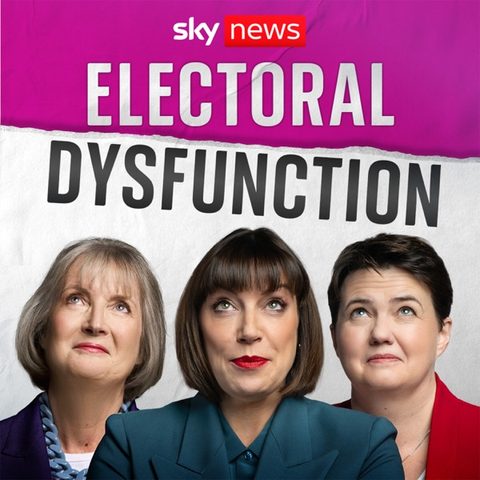
This members edition of Electoral Dysfunction, recorded before the David Walliams allegations were published, centres on Russell Brand's conviction for one count of rape and three counts of sexual assault covering 2004 to 2009. Jess Phillips, who ran a women's aid and rape crisis service before becoming an MP and has sat through hundreds of sexual violence cases, explains that complainants are not parties to the case. The Crown prosecutes, victims usually have no individual lawyer, and the defendant has a senior barrister. Scotland now provides state-funded legal representation automatically when a defence plans to raise a complainant's sexual history.
The conversation then moves to rape myths, which Phillips says change shape whenever courts close one route. Previous sexual history was the old problem, and guidance against it is not mandatory, so defence lawyers can still raise it. She also describes why victims often do not scream or fight back, citing disassociation and fear of dying. The defendant does not have to give evidence, while victims can be compelled to. Phillips recalls a magistrates' court where a woman was questioned about messaging an ex after being strangled.
The last section weighs reform. Andy Burnham has said government will keep looking at how trials are run, and Phillips expects practice directions, expert evidence and specialist courts to follow. She argues the bigger failure is that so few cases reach court, citing a House of Lords finding that only one to four percent of rapes do. Operation Soteria, which moves police away from attacking complainants' credibility and toward patterns of complaints, is credited with rising charge numbers. The panel also praises Channel 4's Dispatches and The Times for giving women legal cover to speak out.
▸BONUS EPISODE: Russell Brand and the reality of rape trials on Electoral Dysfunction: the answers
What did Jess Phillips say about Andy Burnham?
Jess Phillips said she thinks the Russell Brand case will bring about change in how rape trials are run, despite the risk that a prime minister's words come to nothing. She expects the government to look at practice directions, what judges can intervene on, and specialist courts over the next few weeks.
“I do think it will bring about change.”Jess Phillips · 13:05
What did Jess Phillips say about Operation Soteria?
Jess Phillips credits Operation Soteria, a system started under the Conservative Party, with rising numbers of rape and sexual violence charges. It asks police to stop investigating the credibility of the victim and to look at patterns and multiple complaints about the perpetrator instead.
“And that is down to Operation Soteria.”Jess Phillips · 16:16
What did Jess Phillips say about House of Lords?
Jess Phillips cited a House of Lords inquiry that found only between one and four percent of rapes ever make it inside a courtroom. She said that when she was a Home Office minister, charging rates were woeful, so the first problem is getting cases to trial at all.
“somewhere between only one and four percent ever make it to the inside of a courtroom.”Jess Phillips · 15:31
What did Jess Phillips say about Channel 4?
Jess Phillips said the women who spoke about Russell Brand would not have come forward publicly without the legal teams Channel 4's Dispatches team provided as cover. She said that protection meant they did not face losing their homes or their parents' homes.
“there's no way those women would have spoken out publicly without the teams of legal advisors”Jess Phillips · 20:57
What did Jess Phillips say about Rape myths?
Jess Phillips said rape myths keep changing as courts close off old lines of questioning. She said that questions asking why a victim did not tell anyone, scream or roll over are now the new myths, and that they are also wrong.
“So the new rape myths come, and it is, why didn't you tell anyone? Why didn't you scream? Why didn't you just roll over?”Jess Phillips · 10:07
What did Electoral Dysfunction conclude about the Russell Brand rape trial and reform?
The panel did not reach a formal decision. Jess Phillips argued the Brand conviction will push the government to change how rape trials are run, including practice directions, expert evidence and specialist courts. The panel also said the bigger problem is that very few rape cases reach a courtroom at all.
Mentioned in this episode
PersonRussell Brand
PersonAndy Burnham
PersonSarah Everard
PersonDavid Walliams
OtherOperation Soteria
OtherHouse of Lords
CompanyChannel 4
CompanyThe Times
CompanySky News
ShowDispatches
Episode facts
Released
November 13, 2026
Length
26 minutes
▸Key takeaways
01Russell Brand was convicted of one count of rape and three counts of sexual assault covering 2004 to 2009, with sentencing still pending as the episode was recorded.
02In a rape trial, Jess Phillips says victims are not parties to the case and usually have no individual lawyer, while the defendant has a senior barrister.
03Only one to four percent of rapes ever reach a courtroom, according to a House of Lords inquiry that Jess Phillips cited on the show.
04Guidance against raising a complainant's sexual history is not mandatory, so Jess Phillips says defence barristers still deploy rape myths in court.
05Jess Phillips expects the Brand case to force change in trial practice, but says culture moves policy faster than Parliament, the courts or the police.
▸Questions this episode answers
Q1What did Jess Phillips say about rape myths in court?▾
Jess Phillips says rape myths keep changing as courts shut down old lines of attack. Previous sexual history and a complainant's clothing were the early examples, and she says questions such as why a victim did not scream or roll over are now common myths. She argues that guidance against such questioning is not mandatory, so defence barristers can still use them.
Q2What did Jess Phillips say about Andy Burnham's plans to reform rape trials?▾
Jess Phillips thinks the Russell Brand case will bring real change to how rape trials are run. She expects the government to look at practice directions, what judges can intervene on, and whether courts should routinely hear expert evidence on why victims do not report or fight back. She also expects work on specialist courts and faster case handling.
Q3What did Jess Phillips say about how few rape cases reach court?▾
Jess Phillips said a House of Lords inquiry found that only between one and four percent of rapes ever reach a courtroom. When she was a Home Office minister she focused on charging rates, which she called woeful at the time. She credits Operation Soteria, which asks police to look at patterns and multiple complaints about a suspect rather than the credibility of the victim, for rising rape charges.
Q4Why does Jess Phillips say rape victims often do not scream or fight back?▾
Jess Phillips says the main reason is disassociation, where a victim's mind moves somewhere else during a traumatic assault. A second reason is fear for their life, so the victim weighs how to get out alive with a violent man. She says she could list a million reasons why a victim does not scream, and that a courtroom question about why she did not fight him off reflects a myth.
Q5What did Jess Phillips say about journalism's role in the Russell Brand case?▾
Jess Phillips credits journalists at Channel 4's Dispatches and The Times with making the Russell Brand case possible. She says the women who came forward would not have spoken publicly without legal teams provided to them, which protected them from the risk of losing their homes. She says that after years of failing to win justice for women, she came to see journalism as the only answer.
Q6What changed in Scotland for rape complainers who face questions about their sexual history?▾
The panel says Scotland changed its rules so that when a defence lawyer says part of the defence will raise a complainant's sexual history, the complainer is automatically entitled to a lawyer. The state pays for that lawyer. Jess Phillips described this as one of the changes she helped bring about, and said the campaign against previous sexual history stretched back years.
Q7Why does the Electoral Dysfunction panel say Russell Brand kept getting work for years?▾
The panel says Russell Brand's alleged predatory behaviour was discussed for years, yet he kept getting gigs, studio time and large paid work. They argue that many people in the industry need to look hard at themselves. They also say that jokes made about women 15 years ago would not be acceptable in the mainstream today, which they see as progress.
▸Transcript
Our own transcript of the public episode, with a timestamp about every 90 seconds. Tap a timestamp to play the episode from there in the show's own player; the link button on a paragraph copies a link that opens this page there.
0:00Grainger knows if you're a procurement manager at an industrial manufacturing facility, you're balancing inventory and budget while sourcing critical supplies across the operation. Too much inventory? Cost climb. Too little? Production slows. Grainger's $2 billion in on-hand inventory helps you get what you need when you need it, so you can help keep budgets balanced and lines moving. Call 1-800-GRAINGER, click granger.com, or just stop by. Granger, for the ones who get it done. Observe the North American dad. 50s, great polo collection. He enters his vehicle information on Carvana. An offer appears in minutes. Remarkable. He squints, reads it again, smiles and says, dang, that's a good offer.
0:54The highest form of approval. No haggling, no hassle. No one called him boss. He's still on the couch. Astonishing. Sell your car today on Carvana.com. Pickup fees may apply. What you're about to hear is our Tuesday members episode with me, Beth Rigby and Jess Phillips. You'd normally have to subscribe to hear this, but we thought that this week, because this story is so important in terms of what it means for victims, survivors and our legal system, we felt we needed to make an exception. And as always, if you'd like to become a subscriber and access these episodes every week, then the link is in the show notes. I should also say that this episode was recorded before the allegations against David Walliams were published. And we do talk about those on Friday's episode.
1:33So do give that one a listen as well. Sky News, the full story first. Hello and welcome to Electoral Dysfunction with me Beth Rigby, me Ruth Davidson and me Jess Phillips. Welcome to our members edition of the podcast and we're going to do our usual explaining on how things work today but there's really only one story in town and that is the conviction of Russell Brand as a rapist and the fallout from that. Yeah, and we're lucky enough to have an expert on violence against women and girls in Jess Phillips on the podcast. So hopefully, Jess, you can help us understand what goes on inside the courtrooms, why there's been criticism in this particular case of how victims were handled, particularly when they were on the stand.
2:27And we can also get into whether Andy Burnham was right to suggest this weekend, after Brand's conviction, that rape trials may need to reform. This case has been everywhere. It is a massive story. But look, to get straight into it, I just want to remind you, former actor, comedian Russell Brand was found guilty last Thursday of one count of rape and three counts of sexual assault, all of which took place between 2004 and 2009. And as we record this podcast, he is back in court waiting to be sentenced after spending the weekend in custody. So that sentence is going to come after we've stopped recording, but we don't really aim to bring you the news as it happens here. We're hopefully going to give you a better understanding
3:11of how rape and sexual assault trials work because there's so much that we as the public don't really get to hear about what happens in court, partly because victims have a right to lifelong anonymity. But Jess, you are an expert, and can you even sort of count how many sexual assault cases you've been in court for and that you've sat through? So, yeah, I mean, I can't count actually how many trials that included sexual violence, direct rape trials, coercive and controlling trials that included sexual violence or sexual harassment and abuse cases that I have sat through in court. It must be racking up to hundreds, including as a victim of violence, stalking and other issues myself, I've had to
4:01sit through them as a victim as well. Can I ask just for people that don't know your background, because we've talked about you as a campaigner, but can you actually tell us what you did before you became an MP? So before I was an MP, I ran a women's aid organisation that also had a rape crisis organisation. So we ran advocacy support. So an independent sexual violence advisor is the name of the sort of advocate that victims are entitled to have with them in court. And I ran ISVA services for many years. And when I think about the cases that I have seen across, whether I've actually sat through the court case, you're talking thousands of cases. And often independent sexual violence advisors are used as the eyes in the court for governments to look at what is going right and wrong in the
4:47court. So for example, there was lots of big cases where women's previous sexual history was being used in cases, and they found this out from what the ISVAs were reporting back. So I was one of those people. And I think that people have no idea, actually. For a start off, lots of people would assume that the victims in this case had a lawyer who was representing them. They absolutely don't. A victim in a rape trial is not what we call party to the case. It is the Crown who is taking on Russell Brand in this case. The victims themselves don't have individual lawyers. So already you can see a power imbalance between Russell Brand, who has a very, very well-paid, highly successful KC representing him,
5:34and the women are evidence. And I don't say that to put them down, these women are absolutely amazing in this case, they were and are evidence in the trial. And how we treat them as evidence rather than as people is the thing that has opened us up to the huge debates now that has led Andy Burnham into making the statements that he has. There is an issue here that's quite interesting that's changed quite recently when you talk about women not having a lawyer which I think would shock many people listening to this. In Scotland the rules changed in the last wee while so that if the lawyer for the defendant has said that part of their defence is going to be bringing up the sexualised history of the,
6:48we would call them the victim. In Scots law, they're often called the complainer, which I think sends entirely the wrong signal, but there you go. There is an automatic independent legal representation has been brought in, which means that you are automatically entitled to a lawyer and it will be paid for by the state. So that's one of the changes we've brought. Well, look, that is good. But I mean, if Harriet were here, she and I could talk about the many meetings that she and I went to, to try and stop the instigation of previous sexual history. So previous sexual history. 100%. On this journey, of which it's funny that the public is now currently awakening to the idea. And if the Russell Brand trial has done nothing else, it has brought into
7:25the courtroom, the public to see things that I have to say, well, the public are shocked. I'm like, yep, that's totally regular. But Harriet and I worked on programs to try and stop any mention of previous sexual history. And you have to apply to a judge to include it. And it has to be so similar to the events that you are alleging that it can be put in. But for years, when it was guidance that you shouldn't do this, defence lawyers would bring in terms of what happens around the victims of sexual abuse or rape or assault when they're in court. the barrister in the court representing Russell Brand, asked the jurors whether they could be sure that out of the many, many women Brand had slept with over a decade, he raped just three of
8:34them. How could they be sure of that? He also asked why Brand's youngest victim, who was anally raped at the comedian's home in 2009, aged 21, quote, didn't just roll over and kick out. He described another complainant who Brand was subsequently acquitted of raping as not a naive and wilting flower. Another barrister, Sarah Vine, who specialises in allegations of sexual defence, said it remained a decision for individual barristers to make, quote, tactical decisions which they consider the best for their clients' interests. And she said, in my experience, most barristers who deal with rape and offence cases will give rape myth arguments a very wide berth. Jess, you don't agree with that, do you?
9:23I sort of do agree with Sarah, but based on the rape myths as they were. So the rape myths used to be previous sexual history. And we had a huge campaign, again, found by independent sexual violence advisors that it was being used in case after case. And so there was a big push for that to be changed. Also, the way that a woman was dressed. And I've literally sat in a courtroom where a woman wearing a thong, like talking about her wearing a thong, meaning she was basically up for it, basically. So that over the years, as this conversation has gone on, rape myths have also developed. Now, it's my experience of working in violence against women and girls that for every door you shut on a perpetrator, they will find a new one to open.
10:07So, yes, those rape myths, I have to say, like Ruth has said, that in Scotland they have attempted to try and stop the previous sexual history. So those rape myths, they are seen less, although it is only guidance in lots of these cases that you're not allowed to do. It's not mandatory. So the new rape myths come, and it is, why didn't you tell anyone? Why didn't you scream? Why didn't you just roll over? Yeah, and those are myths as well. Yeah, and that's what Winter was obviously doing in the summary evidence. And actually for the victims to come forward to have to go through cross-examination and then basically be blamed. He was convicted of that anal rape, by the way. And I was really actually felt physically quite sick when I read the
10:58evidence, which was he put this woman's name in his phone with the letter T, which he said stood for Tart, and he put alongside it initials AP, which he said, this is Brand said, stood for anal play. The prosecution was presented with medical, clinical and witness testimony, including accounts the victim screened in plain bled and asked for him to stop, which led the jury to convict Brand of the anal rape charge. But the victim sitting there in the court being, you know, having to listen to, well, I don't know if the victim was in the court at the time of the summary, but the KC saying, oh, why didn't she just fight him off? So I could come up with a million reasons why she didn't scream out.
11:43I mean, the first and foremost reason why rape victims don't is because there is disassociation. You can essentially become that you are somewhere else because you're in a traumatic situation. So that's one. The other is, is you think you might die? You're with a man who is committing a violent act against you. And so you are playing the percentages of how you will get out of this alive. Can I ask you just to, in terms of, we've just talked about the rape myths, the victim blaming, the fact that the court is stacked in a way that the defendant has a barrister arguing their case and the victims are there to give evidence and be cross-examined. Also, the perpetrator doesn't have to give evidence. The witness can be called.
12:31The victims have to if they are told, whereas he can just say, no, I don't want to. He doesn't want to. He doesn't have to. So that's some of the context that is really being brought out actually with this trial, because it's such a national news story and it's so of the context that is really being brought out actually with this trial, because it's such a national news story and it's so in the spotlight. It also has brought the question of how rape trials are conducted under more scrutiny. And the Prime Minister, Andy Burnham, said over the weekend he was now looking at reforming how cases are conducting. He said the government needs to, quote, constantly look at how trials are conducting. He said the government needs to, quote, constantly look at how
13:05trials are conducted. He said he wanted to make sure that rape trials do not leave the woman feeling like she is on trial in court and that we need to get the conviction rate up and encourage more women to come forward. I mean, Jess, you have been banging this drum for many years. Do you think that this might be a moment that might bring about change or do you feel it's more he's just saying this stuff and nothing will change? What's your view? I do think it will bring about change. I think that I think that it's one of those moments. And they come along, and I'm really sorry to the women who have to pay the sort of ultimate price for cases that come along and capture their public interest.
13:54So Sarah Everard, I remember sitting opposite Sarah Everard's parents in tears saying, your daughter has changed more than almost anybody, and I wish that you hadn't had to make this sacrifice but let me tell you she will she will matter for the rest of time she will have changed things and I think I think in this case this will absolutely change things I think we will see the government over the next few weeks looking at exactly what the practice directions can be put forward in court, what the judge can and can't intervene in, what experts might be needed in a courtroom. So actually, you should, like, as standard, really, have an evidence from somebody who says, well, this is the reason why
14:40victims don't do this. This is like, you know, that sort of evidence from experts as well being instigated. But I also think that they will be looking at how we can like put rocket boosters up. Some of the things that they've said they're going to do around having specialist rate courts, expediting, look, the Attorney General, Ellie Reeves, is a woman who I work very, very closely with long before we were in government to make the policy. So in the UK now, for the first time, rape victims, adult rape victims from report will have access to lawyers. And that's never existed before. And that was a policy that myself and Ellie Reeves wrote that the government is putting in place. We are trying constantly to equalise the balance.
15:31And I just think it's going to get some rocket boosters up, some stuff that they've already said that they were going to do. Yeah. So I think there is an issue about how you run rape trials and sexual offences trials. I think there's also an upstream issue about how many of them even get to trial. And the House of Lords has done a bit of looking at this and has found that when you look at all of the rapes that happen, somewhere between only one and four percent ever make it to the inside of a courtroom. Obviously, while I was a minister, this was a thing that I became obsessed with, the idea that people would get into a courtroom at all. And charging rates were woeful. And so looking at how many more cases could be pushed through,
16:16as a Home Office minister, it was a policing issue. There is a system that was started by the Conservative Party, actually, to give them their dues called Operation Soteria, which is all about how police should stop investigating the credibility of the victim and start looking at patterns and multiple complaints, for example, about the perpetrators. And this has, I mean, look, it's early days. We are now starting to see the real benefit in the increasing number of rape charges and sexual violence charges being taken. And it is going up and up every single year at the moment. And that is down to Operation Soteria. So now we have to try and do whatever we can on the back of this case to make it so that this case doesn't put people off.
17:04It actually encourages more people to come forward. And so I do think we need to have a real look at the court. Jess, just to update, following what I said the PM said at the weekend, and he's been asked, are the government doing enough in the wake of this trial and what has emerged around the treatment of victims? And he said, There is so much that needs to be done. We have to bring it forward. And obviously today, everybody will be thinking about the women who have the courage to come forward. Their bravery will, I believe, change the system more broadly. And we will be relentless in making whatever improvements we can but there's no complacency here there's a lot more that needs to change i mean what would be your ask or you're
17:50like if you like this is the thing you need to do like the first thing you need to do the very first thing they need to do is they need to shorten the amount of time that victims are waiting i took a case with a young woman she was 12 when she was abused and she was 21 by the time she saw the inside of a courtroom. That's a life sentence for her. It is arrested development. And look, it's going to take money. That is the reality going into the legal support and advocacy support for the victims of those crimes. But look, this isn't just an issue in rape cases. I was in a trial about two weeks ago in the Midlands. I was in a courtroom with a woman who had been multiply strangled by her ex-partner. In this, I watched a defence barrister, or a defence lawyer, actually,
18:49and probably not a barrister because it was in the magistrate's court. I watched him say to the woman, well, why did you, like, you know, message him afterwards sort of thing? And, like, these things that are, like, well, because, like, she owned a house with him, do you know what I mean? Like, you know, like, you don't she owned a house with him. Do you know what I mean? You don't get to walk away from the logistics of your life because you're in a courtroom trial. I mean, look, Beth, I can't explain to you enough how, if I was sat in front of Andy Burnham, is that I feel like every woman who comes forward to me in my constituency, I have to attend court with her to make sure everyone behaves.
19:22Because I feel like if I'm in the courtroom, people will have to behave. I literally go like a hawk. I go and sit in courtrooms like a hawk. And, you know, I'm not, as I used to say about childcare and my mother-in-law, I'm not a solution for the nation. There need to be observers who are properly making sure that this doesn't happen. Yeah, I mean, I think the thing about all of that, Jess, as you were saying, is I don't think people fully understand the way in which the legal system is stacked, so that if you have resource, you can really load the system. Yes, what has become really common in the last sort of decade is to try and silence women from speaking about it. Just ordinary women saying on Facebook,
20:08I was a victim of domestic abuse, not putting the name on it or saying, oh, you know, keep away, watch out for this fella sort of thing. They are like, we are seeing a really chilling effect of what they, you know, you call slap legal cases where people are trying to use the law to continue to control and silence uh victims of this crime so um that i see a lot i mean a woman sent to me um a legal letter that she'd got from her husband because of something that had been said on facebook about him his domestic she didn't mention his name um but said uh you know that she had been a victim of domestic abuse you say why didn't she come forward because when she did uh she got sent a letter that fred scared the bejesus out of her and that she'd be liable for costs and it's why i
20:57suppose beth i would come to you on this and the the free speech uh journalism being an important part of our democracy is so important in this story because there's no way those women would have spoken out publicly without the teams of legal advisors that they were provided with as cover by channel four um in dispatches and by the times like that that would have given them the final moment of comfort that they were not going to lose their homes their parents homes in some cases like that there is a really and so many times I've tried to get justice for women over the years and not been able to and so I thought journalism is the only answer so yeah basically what happens is journalism in that sense and in the case of Brand, it was journalists working with victims, getting their testimony, putting together a case, fighting it through the courts to publish it and served endless, endless injunctions. And there's actually a current one that's going at the moment where a very,
22:05very high profile individual has served an injunction against a number of different newspapers on the basis that this individual has tried to take their own life and is at suicide risk. And that is a real test case as to where does the judge land in terms of whether it's in the public interest or, you know, the right to life. It is a heck of a test case, that one, because if the judge says, if anybody that says, I'm at risk of taking my own life if you make this public, I mean, that's going to be everyone's go-to defence from now on. I mean, the Pandora's box of that one. Can I just say, it already is. I mean, look, the court has of that one. Can I just say it already is. I mean, look, the court has currently ruled on the case of that injunction that the newspapers can publish,
22:57but it's whether that case will be appealed. We will hear this afternoon as we're recording on Monday. So by the time you're listening to the podcast, the name of that individual might well be in the public domain. I want to bring you back because you were absolutely right to say that this case against Russell Brand, you know, without that reassurance that Channel 4 and Times lawyers were going to help the victims that came forward, probably wouldn't have got to where it is. Yeah, look, it's not easy. And if I could wallpaper my walls with legal letters that get sent to me over the years for speaking up. It is frightening. Like when you're doing a story and you get a legal letter and you get threatened,
23:32what you need in an organisation is a load of brilliant lawyers behind you, ready to back you up. And that's what the power of the media is that, you know, I used to work at the Times, they've got an amazing legal team and then they stand behind you and then you have the courage to go forward. But you need to. It's the sort of collective endeavour, isn't it, that you're talking about, where the victims team up with journalists and politicians to get it over the line. So you're you're not it's not so much David and Goliath in that sense. I mean, I would rarely use privilege unless I already had media people, newspapers that I had spoken to where I know that their legal teams have properly checked over all the cases. The Russell Brand story is an absolute
24:19credit to journalists at Dispatches and The Times. And Jay, I think we need to come back to this as well, because there have been some absolute heroes in this. I think there are some people who really have to look at themselves, because there are issues about Russell Brand and the fact that he wasn't just sexually inconstant, that he was sexually predatory, that were doing the round for years. And he was still getting employed. He was getting gigs. He was getting put in studios. He was getting paid a lot of money. He was being fettered. And I think there are a lot of people that need to look really bloody hard at themselves in this case. So where I feel encouraged here is that the jokes and jokes that were being made 15
25:03years ago, they just wouldn't be acceptable today. And that's regardless of whether Russell Brand ended up at trial or not. So you kind of think, but it's also a reminder of how... They wouldn't be allowed in the mainstream. Yes, but it's interesting, isn't it, that culturally, what was kind of mainstream acceptable as bants is no longer acceptable. And to me, that is some form of progress in that that isn't okay. Yeah, definitely. Definitely there has been progress. Like it is really easy for people like me to say this shit again, like, you know, and to start to be really, really, really tired. But you're right, Beth, there has been progress. And it has usually been on the back of these incredible women, and frankly, a changing public opinion. Like culture
25:53eats policy for breakfast always. And policy, when you're talking about, like the most patriarchal organisations in the world, Parliament, the courts, and the police, like it's going to take we've got 700 years of civilization to undo or something so um like it's going to take time for some of those systems to catch up well look on that note we're going to have to wrap today that because we've run out of time um but i should say if you'd like more details on how the case against brand was built his sentencing and what happened in court there is is a Sky podcast. It's called Russell Brand on Trial. And that has followed every twist and turn of this case. If you want to listen to more. We'll be back on Friday for our regular episode.
26:39And in the meantime, we would love to hear from you. You can post on our brand new members forum or send a message to the burner phone. That's on 07 934 200 444. And just a quick reminder, there are still a couple of remaining tickets, but only a couple for the upcoming live show at Cadogan Hall on the 26th of November in London. If you'd like to come along, the link is in the show notes. Come along to the show. It's going to be a good laugh. And that is it from us. So goodbye. Goodbye. Goodbye. along to the show it's going to be a good laugh and that is it from us so goodbye goodbye goodbye this is the story of the one as a shipping manager he's running the dock stocking supplies and making sure every order goes out on time and granger helps him stay prepared from shipping supplies
27:26to ppe to hand tools he counts on granger to keep products moving and trucks rolling so his operation runs smoothly no matter the shift call 1-800-GRANGER click granger.com or just stop by granger for the ones who get it done. Shaq here. What's it like to buy a car from Carvana 100% online and get it delivered to your door? Let me tell you. Your car is here, Mr. Shaq. Thank you, Mr. Carvana guy. Can't wait to take it for a spin. Only the best for you, Mr. Shaq. Hey, have you always been so big, tall, and handsome? Not always. I was 6'10 once. Seven days to love it or return it, Mr. Shaq. Not that I would. You never do. No, I never do. So buy your car today on Carvana. Delivery fees may apply.
28:12See our seven-day return policy at Carvana.com.