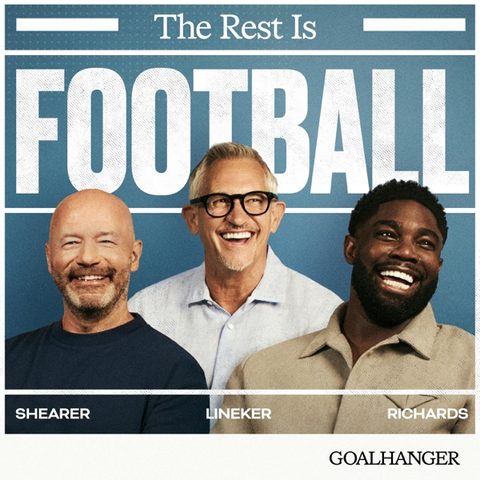
In this episodeGary LinekerJosé MourinhoLouis van GaalSir Alex FergusonManuel NeuerPetr CechDidier DrogbaFernando TorresRonald KoemanMichael CarrickMelbourne VictoryCommon Goal
▸Chapters
Tap a chapter to play it from that moment in the show's own player; the transcript opens there too.
“But after time, you realize it's not that easy.”
Juan Mata · at 34:14 — ▶ hear it from here
“I feel that I want to be happy on a Tuesday.”
Juan Mata · at 58:49 — ▶ hear it from here
▸What this episode covers
Juan Mata, a former Spain international, explains why he chose to stop playing after a final season with Melbourne Victory in Australia. Physically he could no longer do what he wanted on the pitch, and after years of chasing the game's joy again, it had become routine. He preferred to leave on his own terms rather than be forced out by injury. His family wanted one more season, but he says the decision had to be his own.
Looking back, Mata traces his path to a father who was a left winger in Spain's lower divisions and never reached the top flight. Mata made his La Liga debut for Valencia at 19 and treats everything after it as a bonus. He left Real Madrid's academy at 18 because the club's star signings left little room for young players, and at Valencia a coach gave him a real run in the team. After spells at Chelsea, where he helped win the Champions League, and Manchester United, where expectations weighed heavily, he went on to Galatasaray, Japan and Australia.
The conversation also covers life after football. Mata is working towards coaching badges but has no fixed plan, and says he wants to avoid the constant highs and lows of management. He runs Common Goal, a movement he set up in 2017 to link professional football with grassroots work, and he is involved with Right to Dream academies that support players who do not make it. He chairs Melbourne Victory's football committee. His advice to his younger self is to protect his joy, adapt, stay resilient and focus only on what he controls.
Have a recording of your own? Paste a link or upload it.
WhipScribe sends back a timestamped transcript, like the one on this page.
Every recording starts with a free preview. Full transcripts come in packs from $4 for 300 minutes. Uploads up to 10 hours or 5 GB.
▸Juan Mata on The Rest Is Football: the answers
Who is Juan Mata?
Juan Mata
Juan Mata is a former Spain international who won the 2010 World Cup, the European Championships and the Champions League with Chelsea during a long career. He has retired and now chairs Melbourne Victory's football committee.
What did Juan Mata say about Real Madrid?
Juan Mata said that joining Real Madrid's academy meant dreaming of the first team, but after a couple of years he saw how hard it was to break through at a club signing big international stars. He left for Valencia at 18 because he could not find his place at Real Madrid.
“I mean, when you go to Real Madrid Academy, your dream is to play in the first team, of course.”Juan Mata · 19:32
What did Juan Mata say about Petr Cech?
Juan Mata said Chelsea goalkeeper Petr Cech saved his penalty in the Champions League shootout in Munich, and that this meant Mata was not the player who lost the trophy. He joked that Cech saved his career, and possibly his life, because Mata would otherwise have been the only player to miss.
“I always say that Peter Cech saved my life”Juan Mata · 32:51
What did Juan Mata say about Jose Mourinho?
Juan Mata said Jose Mourinho was a very funny man when Manchester United were winning and had a good relationship with the players, though he was tough when they lost. Mata said he wanted to prove he was an important player for Mourinho after the coach arrived at United, and that they won trophies together.
“he can be a very funny man when we are winning”Juan Mata · 46:57
What did Juan Mata say about Louis van Gaal?
Juan Mata said Louis van Gaal held a one-on-one interview with every Manchester United player in his first season, asking who they were as people. Mata described van Gaal as intimidating but very warm, and said he became emotional when talking about human gestures from players.
“I remember he cried sometimes talking to us”Juan Mata · 44:41
What did Juan Mata say about Melbourne Victory?
Juan Mata said his time at Melbourne Victory in Australia made him feel 19 again, and that he played some of the best football of his career there. He said the club's relationship with its coach, players and fans made the season enjoyable, and that he chose to end his career there.
“to be honest i felt like i was 19 again”Juan Mata · 57:22
What is Juan Mata's main argument on The Rest Is Football?
Juan Mata argues he chose to retire while he still enjoyed the game, rather than being forced out by injury or by the routine that had crept into his career. He says football should treat players as humans, support those who do not make it through academies, and that players should focus on the attitude and professionalism they can control.
Mentioned in this episode
CompanyReal Madrid
CompanyValencia
CompanyChelsea
CompanyManchester United
CompanyMelbourne Victory
CompanyRight to Dream
OtherCommon Goal
PersonJose Mourinho
PersonLouis van Gaal
PersonSir Alex Ferguson
PersonManuel Neuer
PersonPetr Cech
PersonDidier Drogba
Episode facts
Released
November 20, 2026
Length
1 hour 3 minutes
▸Key takeaways
01Juan Mata, a former Spain international, retired after a final season with Melbourne Victory because he could no longer move the way he wanted on the pitch.
02Mata left Real Madrid at 18 because the club's star signings left little room for academy players, and found a regular place at Valencia.
03Juan Mata says 99% of his Real Madrid academy teammates never reached La Liga, and argues clubs should do more to support the players they release.
04Juan Mata says overthinking his career in later years drained the joy from his play, the opposite of his carefree early years at Valencia.
05Juan Mata tells his younger self to control only his attitude and effort, because the rest of football, including coaching decisions, is out of his hands.
▸Questions this episode answers
Q1Why did Juan Mata retire from football?▾
Juan Mata said he retired after his final season with Melbourne Victory in Australia. He said he could no longer move on the pitch as he once could, and that the game had become routine. He wanted to end on a positive note rather than through injury, and he said he had felt the last game might be his last while playing there with his family in the stands.
Q2What did Juan Mata say about José Mourinho at Chelsea and Manchester United?▾
Juan Mata said playing for José Mourinho at Chelsea was the toughest part of his career. After being voted player of the season for two seasons in a row, he fell out of the first team from September to December when Mourinho brought in new players. At Manchester United he said they had a good relationship, and he described Mourinho as funny when the team was winning and tough when it lost.
Q3What did Juan Mata say about leaving Real Madrid for Valencia?▾
Juan Mata said he left Real Madrid's academy at 18 because the club's mix of galácticos and academy players left him no clear place in the first team. He moved to Valencia, which he said was then Spain's third club behind Real Madrid and Barcelona, and he found the first years hard when he was out of the squad. He said a Valencia coach who saw him training gave him a real chance to establish himself.
Q4What did Juan Mata say about Louis van Gaal as a manager?▾
Juan Mata said Louis van Gaal was intimidating when he interviewed him early in Mata's television days at Ajax, but he later found him warm. In his first season at Manchester United, van Gaal held a one-on-one interview with each player and asked who they were as a person, not only as a footballer. Mata said van Gaal sometimes became emotional when talking about human gestures from players, and that the team won the FA Cup under him.
Q5What did Juan Mata say about his penalty in the Munich shootout and Petr Cech?▾
Juan Mata said he took the first penalty for Chelsea in the Champions League shootout in Munich, and that Petr Cech saved it. He said Chelsea's goalkeeper coach had told him that Manuel Neuer dives to his left, which was Mata's favoured side, so he aimed there, but at the last second he switched. Mata said Cech saved his career, and that Chelsea won the shootout after Didier Drogba scored the final penalty.
Q6What did Juan Mata say about Common Goal and Football for Good?▾
Juan Mata said Common Goal, the movement he created in 2017, is meant to close the gap between professional football and the Football for Good work that has historically been separate. He said he will stay involved with Common Goal and Football for Good after retiring. He also said Right to Dream, the academy group whose San Diego club he has a stake in, cares for players as humans and gives tools to those who do not make it.
▸Transcript
Our own transcript of the public episode, with a timestamp about every 90 seconds. Tap a timestamp to play the episode from there in the show's own player; the link button on a paragraph copies a link that opens this page there.
0:00Hi, this is Gary Lineker from Goal Hangers. The rest is football. This episode is brought to you by WISE. It's only when you start moving money between currencies that you really think about the exchange rate, the fee, and what might be hidden away in the small print. Whether you're living abroad, paying someone overseas, or just trying to manage your money across borders, you want a fair exchange rate, an easy transfer, and no surprises along the way. Wise keeps things simple. Wise is a smart way to move the currencies you need around the globe. It works in more than 160 countries and with over 40 currencies. Most transfers arrive instantly. Wise uses the mid-market exchange rate, like the one you see on Google,
0:42with no markups or hidden fees. So when money needs to move, you can see the rate, know the fee you see on Google, with no markups or hidden fees. So when money needs to move, you can see the rate, know the fee, and get on with it. Join millions saving billions on hidden fees by downloading the WISE app today. Be smart, get WISE, T's and C's apply. Are you looking for support in your weight management journey? Zepbound Terzepatide may be able to help. Zepbound is a prescription medicine used with a reduced calorie diet and increased physical activity to help adults with obesity or some adults with overweight who also have weight-related medical problems to lose excess body weight and keep the weight off. Zepbound is approved as a 2.5, 5, 7.5, 10, 12.5, or 15 milligram injection. Zepound contains terzapatide and should not be
1:28used with other terzapatide-containing products or any GLP-1 receptor agonist medicines. It is not known if Zepound is safe and effective for use in children. Don't share needles or pens or reuse needles. Don't take if allergic to it, or if you or someone in your family had medullary thyroid cancer, or if you've had multiple endocrine neoplasia syndrome type 2. Tell your doctor if you get a lump or swelling in your neck. Stop, ZipBound, and call your doctor if you have severe stomach pain or a serious allergic reaction. Severe side effects may include inflamed pancreas or gallbladder problems. Tell your doctor if you experience vision changes before scheduled procedures with anesthesia, if you're nursing, pregnant, plan to be, or taking birth control pills.
2:09Taking ZepBound with a sulfonylurea or insulin may cause low blood sugar. Side effects include nausea, diarrhea, and vomiting, which can cause dehydration and worsen kidney problems. Talk to your doctor. Call 1-800-545-5979 or visit zepbounce.lily.com. and Violent Night 2. Expect over-the-top action and big laughs. Plus, Kristen Bell joins the mayhem as Mrs. Claus, ready to slay alongside Santa. You better watch out, you better not shout, and you better watch Violent Night 2, only in theaters December 4th. Hello and welcome to The Rest Is Football for a very special episode. Joining us today is a man who, after two decades of gracing the beautiful game, has decided to hang up his wonderfully worn boots.
3:22It was quite the career. He won pretty much everything. A World Cup, the Euros, a Champions League, FA Cups, Europa Leagues, a Copa del Rey, a Turkish Super League and a J League. Worked it out? It is, of course, Juan Mata. A man, I would say, who transcends his sport. That rare footballer that is universally popular. Juan, thank you for sharing with us such a significant moment for you difficult decision? well yes and no I think of course yes because it's you know to stop something that you've been doing 30 odd years something that you love to do and that has given you so many happy moments is tough but also I'm really thankful and grateful and I think you feel it when it's enough you feel when you're excited for the next step in your career in your life and
4:12so it hasn't been difficult the actual decision maybe in the future i tell you well i find it so tough but i'm i'm really grateful for what i've lived through through football emotional so yeah some emotional moments when you actually realise this might be my last game. That's what happened actually in my last game in Australia. I didn't know if it was going to be my last game, but I kind of felt it. My family was there. Everything was perfect during the season. So inside of me, I thought maybe this is it. I wanted to come back to Europe and give it some time to the decision, but I think I already knew. It happens to all footballers. It has to. Was there a moment, perhaps on the field, where you start to think, my powers are waning a little?
4:57To be fair, I've been lucky because it hasn't been a physical, challenging decision in terms of I couldn't move anymore neither mental but over the last years in my career I've been wanting to fall in love again with the game I had great experiences but sometimes it became routine so I wanted to feel I enjoy this game again to finish and thankfully that happened last season at Melbourne Victory. You wanted to go out on a high. I wanted to leave in a moment where when I look back, I was going to say, you know, that was the right moment to do it. I didn't push it a lot farther. I couldn't move myself on the pitch. That's why I stopped. And thankfully I didn't stop because of an injury that sometimes happens. So I think it's a good feeling to be in charge of when you finish
5:48and I wanted to do it that way. And family and friends, what did they think of the decision? Yeah, I mean, they knew it had to come at some point. Of course, they were trying to convince me not to and keep playing one more season because they saw how happy I was last year at the end of the day it has to be your own decision and I felt inside of me that I wanted to end with that positive feeling. That's quite a career haven't you I mean a astonishing career long career successful career almost everything when you look back now perhaps that young lad who started to kick a roll around I mean it's it's been way more than I ever dreamt like so my dad used to be a professional football player and he played in
6:35did he play like you? yeah he was left footed he claims he was better than me probably he was I don't know but he was he was a proper left winger at the time where left footed players were playing on the left and not on the right coming inside so he was a proper winger he was for sure better than me at one against one and he was quicker than me he was great at free kicks I tried to live up with his standards and he played so many years in second division but he never made it to La Liga to first division he promoted but he never played and so my only dream was to play one game in La Liga to make you dead yeah to make him happy through me let's say anyway that was my like family dream and I was lucky
7:22to do that when I was 19 for Valencia against Almeria and so everything that came after that it has been a bonus and it has been a lot a lot of bonuses I would I want to come to your career um shortly but firstly I want you to look back I mean I mentioned some of the highlights in my introduction too and they there have been many. What are the moments that stand out for you? Well, I think the first one is my debut with Valencia when I fulfilled that dream. Of course, the first goal, all these things. But when you really think about something that really changed my life or our life or that group of players was the World Cup 2010. It was the first time that spain won the world cup so coming back to spain and celebrating was with everyone was something that
8:12i will never forget um champions league with chelsea also the first time for for the club something you know that night in munich just incredible playing against Bayern Munich in Munich my first game with Manchester United you know the feeling for to play at Old Trafford at home is is incredible and of course the trophies we won there are most of all and most of course not only the trophies but the the ability to live life and doing something that you love, to travel the world, to get to know different places and to make so many people happy. I mean, sad sometimes, but most of the time, thankfully, happy. And, you know, football is an incredible way of living. And if you become a professional football player, it's a dream.
9:04How do you think you've managed to be universally liked? I mean because you know I generally think you are I mean I don't know anyone that's got a bad word to say about you Juan and I mean obviously you've done amazing things and we'll come to those later with the charities and etc but as a footballer it's quite unusual that unusual that you can play for clubs like Chelsea and Manchester United in this country, and still fans of opposing clubs will respect you and say he's a good person. I think at the time when I was playing for Chelsea and everything was going great and suddenly it didn't go so well for me and I stopped playing, I think everyone or most of the fans understood that maybe the best for my career
9:46was a change. To be honest, I'm really thankful that every time I came back to Stamford Bridge, everyone was so nice to me in the stands and clapping to me. So I don't know. I just try to respect every club, respect the history of every club, respect the fans. For me football as we know it without fans means nothing so I always try to be respectful to every fans of the clubs that I played with and I don't know if that resonates with people. Let's go back to the start. I mean you're obviously influenced by your father being a footballer himself. Was it always football for you as a kid it was yeah all i can remember is me going to his games his trainings going in the dressing room playing football at
10:34home with with my sister so my mom my sister and me will always travel within spain because of my dad's different clubs so as far as i can, I was with the ball at my feet. And you know how football, it's like a religion in Spain. You play everywhere, anywhere. So all I can remember is me playing with the ball. And that's something that Spain has over everyone else at the moment, that technical side, the thoughtful, the intelligent side of the game. Why do you think Spain has the edge in that sense? Well, I think it's a combination of things. Of course, like I told you, we are born with a football in our feet. We play all the time in the streets, in the school, everywhere. We also have a great setup.
11:21We have great coaches in the academies. They really make you understand the game they can help you and they do help you to become a better football player so the pursuit of becoming professional it's it's really good in Spain we have great facilities to play football we are kind of street smart also which helps with competitiveness and I think the whole combo makes Spain great it wasn't always like that in Spain I spent three years there in the mid-80s and it was incredibly aggressive yeah the butcher bill Bowne yeah all these characters are you know you look at Maradona's time a big punch-ups at the end of games and crazy crazy stuff I think might have been the turning point and it might you know
12:11i wonder if it was the era when cruyff came in and changed things in the massia certainly that is a pivotal moment in barcelona's history yeah um but i think possibly spain followed suit in that sense of producing really good i mean they were always good technical players yeah but again you're michelle it's a great players in that era but how they are now how have they been the last couple of decades since your time as well I mean the streets are high yeah I think the big change was actually when we went through the quarter finals we had this challenge always of arriving to quarter finals and then losing against the big countries in football like England now yeah exactly so we we beat Italy in the 2008 and so Luis aragonese was the
12:52national coach there and I think he changed the dynamic of you know he made everyone believe in themselves like we can beat big historical countries in football and we can make it happen through our small quality players and he changed the dynamics I played for him as well did you? yeah Barcelona for one year he was amazing what a character and did he still do that thing in the dressing room where he'd get everyone to touch the ball? I didn't play for him I came with Del Bosque in 2010 but they told me my generation told me that he made all kind of things in the Dresden Romand in terms of how to motivate and all that but he I think he was the start of what we're seeing right now and then of course
13:33we think Del Bosque took over and we won what we won but now it's nice to see how the new generation is actually being the best in the world for me by far the last I don't know you've won so many major trophies now inain it's been impressive you were part of that first world cup when you mentioned it earlier i have to say that that must be just to live through winning a world cup and be part of that squad must have been so special it was really special i mean for for different reasons the first one is that i was 22. so i always say that it was the best thing that could happen to me to be in that national team but it was also challenging because it was difficult to play i mean you had andres iniestas and chavi alonso
14:16and chavi and everyone was 25 26 at their peak so basically I was there learning a lot, but also experiencing everything and I managed to play. But, you know, to be in a tournament where you start feeling... And we started the first game losing with Switzerland. So there were a lot of critics. We were, of course, the European champions at the time. But I remember the third game that we played in the group stage against Chile. I've never felt so nervous in my life. And I think everyone was the same. I remember going in the bus to the stadium, total silence. Because you lost your first game. Exactly. So we had to win. At the end, we could have drawn that game, but we had to win against Chile, Marcelo Bielsa Chile,
15:03which is very difficult. And so I remember Vicente El Bosque inspirational motivation meeting. And, you know, it was a tough moment because it could have been a big failure. And so we won that game. And from there, you start feeling something special can happen here. But what happens in the World Cup and in the Euros is that not always the best team wins you need to be lucky at certain times and I thought we were too Winning the Euros in 2012 you'd already obviously won defending the Euros because you won it in 2008 you were part of the squad of course for the World Cup in 2010 coming on and scoring in a final when you blitzed Italy. I was at that game. Yeah. I mean, Spain was so good that day.
15:50I think that was our best game, actually. Because we didn't play that good during the tournament. But of course, we managed to win and win. But that game, it was nice that we played our best football. And yeah, I remember, first I remember being warming up for too long. I didn't think he was going to get me on. Yeah, exactly. I mean, I don't know about people. I mean, when you're on the bench in a big game, you're just desperate. Especially in the final and it's 3-0 and you want to be part of that. And I was just, I didn't think I was going to come in. But then, you know, he called me thankfully and I came in. To try and catch his eye. Yeah, yeah. I went to drink so many times. I'm still here. Anyway, I'm thankful to him and he put me in. You tried to catch his eye. That's the only way. Yeah, yeah. I went to drink so many times. I'm still here.
16:27Anyway, I'm thankful to him and he put me in. And then the first two minutes or something like that, I scored. A pass from Fernando again. Your friend? No wonder he's your friend. He told me he passed me because he heard me. He couldn't see me, actually. He was one against one against Buffon. He had a tendency of going for it himself as a striker. But I screamed as loud as I could and he passed me an open goal. But that moment of scoring the fourth goal in the final, my family was there, everyone was there. And it was kind of closing the circle of that 2008, 10 and 12. And it feels really nice to think about that memory did that make the memory for you more special in 2012 than 2010 because you didn't
17:11feature in the final I never thought about that difficult to be honest I think a World Cup it's just up there and nothing can match it even if you don't play the final it's funny because when Iniesta scored that goal I was on the bench and if we had GPS's at that time that was my my highest speed for sure celebrating all of us we went to that corner and I don't know what I hit but I tell you it was the highest in my career but it's difficult to compare but i mean the celebrations of both tell us what tell us i mean we don't know we have well there's hardly anyone even i'm not old enough to remember 66 i was five years old at the time tell us what i mean the feelings and the celebrations must have been it was it was not only the celebrations of course uh in south africa in
18:02the stadium and realizing what have we done here it was the flight back straight back so nobody slept in that flight of course Pepe Reina was making sure that the music was loud enough then we arrived the next day and of course we do all these Royals and we visit the Prime Minister the President and everything and then we do the parade with the bus i've never seen so many people in my life together it was challenging times in spain financially and we managed to bring everyone together celebrating the the first world cup and i remember landing with the plane and so the motorway everything was stopping everyone was out of their cars in Madrid through the streets you could not see pavement at all it was all in the windows and it was millions of people on the
18:51street I get goosebumps talking about it and so we had a big party there in the stage then we went for dinner and I think a nightclub or something all together then the next we didn't I mean it was a day that it was not 24 hours, it was 70 hours. And I slept for four days after that. But that was the best part of winning, coming together with our families and with everyone in Spain. I still think you're the best team. And I think they were the best team this year as well. Yeah, I thought so. I mean, France, of course, had an incredible squad. But I think the best game of the tournament was Spain against France because France couldn't do anything. Spain was much better than them. You were at the
19:32Real Madrid Academy and then you came through Castilla as the kind of Madrid's second team. You obviously then moved to Valencia. You didn't feature for Real Madrid. No. Was that at the time difficult, disappointing? Yeah, it was difficult. I mean, when you go to Real Madrid Academy, your dream is to play in the first team, of course. But after a couple of years, you realize how difficult it is to play for a club like Real Madrid with all the big signings, international players that come to the club. It's a sort of different approach, isn't it, at Real Madrid with all the big signings international players that come to the club it's sort of different approach isn't it at Real Madrid to Barcelona
20:09Barcelona they seem to rely on the academy and amazing the players that they bring through whereas Real Madrid very much signing the big stars the Galacticos which makes it tougher for young talent like yourself to actually go through and you had to go to Valencia to find them yeah at the time they had a combination of Galacticos which are the big names and some players from the academy but yeah I couldn't find my spot there and the opportunity of going to Valencia arrived and I was only 18 Valencia at the time which is sad to say now because Valencia at the moment is so sad to see but at the time they were the third club in spain for me by far they were ahead of atlantic madrid in terms of winning trophies and being
20:51third after madrid and barcelona so it was a really exciting opportunity for me to play champions league to feature regularly in a top club do you think people underestimate how difficult it is to be a very young man trying to find a career in football it's so competitive so many so many young players that are really talented never make it yeah most don't make it that's the thing right vast majority 99% of the players that we were in in that team when I was 15 16 17 in the Real Madrid Academy didn't make it to La Liga some they made it to professional football in second division and second B, but it's very difficult to actually be the one or the two out of 25 that make it. And that's football, of course,
21:35that's the competitiveness of wanting to become a professional football player. But I think there is more work to be done there in academies to actually care and take care of the ones that don't make it because I had so many teammates that at 15, 16, they focused everything on their life to become a professional football player. And then they have to deal with what they think is failure. Exactly. And when you're told when you're 15 or 16 that you're not good enough, it's very big. What do you think clubs can actually do about that? I think there should be more support to the ones that don't make it in terms of providing other opportunities because of course our dream was to become a professional football player and we were lucky
22:17to do it. But if you don't do it, it's fine. Life goes on and thanks to football you should have other tools to develop yourself and i think clubs could do more in that sense do you think it was an advantage having a dad who was a footballer i think it was an advantage to have my mom and my dad who let me be actually because you know sometimes that's quite interesting one because a lot of people say and i've had these arguments as well and i'm on your side i think on this one a lot of people say, and I've had these arguments as well, and I'm on your side, I think, on this one. A lot of people will go, you need parents that push you, that drive. And then they always cite the Williams sisters as an example.
22:53I mean, I think the Williams sisters would probably be quite good at tennis anyway, even if they hadn't. But I agree with you. My dad was supportive but not pushy. And I think so many parents drive their kids away from football because they're trying to live their dreams through their kids. Just let them play. Yeah. Let them enjoy. They'll find their level. Yeah. No, I agree. And, you know, I had experience of being with teammates that they didn't want their parents to go to the games because their parents were so pushy and don't pass the ball, shoot yourself, don't listen to the coach listen to me and all of these unhealthy things that happen in spain and probably everywhere else because certainly happening yeah so i was very lucky
23:34because my parents let me be and you know i made my own way and i did what i did but if i was not a football player they will have been fine with that. So my dad used to play football, but was never pushy in a negative way. He gave me some tips that helped me, but always in a supportive way. Yeah, and obviously he always thought you were better than you. He and his friends claim that. His friends claim it as well? Yeah, yeah. I mean, he was very good. He says that he was not lucky and whatever he certainly was a good football player he was he made his debut in Real Oviedo our team when he was 16 so he must have been good did you enjoy football when you were trying to break through because that's
24:17I think that's the hardest bit when you're a youngster you're trying to make your way you go from the youth team to perhaps the second team and then you can't quite get in the first team and it's the worrying time which I think for most young players once you've established yourself yeah I think you can live with yourself more you see it was the opposite for me so when I was playing at Real Madrid and I was playing my first years at Valencia I didn't really think too much about what I was doing. I was just playing, finding my level, trying to improve and always consistently improve and develop as a player. So, of course, it was challenging times in the beginning at Valencia when I arrived because I didn't play.
24:58I was out of the squad and then you start to think, you start to question the decision of having moved from Madrid to Valencia. But at that time, especially early years in my career, I was not really thinking of what I was doing or what I was achieving. I think later in your career, where you are probably more mature and you realize what you've done, it's more difficult to satisfy your own expectations. So there is this dilemma of when you don't think too much, you tend to perform better. When you start thinking a lot, you start doubting yourself and knowing what it means to score a goal or to lose a penalty. And then the joy of the game starts to disappear. And that's what kind of gradually happened in my career until last year
25:45sometimes you need someone that's really supportive was was ronald that man yeah he basically was the most uh instrumental coach in in my career of course the academy coaches but he was the one when he arrived to valencia and i was not playing i was out of the squad he saw me training and he said why are you not playing I said well it's supposed to be meant for me and so he said don't worry keep doing what you're doing and I believe in yourself and he gave me actually not one game or two games he actually gave me a real chance to establish myself on the first team and of course you have to take the advantage of it and that's what position left winger that's right yeah do you think that was your spot
26:28your position where you felt I mean you could move around you could play midfield you could play as a 10 you could yeah at that time in my career it was left wing I was quicker back then than in the second half and we're all quicker when we're at 20 than we are when we're in our late 30s or mid 60s exactly so left wing was the natural position for me but I think overall if I have to look back my ideal position as a creative player would have been number 10 now what happens with number 10 positions that gradually in football started to disappear somehow so number 10 was normally deployed on the right or on the left it came back now yeah that's right in football started to disappear somehow so a number 10 was normally deployed
27:05on the right or on the left it came back now yeah that's right so it came back now but for a couple of years there it was more like 4-3-3 or 4-4-2 without the proper number 10 I mean I can think of number 10s at your time they were fantastic Diego Tricuartista yeah exactly connecting as much as anyone but I mean talking about good players I mean Valencia 10s at your time and they were fantastic that Diego trick one tista yeah exactly connecting as much as anyone but yeah I mean talking about good players I mean Valencia at that time and I know you you've already said that that's really struggling now in that era you were in the Europa League yeah obviously he had the likes of David Villa David Silva I'lla, Joaquin, Vicente, Moriente.
27:47I think there were seven or eight players at the same time from Valencia that we were going at the Spanish national team. And I don't think that ever happened before. So we won the Copa del Rey with Koeman. And we had an incredible dressing room. It was very important for me also to have these players like Villa which is from Asturias like I am Silva and all the great players around me to keep improving I always been one that when I arrived to a certain dressing room I of course when I arrived to Chelsea when I arrived to United they were fantastic players but I always tried to make myself the best I can be within that level. And so that happened always through my youth years, but especially during my professional career.
28:31So Pia, Silva, we enjoyed so much together. Incredibly good, gifted players. Was it difficult to leave Valencia? Because you're not just leaving that, you're leaving your country and going away as a young man. I felt it was the right time. At Valencia I was there for four fantastic seasons and we had success. The club was already in a very difficult financial situation. So the year before Villa and Silva left because the club needed money and then the following year which I was made captain and I was going to you know have real importance in the club and an opportunity came to go to Chelsea to change completely my life and I felt it was the right time and Valencia as a club needed that transfer too
29:20so How did that come about the move to Chelsea who contacted you or your representative so my my dad was always my agent yeah so from chelsea directly they they called him um i had a conversation with andre villas boas the coach at the time my good friend uh fernando torres was at chelsea and he was an instrumental part of the move actually. He was calling me... Where was your friend from? From the national team. From the national team, yeah. He's probably one of the most important teammates in my career basically because of what we lived in the national team but especially because he pushed a lot for me to go to Chelsea and you know since the first day that I arrived to London, I felt that I loved it.
30:08I love this country. I love the Premier League. I love, of course, it helped that I scored a goal in my first game against Norwich. And, you know, when you arrive to a place and you feel this is right for me, I felt like that. Yeah, I mean, you had some great, great memories at Chelsea and that extraordinary season when you won the Champions League. I mean, you've already, you've already mentioned that you went to Munich, but it wasn't just the Munich, was it? It was the, the wins in adversity where almost being outplayed in the quarterfinal, was it? Napoli? Napoli, yeah. Semi-final, Barcelona was extraordinary. Yes, that game. I still don't know how we went, honestly. Aboutemi-final. Barcelona was extraordinary. I still don't know
30:45how we went. Honestly. That game in Barcelona. Even down to 10 men as well. Yeah. And I think Messi missed the penalty. That whole season was just because we started with Villas-Boas. So things were going well in the Champions League but not in the Premier League. And then after Napoli which we lost 3-1 I believe. Villas-Boas was out and then Di Matteo took charge, which was his assistant. And then he found a way of, you know, making everyone believe we came back in that quarterfinal against Napoli and then, yeah, the semifinal against Barcelona. I still don't know how we made it. And then also in the final, I still don't know how we managed to pull that one out the final I still don't know how we managed
31:25to pull that one out yeah I mean it was obviously a great moment I mean the drogba header was fantastic I've got to ask you though because I heard Petr Cech talking about the penalty shootout now you took the first penalty yeah and the goalkeeper saved it yeah now he insists that all along they'd done so much research that Manuel Neuer always, if it was a left-footed taker, would always dive to his left. And that was your favoured penalty generally, to the keeper's left. And you were practising, tit it to the keeper's right, then you'd open up and just knock it in there because they knew that Neuer would go to his left what happened? well yeah that's that's true like after the extra time it was an extra time
32:16and everything and so the goalkeeper coach came to me and I wanted to shoot and I told Di Matteo I wanted to shoot the first one and the goalkeeper coach came to me and he said you Matteo I wanted to shoot the first one and the goalkeeper coach came to me and he said you know Neuer goes to his left right I said okay okay that was my favorite side anyway then I put the ball I go back I take my time and when I'm making the run up to the ball I feel that I'm showing too much that I'm gonna play to his right you know at that stage yeah I swear I felt that and so I was thinking I'm showing too much that I'm going to play to his right. At that stage? Yeah, I swear I felt that. And so I was thinking, I'm showing too much that side.
32:51So in the last second, my muscle memory or something came and I should have left. And of course, he was waiting for the ball. And from that moment, honestly, when I walked back to my teammates and they scored and then we score and they score again and I was just pleased I don't want to lose the Champions League because of only me only my penalty marginally terrifying I would say wouldn't it so I always say that Peter Cech saved my life he did save my life he did save my life because imagine that I am the one that missed the only penalty because we all scored I'd say saved your career maybe my life because imagine that I am the one that missed the only penalty because we all scored I saved your career
33:26maybe my life I think I think my life I mean how relieved were you when you won that must have been that must have been added to the glory of winning the Champions League that was I mean it was relief it was relief actually when they missed when Peter saved of course I wanted to win but at that time I was like okay then we are not losing because of me and so but when we won and Didier scored that penalty which I thought it was meant to be I thought it was written that we had to win in Munich against Bayern Munich that way with Didier also scoring that final penalty it was relief and it was just an incredible happiness. And at that time in my life, it felt that everything was good. Like it was winning after winning
34:14and then the Euros and the Champions League and the Europa League and the FA Cup. And you felt, oh, football is easy. You just have to play and it will win. But after time, you realize it's not that easy. Yeah. Let's take a little break there's a lot to discuss when we come back this advertisement is brought to you by Guinness the Premier League is in full swing and with Black Friday coming up it's the perfect time to give your home viewing set up an upgrade well I've done that myself actually Mike I've got a new media room now and I'm looking forward to sitting in the cold in the winter and watching loads of football with a pint of Guinness in hand. Which calls for one of these, boys. Here we
34:56go. Look, the old nitrous surge on here, boys. Here you go. It's a pub-like pint at home, Al. Cheers, boys. Cheers. Enjoy a perfect pour at home with the Guinness Nitro Surge device available at selected UK retailers. Get one for yourself or a friend on Black Friday and make your match day lovely with Guinness. Official beer and non-alcoholic beer of the Premier League. 18 plus for the facts. Visit drinkaware.co.uk. Please drink responsibly. Ulcerative colitis and Crohn's disease symptoms? Don't pause for the moments that matter. That's why understanding your treatment options matters. Discover what's possible with Trimfiya. Guselcomab. Trimfiya is a prescription medicine used to treat adults with moderately to severely active Crohn's disease
35:51and adults with moderately to severely active ulcerative colitis. Serious allergic reactions, increased risk of infections, or lower ability to fight them in liver problems may occur. Before treatment, get checked for infections and tuberculosis. Tell your doctor if you have an infection, flu-like symptoms, or need a vaccine. Talk to your doctor and explore what's possible, or call 1-800-526-7736 to learn more about Trampaya and visit trampayaradio.com. I'm pro-football Hall of Famer Brian Dawkins, and I lived for a long time with something I did not know the name of major depressive disorder. I carry sadness and anger because I thought I could handle it alone, but I couldn't. Now I want to make sure others know that that support is out there.
36:37If you're experiencing similar symptoms, talk to a health care professional. Visit MDD allies dotcom to watch my story. Paid partnership with Johnson & Johnson. Brian Dawkins has not prescribed Caplyta Lumateperone. This little item of mine In the dark found a hopeful sign I needed more from my antidepressant, so my doctor added Caplyta Lumateperone, proven to provide greater relief from depression symptoms than an antidepressant alone, building on my progress without starting over. Caplida is for adults with major depressive disorder when used with an antidepressant and is available by prescription only. Individual results may vary. In clinical trials, weight gain was not common. Elderly dementia patients have increased risk of death or stroke.
37:20Caplida is not approved for dementia-related psychosis. Call your doctor about new or sudden mood changes, behaviors, or suicidal thoughts right away. Antidepressants may increase these risks. Report fever, confusion, stiff muscles, which may be life-threatening, or uncontrolled muscle movements, which may be permanent. High cholesterol and weight gain may occur, as can high blood sugar, which may be fatal. Monitoring is recommended. Common side effects are sleepiness, dizziness, nausea, dry mouth, feeling tired, and diarrhea. These aren't all the side effects. Ask your doctor about Kaplida. Learn more at kaplida.com or call 888-252-4824. Welcome back to The Rest Is Football with me, Gary Lineker.
37:57And today I'm delighted to be joined by Juan Mato, who's just announced his retirement from football. And we're discussing what has been a phenomenal career. We're at the stage where you're at Chelsea. I mean, Chelsea went through managers and still do. Yeah. You played for some interesting managers, most notably, of course, Jose Mourinho. Yeah. What was he like to play for? Well, I played for him twice. Yeah, Man United as well. Not only in Chelsea, but in Man United. In Chelsea it was tough for me, of course, because I was having a great time, playing a lot, winning, voted player of the season for two seasons in a row. And so I felt that was at the top of my game. And then this is something that you learn also
38:40during your career, that football can change so quickly. And so he came in, he brought different players and I was not playing so much. And then from September until December, I was just not a first team player. I was playing some games, but not... How frustrating was that? It was tough. It was probably the most challenging part of my career. When you still, when you actually believe that you're at the top of your game and then suddenly you... Did you knock on his door? We talked. There was nothing personal. It was his idea of football, my qualities as a football player, probably the squad that we had at the time, the players that he brought in. So, I mean, you have to accept it, right? You don't have
39:21the last word when it comes to who plays or who doesn't. It's the coach. So I kept professional. I kept training. I kept being a good teammate. And so then the opportunity of going to Manchester United came. And I think when a club like Manchester United calls you, it's difficult to pass it. That might have changed a little bit. So I still you know of course challenging times of course during my time also challenging times after Sir Alex left I just arrived when Sir Alex retired and it was always going to be difficult when someone like him of his stature and his power in the club and his legacy stops it's going to be difficult for anyone that comes after but I always say that the feeling of having been a Manchester United player in the club and his legacy stops, it's going to be difficult for anyone that comes after.
40:08But I always say that the feeling of having been a Manchester United player is unique. And there were some good and bad moments. Now they're tough times, but I really believe that the club is, you know, it's something unique in the history of football, something special. Old Trafford is a really special place to call home. And, you know, I'm happy with the time that I spent there and I realised how big of a club it is. How did that move transpire? I have a couple of options. When I was at Chelsea at the time and the January market came along and I had different clubs calling i was not sure about staying in the premier league and playing for a different club other than chelsea but at the end of the day united war was trying to rebuild after sir alex we still had a great
40:57squad with the likes of rooney van percy ferdinand big players were r Ryan Giggs was still there and so I wanted to live that experience again the club contacted my dad and the deal went went through at the time it was the highest transfer for Manchester United in the history which now I think is the 25th how times change most expensive I'm an old man yeah but so at the time it was yeah it was just another big move How times change. More expensive. I'm an old man, yeah. So at the time it was, yeah, it was just another big move and a new stage of my life. Yeah, yeah. It must have been quite exciting to go. It always is when you move to another club. I think it's always, there's an element of the unknown,
41:40there's the element of excitement and obviously ambition but it was the start as well of united post sir alex ferguson the things were a little bit different could you as someone that was there at the start of that could you feel something was changing yeah i mean i could feel that there was a massive challenge in front of all of us as players as coach David Moyes was the coach was the one that called me to come to United which I'm grateful for but it was a challenging time because the expectations are so high at Man United every single year that it's difficult to fulfill them. When the great leader is not there, when players are coming to a certain age, when, you know, in my time at United,
42:29we went through to also different coaches with different styles of play. So it was just looking for something that... Do you think that's one of the mistakes they've made? Because they just went for a big name here. It was completely different styles. So you want these different kind of players. And then they go a different style someone like Mourinho who's different to Van Gaal yeah so we had Van Gaal then Mourinho it was just trying to look for success I believe in a short term view and we kind of achieve that sometimes like we won the Europa League and the FA Cup and of course we won trophies but I believe that for a club like Man United, you have to have a very strong culture of what you want to be, what you are,
43:11and walk towards that with the decisions of coaches and players and go to a certain direction because otherwise other clubs are signing right, are having the right coaches and then you get distance from them. I always thought it was going to be extraordinarily difficult for the person that replaced Sir Alex. It's just impossible. How was David Morris? Because he's just shown he's had such a stellar managerial career. Yeah, of course. It was almost impossible for anyone. But he was a very decent man with me. I'm of course grateful to him. He didn't last very long at the club, again, because of the expectations. But my experience with him is very positive, of course. Talk about one or two of the coaches there.
43:54Louis van Gaal, who's... I met Louis van Gaal once, and I did an interview with him when I was in my early days of doing television. And I went to Ajax to interview him, and I was behind the desk and he was terrifying I mean I'd played at the top but he was so kind of borderline arrogant so I remember because he had this system and the Dutch way of playing and I said what happens when a team eventually works out a way this will not happen with my football and I thought oh okay okay and then I met him latterly and he was actually really nice kind of nice guy but I just think I was a bit in awe of him at the time you know what struck me with him is that he is very if you talk one against one with him
44:41which he did actually in his first season he wanted a personal interview with each player, with Ryan Giggs and a bottle of wine in the table. So he asked you who you are, and I said, well, I'm Juan. I play in this position. He's like, no, no, no. As a person, who you are. So that was really positive to hear from someone like him. And what struck me is that as intimidating as he can be, he's also very warm. I remember he cried sometimes talking to us, saying something nice about how players approach the fans or how good we played in a certain game. He really valued some human gestures and he was emotional when he talked about it so you could see this big man which of course you are intimidated by
45:32but he was very warm and we played good football under him I remember a couple of games against Liverpool and we actually were much better than our opponents but at the end of the day yeah we won the FA Cup with him, but he didn't continue. No, that day, wasn't it? It was that day. I think it was that day, no? Yeah. That he realized. That's right. One thing, the wine on the table, did he share it? He wanted to share it, but I thought it was trying. It was a trick. Yeah. So he was like, do you want some wine? And I said, maybe not now. Rioja. Yeah. He had some Rioja. It was a trick. Yeah, it he was like, do you want some wine? And I said, maybe not now. Rioja. Yeah, he had some Rioja. It was a trick.
46:07Yeah, it was a trick. What were you actually thinking? It was a trick. He's going to share this on it. He's going to wait for me to ask for some. Exactly. Tell me what you felt when you heard Mourinho got the job, because obviously it didn't work for you at Mourinho at Chelsea because you moved on was the part of you going oh no really yeah but you know what I think in different contexts different decisions can be made and so people also change in their process of being a coach of being a player and we never had a personal problem so my family was telling me well you have to leave if he's coming out to united you need to leave because you're not going to play and whatever and i actually took it kind of personal and wanted to challenge yeah i wanted to prove
46:57that i didn't have to leave and that i was going to be important player for him and that's what happened actually and our relationship at United was funny like was good we had a good relationship he can be a very funny man when we are winning I've heard that if you're winning he's great yeah when you're losing he's tough he could just walk past you completely ignoring you yeah he hates losing like we all do but it's tough when you lose and he's the coach. On the other hand, when you're winning and everything is going well, he makes you feel that you're probably a better player than you are. How does he do that? I think it's just a way of communicating, a way of behaving, a way of motivating, a way of criticizing sometimes.
47:42But to be fair, at our time at United, I enjoyed it. And I felt, you know, an important player playing in the finals, playing the important games. I thought he was very good at, you know, picking reliable players. I think he relies on that, actually, in his way of competing. And we won trophies together and we had a good time together. So whether I had more or less time with him at Chelsea in terms of game time, I always tried to face every situation trying to bring what I can bring for myself and trying to improve myself through the challenging moments and I think he helped me do that. Yeah, I mean, he's gone on record as saying, isn't he, that finishing second with Manchester United was one of the greatest achievements
48:29of his career. Could you understand what he meant? Well, what he meant is that we had a good season, that of course the expectation for United is to win but we were the best of the rest and at the time Man City was playing incredible football. And it's funny now to come back to those times because those times were the ones that are being judged now. I was going to ask you about that now because you finished second in the league, obviously, with Manchester United. And City were the winners. So what do you think will happen with Manchester City? I mean, would you be the sort of person that would say, well, they should take the titles off them. If they do, we should have won one. I think I should have won two.
49:16Two, I suggest. Because Ole, you know, with Ole also, I think. Oh, Ole, of course, yeah. Of course, it doesn't feel well as a player that you were second and then suddenly you are a Premier League champion. I wouldn't be specifically proud of that. It's not something that I really want. I think Man City players also will feel disappointed because they were playing football and it was not their responsibility what happened at the office. Of course, you have to follow certain rules in football and if you don't follow them then you cannot compete with the rest in the same position so I don't know what's going to happen I think of course it's a very serious matter and I think the Premier League
49:56has to take it really seriously I don't really know what the accurate punishment is I don't think anyone knows yet everyone's got their theories and they might do this they might do this, they might do that. And I guess there's the ongoing appeal, but I think it's highly unlikely they'll probably win that. We'll see what happens. You play with Michael Carrick as well, of course. What do you think United need to change to get right, to get back to the huge football club, successful football club that they were I know it's not an easy question but what do you think the answers are well first of all I think you know I play with Michael and not as a player of course which I used to call him the quarterback because he will always find
50:39you in front of him I suck a Spanish kind. So if you're number 10 as your own winger, he will always find you. Fantastic player for me, underrated player. And as a person, I actually wrote in my book that if you want to become a professional football player, you should aspire to be Michael Carrick as he is, as a teammate. So of course I'm suffering because of what's happening because I wish him and the players the best the question is a question that's been ongoing for many years and I don't really have a short answer to it I think it's more about who the club wants to be and respecting the history respecting the legacy but actually making decisions towards what the club wants to be. Having a certain style of play,
51:28signing players and coaches in that style of play. And I think the road back to success will be shorter than keep looking for short-term solutions. And I understand it's difficult for all of us that we like Manchester United because the expectations are that the club wins soon and so there is a dilemma between keep building for the medium long term which is stronger or trying to win in the short term I think you can try and do both but certainly right decisions and smart decisions need to be made I believe so and I think that's the only way of actually going back to competing with the greatest. Towards the latter stages of your career, you traveled a bit. I did. I couldn't travel further. You knew Japan, Australia, Turkey.
52:20Yeah. Great experience. Cultural differences. Yeah. There was a time when I finished contract at United that at the time I really didn't want to play for a different club in the Premier League I didn't want to go back to Spain at the time I just felt I will have time to go back to Spain at some point so I wanted to do things that I wouldn't do otherwise and I wouldn't have lived in Japan or Australia, probably, if it wasn't thanks to football. So the first opportunity that came was Galatasaray in Turkey. How was that? It was fantastic. It's a massive club, massive club. And of course, you know, it's a big club, but you only realize when you go there. And Istanbul in Turkey, football is, again, religion.
53:04And to have this rivalry between Galatasaray, Fenerbahce, Besiktas, be part of that, be in the derbies, which is the most challenging games that you can play, Galatasaray, Fenerbahce and otherwise and being able to win the league there and enjoy my football. It was the start of a new stage in my career where I wanted to keep competing and keep winning but also i wanted to live in different cultures yeah which you did then you went to japan which i obviously experienced i went to japan come on you're showing off now that's all i can can say. Do you speak Japanese? You were, of course, one of the players that I've always admired. No, and this is not because we're doing this. I mean it. Because you going to Japan and you doing what you're doing after your career
53:57is honestly a big example for me. So players like yourself that went to different cultures are always interesting. And I've actually wanted to play in Japan, for me so players like yourself that went to different cultures um always interested me and i've actually wanted to play in japan and i actually wanted to play in australia so i talked with my dad and we talked with a couple of agents there and i i was the one that said i want to play in this country so what opportunities are here and so bisel cove came along and of course i knew the club because Andres Iniesta was playing there, David Villa played there, Boyan and other players, Samper played there and I wanted to live in Japan so having
54:33the chance to play for one of the best teams in the country and then live in Japan it was a perfect match. It's very different Japan. I've never seen a more different place. But great as well. Incredible. You can learn so many things from Japanese culture. They're just so different in everything we do, in our daily routines. I remember my first day, I went to training, and of course you want to create a good impression, so I went there as early as I could. I don't know. Maybe we had to be there at 8, and I went there at 6. I arrived to don't know maybe we had to be there at 8 and I went there at 6 I arrived to the dressing room there's no one perfect I started to get changed and suddenly I see seven Japanese players going out of the shower because they do onsen they do the whole thing here
55:18the whole before before training which I never seen so they arrived there at 5 30 in the morning then after training I've never seen more more dedicated people and players so after training they spend one more hour practicing control pass control pass or just the how to kick a ball in a free kick so very specific execution movements after that they go to the physio for one hour then they go to the gym for another hour so they spend 10 hours in the in the dressing room um and it's just incredible to see the dedication they they devote to their work actually yeah i mean the food as well i mean great variety great i mean it's not just raw fish everyone was on yeah yeah it's not i mean the sushi is great by the
56:03way but i mean ramen and their own everything so the sushi's great, by the way. I mean, ramen and everything. Oh, yeah. And it's in every restaurant. The quality of the food is fantastic. You don't have to go to the luxury restaurant. Every restaurant is so good. Yeah, I loved it there. It was great. And it's very safe there, isn't it? Super safe. Yeah. Super safe. Yeah, incredibly. Lovely people as well. So all these experiences that you've had, and then Australia as well, all these experiences that you've had and then australia as well yeah which had mixed i think your first time there didn't go that well what was wrong there well actually it happened a couple of times unfortunately over the last years which is
56:36i went to clubs um because the owner or the sports director wanted me, but I didn't have a proper conversation with the coach. And I don't know if the coach was on board onto this decision. So that happened in a couple of clubs and that kind of happened in Sydney. And to be honest, I was so happy living in Sydney and the life there is great. You could put it, we're not playing. Yeah, I wanted to play, but you know, it was fine anyway. But I didn't want to finish my career that way. That's why I wanted to stay in Australia, but then Melbourne Victory came along and the same that happened with my feelings when I arrived to Chelsea, this is right. When I arrived to Melbourne Victory, it was the same.
57:22The coach, we had a great relationship with my coach, with the rest of the players players with everyone at the club with the fans everything started well and everything was so well and to be honest i felt like i was 19 again yeah really not only of course physically i wasn't you felt like you know you wouldn't have retired in my mind not in my legs but in my mind I went to the games just wanting to enjoy and that helped me to play one of the best football that I've played and enjoy every game and not be worried about anything else and you had a great season it was a good season yeah played really well it's funny isn't it that you mind always thinks you're 19 and 20 and I can tell you even now even now there are times It's funny, isn't it, that your mind always thinks you're 19 and 20.
58:08I can tell you even now, there are times. But then you try and get off a sofa and you've been sat on for this and that time and you struggle. There's a lot of life after football. You tell me. I've lived a lot of life after football. You got a plan? No. I mean, not a specific plan? No. No. I mean, not a specific plan. Do you know roughly what you want? Do you want to go into coaching, into management? Do you want to go into television, fundatory, even a podcast now? I think I know what I don't want. You know what you don't want? Yeah. Go on. And I think that's kind of important to build from there. At the moment, I don't need the rush. I don't need the rush. I don't need the competitiveness.
58:49I don't need the high frequency of football. You won't get it. There is nothing. Yeah, but if you get into coaching, if you get into things like that, I don't really want that. I feel that I want to be happy on a Tuesday. I don't want to be sad because I lost a game on a Sunday. And that happens a lot. I worked it out quite quickly as well. I looked at the lives of managers and they were permanently either up there and down there and up there. As a footballer, you're like that. And a footballer as well. But even more so, I think, a coach. Because the responsibility is enormous. I mean, this is about you not me but I just I looked into that media and the television and you kind of get a bit of the camaraderie side of a dressing room
59:34it's smaller but it's still there you still get a bit of a buzz but it's not quite as not quite significant you're still loving the sport watching the sport if you love football, like I always have. So, I mean, if you're thinking of going down that route, I would say it's not a bad world to be in. But you've also, I mean, you've done so much more than football. I mean, your charity, which you set up, what, how long ago was that, 12 years? In 2017. About 10 years ago, almost 10 years ago. Tell us about that because it's been a huge success. What you did was amazing. I mean, I think it's part of the process of having played football for so long and realizing the power of football. And I think
1:00:18in this next phase of my life it will be also about trying things and see what resonates with me, what it doesn't because yeah maybe i i you know try and get into the coaching role but not right now i'm doing my badges and everything so basically because i don't have a specific idea of what to do i want to learn as much as i can to open all doors so you make a decision on it but what i know is that i will still be involved in football for good likeal, which is the movement we've created in 2017, in which basically what I try to do, what we try to do is to create a smaller gap. So make the gap between professional football and Football for Good, which historically have been separated, because we know that football is not only winning the World Cup.
1:01:04Football is so many millions of people playing the sport and trying to have better tools to develop themselves as humans, as persons, thanks to sport and thanks to football in particular. And I think there is nothing like sport to get to people, to communicate with people, especially with the youth. So creating Common Goal gave me the chance to realize that and try to bring those two walls of football together because I think they have to be together because we will not have been the players that we are in terms of the context that we live in if it was not thanks to the millions of people that support the game and the passion that is in the game. So I will certainly be involved with Common Goal,
1:01:43with Football for Good, with different projects that I'm doing in football. I will certainly try my best to give the importance to the fans that they deserve. Because for me, football without players and fans is impossible. Everything else you can change, but not players or fans. And I will explore what needs to be done down there. And I think that gave me a common goal and the other projects that I'm doing gave me a deeper meaning of what having been a football player means. Interestingly, you're involved as a, I think, stakeholder in San Diego. Yeah, that actually has to do with common goal because the ownership of San Diego is part of the ownership of San Diego, they own Right to Dream. And Right to Dream is a group of academies around the world
1:02:30that they do something that I've never seen, which is they don't only care about the kid, boy or girl as a player, but they care as a human. And they provide tools to the ones that don't make it. So for me, that's something really that could change the way of we understand football and so that's why i got involved with right to dream specifically in the in san diego in the club so i think more things like that should be done in football where you treat players first as humans because that's what we are we're definitely human with with all human frailties as well along the way. And also the Australian team that you're at, you've invested in a little bit. Yeah, Melbourne Victory, when I told them I didn't want to play anymore,
1:03:14they were sad and I was thankful for that, but they wanted to create a long-lasting relationship, which I'm happy because I think the club has potential, an incredible potential within Australia and also in different continents. So, yes, they've created a football committee, which I chair now, and I will try my best to try to support them in any way. So it's also good for me to create relationships with the clubs and the countries that I play for because I love going there. I love meeting people there. And I love, you know, using football as the tool of connecting everything. Looking back over your career now, I think the young Juan Mata would have been quite proud of what you've achieved. He couldn't believe it, I think.
1:04:00He couldn't have believed what I lived. So if I look back at myself when I was playing for Real Oviedo at the time, to sign for Real Oviedo when I was 12, it was like winning the Champions League for me. Everyone in the town wanted to play for Real Oviedo. So when I played for Oviedo, it was like, wow. But yeah, if I could see myself back then, and if I could tell something to myself back then, I would say, you know, try to keep the joy and the passion for the game. That sometimes in professional football it's easy to lose, given the expectations and the demands and everything. Not everything is going to go your way. Keep believing in yourself, no matter what happens. Some coaches are not going to play you.
1:04:42You're going to have some injuries. Keep believing in yourself. Keep being consistent in your mindset. Adapt. I think adapting is a key quality for a human being. Anywhere you go, adapt to what you have in front of you. And be resilient. And another one important, I think, is sometimes we tend to focus too many times in what we cannot control, which is out of our hands. And as a player, I think it's important to control what you can do. And that's your attitude, your professionalism, and the way you want to be a teammate. That's it. And I think the rest will apply to life after football as well. Juan, it's been a real pleasure to talk with you. I think you're a credit to our sport and I think you're a credit to your family and yourself.
1:05:33So thank you very much for everything you've given our sport. Thank you. That's it from this episode of The Rest Is Football. Goodbye from me. Whether you're shooting a masterpiece on your phone, filling notebooks with sketches, or turning your bedroom into the booth, keep going. Obey your thirst. Sprite. Ever check out online and think, wow, that was easy? That might have been Link. No card hunt, no address typing, no checkout obstacle course. Link fills in your details, helps protect eligible purchases, and makes subscriptions easier to manage. Next time you're at checkout, look for the green button. Link, the smarter way to pay. Learn more at link.com. Gifted You're All. This holiday, Gifted You're All with Target and the perfect gifts for everyone on your list.
1:06:45For your oh-so-chic sister, Target has 100% cashmere sweaters at just $45. Trending trading cards for literally every collector. For your Hogwarts superfan cousin, the Harry Potter 25th Anniversary Collection. New and exclusive scents for your beauty-obsessed bestie? Now that's just the thing. Target's got all the gifts, so you can gift it your all. Restrictions apply.
Have a recording of your own? Paste a link or upload it.
WhipScribe sends back a timestamped transcript, like the one on this page.
Every recording starts with a free preview. Full transcripts come in packs from $4 for 300 minutes. Uploads up to 10 hours or 5 GB.