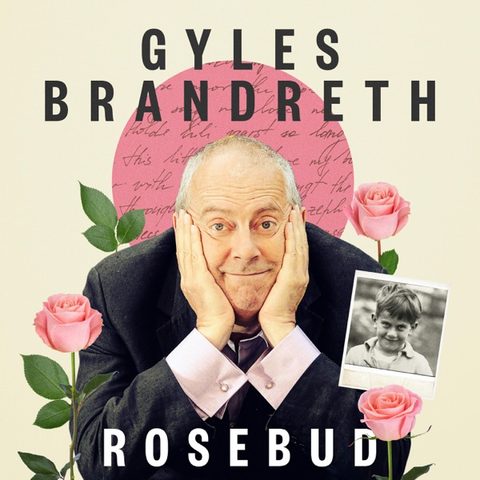
In this episodeMargaret ThatcherTony BlairWinston ChurchillJo CoxJohn McLaughlinWalter CronkiteSir Nicholas FairbairnDavid LammyZack PolanskiPay Attention
▸Chapters
Tap a chapter to play it from that moment in the show's own player; the transcript opens there too.
Transcribe your links. Paste a YouTube, Google Drive or podcast link and WhipScribe gives you the transcript.Transcribe a link →
▸Notable quotes
“politics has become so brutal and brutish that actually there are all sorts of really smart people in the UK”
Laura Kuenssberg · at 9:55 — ▶ hear it from here
“For me, impartiality is like a freedom ticket because all I'm trying to do is find out what's true”
Laura Kuenssberg · at 54:53 — ▶ hear it from here
▸What this episode covers
Laura Kuenssberg, the BBC's first female and youngest-ever political editor, traces her roots on Gyles Brandreth's Rosebud, starting with a family shaped by expatriate life and flight from Nazi Germany. Her father's father left Germany in the 1930s with money hidden in a hollowed-out hockey stick, reached Edinburgh University to study medicine, and passed a relentless work ethic down to his son. Her great-grandmother, a Jewish academic who had married a Christian man, survived the war in hiding and later spent years helping reunite families for the Red Cross. Kuenssberg says the family's sense of debt to Britain shaped her own drive.
Her book Pay Attention argues that trust in politicians has been worn down by a run of shocks, from the Iraq war and its missing weapons to the expenses scandal, the financial crash and the Brexit fight. She says prime ministers have changed so fast that the public has had no time to form a bond with them. She also thinks politics has become brutish enough that capable people now refuse to stand. The hardest day of her career, she recalls, was the day MP Jo Cox was killed during the referendum campaign, when the tone of debate had already turned nasty.
Her own route into journalism was accidental. She wanted to make documentaries, took an internship on a Washington political show during her time at Georgetown, and joined the BBC as a trainee in 2000 before being steered into politics. She says impartiality is a freedom ticket rather than a constraint, since it lets her follow facts without fear or favour. The conversation also covers a wrongly identified affair story, which she says shows how blurred Westminster's professional and personal lines can be.
▸Laura Kuenssberg on Rosebud: the answers
Who is Laura Kuenssberg?
Laura Kuenssberg
Laura Kuenssberg is the BBC's first female and youngest-ever political editor, a role she took at 39. Her book Pay Attention draws on about 20 years of covering politics.
What did Laura Kuenssberg say about Tony Blair?
Laura Kuenssberg said that when she first met Tony Blair, as a junior political reporter, he was polished and always seemed taller than people expected. She found him possessed of his message and very professional, and she said she had no personal feeling about politicians beyond a professional one.
“somebody who's incredibly polished, always taller than you think”Laura Kuenssberg · 4:43
What did Laura Kuenssberg say about the Iraq war?
Laura Kuenssberg said that polls at the start suggested a majority of people supported the Iraq war, and Parliament voted for it. When no weapons of mass destruction were found, a large chunk of public trust fell away, which she sees as one of the first big blows to politics in her book.
What did Laura Kuenssberg say about John McLaughlin?
Laura Kuenssberg said John McLaughlin was the host of McLaughlin One-on-One, an NBC political programme in Washington, D.C. where she interned during her Georgetown year. She described him as something like the Andrew Neil of the United States at that time, and said the experience of watching hosts and guests argue live was transformative for her.
“John McLaughlin was a bit like the kind of Andrew Neil of the states at that particular moment”Laura Kuenssberg · 36:37
What did Laura Kuenssberg say about the Brexit referendum?
Laura Kuenssberg said that the day MP Jo Cox was killed came right at the height of the Brexit referendum, close to the day of the vote. She described the arguments as very divisive and noisy, with a lot of distress on both sides, and said she was on the road covering the campaign in Sheffield when the news broke.
“when the arguments had already got very divisive, very noisy, a lot of distress on both sides”Laura Kuenssberg · 42:13
What is Laura Kuenssberg's main argument on Rosebud with Gyles Brandreth?
Laura Kuenssberg argues that trust in politicians has been eroded by a series of shocks, from the Iraq war to the expenses scandal, the financial crash and Brexit, and that politics has moved too fast for the public to connect with prime ministers. She says her book Pay Attention is meant to help people understand how the country got here, and that impartiality gives journalists the freedom to follow facts.
Mentioned in this episode
PersonMargaret Thatcher
PersonTony Blair
PersonWinston Churchill
PersonJo Cox
PersonJohn McLaughlin
PersonWalter Cronkite
PersonDavid Lammy
PersonZack Polanski
ShowMcLaughlin One-on-One
BookPay Attention
Episode facts
Released
November 13, 2026
Length
1 hour 2 minutes
▸Key takeaways
01Laura Kuenssberg became the BBC's youngest-ever political editor at 39, a job she says she never planned to hold.
02Kuenssberg says her Georgetown internship on NBC's McLaughlin One-on-One in Washington showed her how live political TV was built.
03Kuenssberg's German refugee grandfather left in the 1930s with money hidden in a hollowed-out hockey stick.
04Kuenssberg calls the killing of MP Jo Cox during the Brexit referendum campaign the worst day of her career.
05Kuenssberg argues impartiality is a freedom ticket for journalists, letting her follow facts without fear or favour.
▸Questions this episode answers
Q1What did Laura Kuenssberg say about impartiality on Rosebud?▾
Laura Kuenssberg told Gyles Brandreth that impartiality is not a constraint on journalists but a freedom ticket. In her view, a reporter who only follows facts and explains them to the public can pursue stories without fear or favour. She separates being neutral from being impartial, and says the public wants insight based on information rather than her personal opinions.
Q2What did Laura Kuenssberg say about the day Jo Cox was killed?▾
Laura Kuenssberg said the day MP Jo Cox was killed was the worst of her career. She was reporting from Sheffield during the Brexit referendum campaign, when the arguments had become divisive and the tone was tipping into nastiness. She learned first that Cox had been hurt and then that she had died, while she was on a packed train back to London.
Q3What did Laura Kuenssberg say about her route into political journalism?▾
Laura Kuenssberg says she wanted to make television documentaries and never planned to cover politics. A year at Georgetown as an intern on NBC's McLaughlin One-on-One in Washington, D.C. showed her how live political TV worked. After joining the BBC as a trainee in 2000, she was sent around the country on stories rather than to Westminster, and she knew no one in the Westminster lobby when she arrived.
Q4What did Laura Kuenssberg say about why trust in politicians fell?▾
Laura Kuenssberg argues that trust in politicians eroded through a chain of shocks: the Iraq war, where no weapons of mass destruction were found, the expenses scandal, the financial crash and the Brexit fight. She also says politics has moved so fast that people have no time to connect with the prime ministers who come and go. She thinks politics has grown brutish enough to deter capable people from standing.
Q5How does Laura Kuenssberg describe her grandfather's escape from Nazi Germany?▾
Laura Kuenssberg says her father's father, a German refugee and sporty young student, left in the 1930s, when getting money out of Germany was hard. He carried money hidden in a hollowed-out hockey stick and a tennis racket frame, reached Britain, and was let into Edinburgh University to study medicine. He left his mother and siblings behind, and they got out one by one, except his mother, who survived the war in hiding.
Q6What did Laura Kuenssberg say about being wrongly linked to an MP's affair story?▾
Laura Kuenssberg says she was once wrongly thought to be the journalist in a story about an MP's affair with Sir Nicholas Fairbairn, because he wore colourful clothes. She also describes a party conference hotel meeting where a minister answered the door with shirt buttons undone and a partner present rather than an aide, and she left after about 10 minutes. She says Westminster's personal and professional lines are often blurred.
Q7What did Laura Kuenssberg say about her childhood in Milan?▾
Laura Kuenssberg says her earliest memory is climbing out from under a piece of furniture in the family flat in Milan at about two years old. Her older brother and sister had left her hiding in a game of hide and seek and never came to find her, and she cracked her head on a marble windowsill. Her father worked for a textiles company, and the family lived abroad in several countries before the move back to Scotland when she was two.
▸Transcript
Our own transcript of the public episode, with a timestamp about every 90 seconds. Tap a timestamp to play the episode from there in the show's own player; the link button on a paragraph copies a link that opens this page there.
0:00Verizon knows that holiday math can be complicated. Okay, let's see. We got the four kids, four gifts each, six teacher gifts. Wait, oh, what did we get in? Sandy. And the dogs. Oh, can't forget the dogs. Know what doesn't need math? Simplicity Plan from Verizon. One plan, one price. Just $30 a line per month for you or the whole family. The holidays are complicated. Shopping our best deals and switching to Verizon is simple. For new customers, $30 per line includes auto pay and switch discount, additional taxes, fees, and terms apply. Hi, folks. This is Mark Bittman from the podcast Food with Mark Bittman, and I'm here to suggest that you host Thanksgiving with industry-leading quality standards from Whole Foods Market.
0:41There are, as usual, no antibiotics ever in their meat department, so carve up turkey and spiral-cut ham with peace of mind. Shop organic sides like stuffing mix and cranberry sauce from 365 Brand. And guess what? All of their fabulous, delectable pies are made with no high-fructose corn syrup. Where else are you going to find that? Gourmet Thanksgiving flavors with the quality you want only at Whole Foods Market. Christmas is coming! Oh, but that's so next month. Let's live in the here and now. This is Rosebud. Hello, I'm Giles Brandreth. This is the Rosebud Podcast. And today we have a guest who is, well, she's a political journalist. She's an unusual political journalist. She's in the record books because she became the BBC's first female and youngest ever political editor a few
1:59years ago. She is Laura Koonsberg. And she sent me her book that she's just written. It's called Pay Attention. And it's really a book about what she's learnt covering politics over the last 20 years or so. And I find it very interesting. So I wanted to talk to her about that. But I also wanted to find out who she was, what her background is, where the name Koonsberg comes from, what is her story, who is she? I mean, I know her, I admire her, I like her, but what are her roots? What made Laura Koonsberg the really recognised, distinguished and admired, respected journalist and, well, presenter that she is? So that's the idea of this particular episode of Rosebud. It's a bit different from the usual.
2:47There's more politics than usual, but I like that because, believe it or not, once upon a time, I was a Member of Parliament. So here you're going to get a mixture of family history, politics, gossip, tales of, well, going back to Lloyd George and Winston Churchill, coming forward to Tony Blair and Andy Burnham. Oh, yes, and there's even a touch of a possible political threesome somewhere along the way. This is my kind of episode of Rosebud. Enjoy. Cue the music. Oh, Laura. Oh, Giles. This is all about firsts. Can you remember your first prime minister? The first prime minister you were aware of, and then the first prime minister you met personally. The first prime minister I was aware of and then the first prime minister you met personally the first prime minister i was aware of was margaret thatcher uh so i was born in 1976
3:49so as a kid as i grew up and i suppose you grow a consciousness of the world uh i absolutely remember her uh and i remember her i remember her voice being on the radio in the kitchen as a child when we were sitting around and having breakfast you know we were one of those families we had the news on rumbling in the background and so I remember her voice and I think I remember as a kid looking at her thinking wow that hair this enormous great halo of hair so Mrs Thatcher was was the first prime minister I remember. And the first prime minister that I met was Tony Blair. And what was your first impression of Tony Blair? Well, I at the time was a fairly junior political reporter and producer and all of those things.
4:43I mean, he was then as he is now. I mean, somebody who's incredibly polished, always taller than you think. I don't know if you think that when you see him. He is taller than he looks on the telly. Unlike quite a lot of celeb types who are often then tiny pocket people when in the movies or the TV. Or like Keir Starmer, a little bit shorter than you expected. Yeah. But Tony Blair was taller, I think, than I expected and incredibly, you know, than I expected. And incredibly, you know, possessed of himself, possessed of his message, very smooth, all incredibly sort of professional. People, for example, if their first president was Bill Clinton, almost everybody except one person I've met goes,
5:21wow, I was overwhelmed by him. I was very not to like him. I was, oh, that is a reaction to Bill Clinton. Did you have a personal reaction to Tony Blair? He certainly has. I mean, no, I don't think it was a personal reaction because I think, you know, I was already working for the BBC. Really, girl and woman, I've only ever really worked for the BBC. I have worked briefly for other people. But I think even, you know, by then, I suppose I would have maybe done a short clip with him or something in about 2005. You know, by that point, you're still already kind of absolutely stapled into your head that you don't have any personal feeling about politicians, but you can have a, you know, a sort of professional feeling
6:02as someone with charisma, with an element of star power, and someone who definitely still does actually, would come into the room with an air of power and grandeur. For what it's worth, to show what a different generation we come from, my first recollection with Prime Minister is Winston Churchill. Well, how amazing though. And my first proper encounter being just a giant and making you feel, and in a sense, I think Margaret Thatcher did this, whatever your politics, making you feel that he was, in his time, the country and emblematic of the country, that there was greatness here. But now we've had so many prime ministers in the last 10 years. Will people speak about them in the same way? Like these sort of mythical, heroic figures,
6:50whatever their party politics. You talked about Tony Blair, and around Tony Blair, you had people like John Prescott, David Blunkett, George Robertson, Peter Mandelson. These were figures in their own right that were also household names and that we had views about. I don't feel that's happened in recent years. Am I right or wrong? I think it's true that awareness of people who occupy the great offices of state has faded. Part of it's really simple. It's just because we've spun through them so quickly. And I talk about that in the book's just because we've spun through them so quickly. And I talk about that in the, you know, in the book about just how we've been through these, all of these different
7:29prime ministers. And therefore, of course, there've been, you know, more reshuffles than shuffling a pack of cards, you know, it's been relentless. So in a way, how could you expect that they would have time to develop, you know, huge personas and the public to feel like they knew them, let alone could look up to them but i i also think something something else has happened is that i think we've seen over a period of time that there's been a whole trail of big events that have each in their own individual way, which collide together to really dent people's respect for politics, politicians, and our institutions. And, you know, quite often at the moment people say, oh yes, well, it's all because of Brexit
8:18was this terrible big clash and it didn't make anybody happy and all of these things. And that's why things have gone completely bananas in the last 10 years. I think actually, and I've tried to do this in the book, as you go back to the Iraq war, which people often forget, a majority of people polls suggested supported to start with. Parliament voted for it. And then we all know what happened when there were no weapons of mass destruction. So too fell away a big chunk of public trust then you have the expenses scandal we don't talk about now that much that was not just bizarre and farcical but also really profound to people they've been doing what on my dime and that was really corrosive to the public's faith such as it was in politicians and the financial crash too you know when we didn't
9:05even have a period of days you know know if you were necessarily going to be getting your money out of the cash machine the next day and that's even before you then get to the sort of herculean brexit struggles and how people felt they were misled over immigration and all of those things so so i think this partly politics just so fast now in the way that modern life is so fast that there isn't a kind of time and capacity for people to develop a connection with with politicians but i also think there's been that real hammering and lots of different ways that has taken away or eroded people's trust in politicians. And I also just wonder, and I'm wondering out loud, because it'd be hard to measure this in any scientific way,
9:55but I think that politics has become so brutal and brutish that actually there are all sorts of really smart people in the UK who in another era might have said yeah i'll give it a go and now they look at it and think not a chance and is there a miss is there a missing generation well we'll ask that question we're going to come i want to discover the roots of your passion for politics and maybe answer some of those questions yeah and i've also i have huge admiration for people who put themselves forward i really do i don't i don't and also let's we shouldn't kid ourselves and think oh there was some halcyon days when politicians were all marvelous and they were all geniuses and actually if you really think about it exceptional or or you know truly
10:40towering prime ministers are the exception right think of the 20th century you've got well george thatcher blair churchill who else would you often a war is involved as well moments of a real national emergency well many people will put clement atley in there but we'll play that game in a minute i want to get back to the roots of you though i should say that all those prime ministers that you talked of coming through i've got the explanation for this go on because you remember the day the late queen died two days before she was saying goodbye to boris johnson and hello to liz truss yeah this was deliberate policy at the time to rush through as many prime ministers as possible during her lifetime because otherwise queen victoria would have won the accolade as our
11:21sovereign with the most prime ministers it was government policy to put elizabeth ii in the record books if if only people had that had been explained if only that had been explained to people and then that's the kind of joke that i think only someone with your impeccable connections would be entitled to make or else you'd be off to the terror and it's interesting that you think it's a joke i think it's actually a fact let's get back to the beginning you are laura juliet kunzberg yes i am um born on the 8th of august 1976 what is your very first memory so i think my first memory uh is climbing out from underneath some piece of furniture or other and cracking my head on a marble windowsill in our family's flat in Milan where I was a toddler having been sent to play
12:17hide and seek with my older brother and sister who made me hide and then didn't come and seek me and after a while as a two-year-old I I thought, well, I've had enough of this. And I came out from under whatever the furniture I was and then smashed my head. So not only abandoned, but then hurt. Now, that may be a complete hokum, but that's what I remember in my bones. It's not hokum for a variety of reasons. You've combined two of the most common memories. One is fear of abandonment and the other is some kind of physical trauma yes so it's not unusual yeah i accept that as your first memory yes you've got to tell us why you are in milan who your parents are and who these siblings are so my dad my parents were expats my father worked for a big international textiles company for a
13:02long time uh boy Boy and man. His name is Nick. And they lived all over the world. They lived in South America. They lived in lots of different European countries. And then their last foreign posting, as it was, was in Italy. And they lived in Italy for six years, I think. And then we moved back to Scotland when I was two. So I suppose I'm from a family where, you know, being in other countries was a normal thing. And having a world view of the world is bigger than your own street and your own city and your own country was a normal thing. We might come on to this. Part of that is because my father's father was a German refugee. So, and I think it's a great... Well, come on to that now so who was yeah okay so
13:46my father's father was an amazing man and his mother so this that we're going back quite a lot my great-grandmother so yeah to cut a very long story relatively short um my great-grandmother was jewish she'd married a christ Christian man and they lived in Germany. She married a Kunzberg. Yes. And she was a Samson and an amazing woman, academic woman, a young kind of, you know, trailblazing academic. They essentially saw what was coming. And my grandfather actually had then gone off to be a student in Austria. While he was a student in Austria, he and some other friends were helping Jewish people escape, get out. And then she essentially, the family essentially, one by one, my great-grandmother got her kids out.
14:44Anyway, he was the first to leave, and he came to the UK. Forgive me, do you know how he left? Yeah, he left. I mean, he left on trains and ferries and things because this was before the war. So it was possible in the 1930s. It was as if he was going away on holiday or something. But he left because it was difficult to get money out of Germany by the time he left. He had a hollowed out hockey stick with money on the inside. A hollowed out hockey stick? A hollowed out hockey stick. So he was a young sporting type, he had his hollowed out hockey stick with money on the inside a hollowed out hockey stick a holly hollowed out it was a young sporting type he had his hockey stick and a tennis racket frame also hollowed out you know those like a press hollowed out so he could get money
15:18out to come to the uk and start a new life and he arrived here and he'd been a student he's an academic guy scientific sporty you know blue-eyed he was a ski across the alps when skis were two and a half meters long made of wood you know he was an amazing guy he came here banged on the doors of lots of universities said i want to be a doctor i want to to study here. And by chance, Edinburgh University was the one that let him in. And so begins then a life in Scotland. And how did he pay for that? From money from the... Maybe from the hockey stick. I don't know. But he left his mother and brothers and sisters back in Germany. And then one by one, they got out, but she didn't get out. What happened to her?
16:03She survived the war. She was hidden for some of it by a friend of hers. I mean, literally hidden in a house so that the Gestapo and the Nazis couldn't find her. Well, I was recently, it was a very eerie thing recently. I found in a pile of papers her ID card with a big J on the front. She, of course, had years when she didn't see her children and there were letters, but she survived the war. She stayed in Germany and she then did a lot of work for the Red Cross and tried to reunify families and she was an amazing person i don't remember meeting her i know i meet i know i did met her meet her and seen a family photograph where she's holding me as a baby but i i i don't remember her at all but then she was a remarkable woman she was an amazing woman an absolutely amazing woman
17:00and i wish i'd know i wish i'd known her you know i wish i'd known her and there are there are various kind of tributes to her and things in Germany now for the work that she did because she stayed after all of that that her family had been through and the danger that she lived in. Do you know how it affected your grandfather, leaving his mother behind in Germany through the war? The impact I think it had on him, the whole thing, was he was a doctor. I was incredibly committed to his work. And I think that is what the impact that it had on him, the whole thing, was he was a doctor. I was incredibly committed to his work. And I think that is what the impact that it had on him is I think he felt,
17:30and I never spoke to him about it, but my sense is that he felt, and I think it's something that was passed down actually in a way to everyone in the family is just a massive sense of appreciation of, and in a way a sort of debt of gratitude actually to Britain to provide safety and opportunity. And then he gave back, to use this sort of cliched phrase, but enormously by, you know, I think working all the hours God sent. What was his first name? Eka. Eka? Eka, as in Eka Hart, but yeah, I think working all the hours God sent. What was his first name? Eka. Eka? Eka, as in Eka Hart, but yeah, Eka Kunstwerger. What do you think he gave your father? What does Nick, your dad, have from him? Massive work ethic.
18:15And you've got that too? I suppose so, yeah. And I think that's probably not unusual. I mean, I suppose families in, you know, there are many, many families in Britain who somewhere down the line you've got a refugee story. And I think that does give you a sense of drive and of that things are worth doing and a desire to pay back and maybe a belief in service what's in you that nick has what does nick since we're dealing with your father now yeah what's he given you laura what have you got from nick he i suppose that well there's two things that well there's so many things i could say he uh nearly always said yes to things and i think I got that from him in a kind of, well, there's an opportunity.
19:08Your default is to say, yeah, sure. Why not? Rather than saying, oh, I don't know about that. You know, he was probably irritatingly positive. And I think some people who know me well would probably say that about me too. You know, come on, let's do it. That kind of thing. Might be difficult. And how did he meet your mother? Oxford University. Yeah, they met in the, in the well actually that's they were both at university together uh in 1961 and they met but they met in the christmas holidays uh after their first term at a fancy dress party where my mom was dressed in a sack that said Golden Wonder 9 and 6 or something on it. She was dressed as a sack of potatoes. But a sack's not very long, is it?
19:51If you're tall with long hair and amazing legs at the age of 19 or whatever she was. And my dad was dressed up as a co-respondent, which you might want to explain to people. Well, as in shoes? No, as in the kind of person he is. Oh my you might want to explain to people well there we are as in shoes no as in the kind oh and listen oh my gosh i will explain to people yes because that's not from my era that's your era not my era when there was divorce with blame uh you had to show that there was somebody who had caused the adultery which was going to give the judge grounds on which to say yes you were divorced yes who is the co-respondent? Who is the other person who has been in this case? Yes. So my 19-year-old blonde-haired, blue-eyed father was dressed in his pyjamas.
20:35Yes, because it ought to be explained, the co-respondent would go to a hotel room, often in Brighton, and would position himself in bed with the lady who was wanting the divorce. To then be caught. And then they would be caught. Somebody would step out of the cupboard and would take himself in bed with the lady who was wanting the divorce. To then be caught. And then they would be caught. Somebody would step out of the cupboard and would take a photograph and that would be the correspondent and the lady in question. And you could hire these people or you could genuinely be having an affair. Right. So, yeah, this was like a great gag for my 19 years. So he comes in. I'm liking these people. He comes in as a correspondent.
21:04Yeah, my mum is in it. She's in as a correspondent yeah my mom she is she's dressed as a sack of potatoes but you like yes if i may say so basically it's a mini dress i suppose yeah exactly but but the early 60s right this was six and i and i think that there's a i think there's a difference between people who came of age and my mom i talked to my mom about this years ago actually i hadn't thought about this conversation for a long time but i think there's probably a difference between people who came of age in the early 60s who remembered the war and then people who came of age in the late 60s and you know my dad used to tell a story about um rationing and because his one of his naughty little sisters got into terrible trouble once, but because for eating the sugar and raisins that had been saved for a long time for a birthday cake.
21:52And he always used to tell that story, probably if we didn't want to finish our dinner or something. And he used to tell that story. But I think there's a difference between the fact that you... You're so, so, may I say so, so well observed. The beginning of the 60s and the end of the 60s, one of the big differences was the advent of the pill. Right. So that people's relationships in the beginning of the 60s are quite different from the end of the 60s. We're ranging wide and far. This is great. But this is social history. Yeah, well, it is. It's social history. So how did they get on together? Oh, well, I think it was, I mean, I think it was. Like that, from the beginning. That was like that, yeah.
22:23So are you the first to be born? No, I'm the youngest. You're the youngest. So who are the other siblings? I have my brother's eldest and my sister is the middle. Very good. Yeah. How do you picture your parents together, though? Give me a flavour of them together. Not just, I mean, they were well, but give us an example of them at their best together. Oh, at their best together. Oh, at their best together. They loved their whole time together. They loved Italy so much. And if I think of their best, I think because we used to go back all the time. So we moved back to the UK when I was two, but we used to go to Italy on holiday a lot. And if I think of them at their sort of best and happiest I think of them on a lovely terrace in an Italian villa
23:08having invited some friends and family to go and stay for a few days with them and sitting outside laughing and looking around at beautiful views and being very easy and relaxed and probably having an argument but not you know an argument about politics or sounds pompous but i suppose debate right and they're funny as well well my mom was really funny it's really really funny and sharp and her mom was very funny as well so it was the kind of dorothy parker kind of you know sharp of, you know, sharp. Oh, yeah, sharp. Really sharp. Really funny. But this is a lovely childhood to have because these are intelligent, entertaining people. Oh, God, we're so lucky. I mean, we had to, yeah. I mean, if I said to you,
23:54just to show there is some shade as well as light, the worst moment you can remember until you were 13 at home, is there a bad moment that suddenly springs into your head? I was in a bus crash. Oh. That was a terrible thing that happened with my head? I was in a bus crash. Oh. That was a terrible thing that happened with my cousins. We were in a bus crash that tipped over. Also, I stole my sister's chocolate bar once. Tell us about the bus crash. I still haven't told her the truth about it. Well, she's a Rosebud fan, so she's going to hear about it now. But let's deal with the bus crash first. Yeah, that was really bad. Where was that? With my cousins, we were on a Sunday school trip because my mom and dad had gone away for the weekend i think for their wedding
24:27anniversary or something and there was a giant gust of wind there were kind of more than 40 children on the top deck of a bus because kids all choose to go up to the top and genuinely it was a big gust of wind and the bus went over into a field if it'd gone the other way it would have gone into a lane of oncoming traffic and but it went the other way into a field and then it was i i remember the noise actually crack of the seats and things coming off the floor and of course the world turned not upside down but on its side so suddenly the wall was the ground and the seats were what it was terrifying out of the back. So if you ever think, why did they have exit doors on the back window of a bus? It's because what happened was we walked along the
25:09wall of the bus, which had become the floor. And then we were bashing the window at the back. And eventually a lorry driver, I remember, because we were little, we couldn't get it open. I remember being with my cousin and we were like hammering on the door. We were about seven or something. It was really frightening. And me and my cousin, and we were, because we were like hammering on the door um about seven or something it was really frightening and me and my cousin and we were because we were very tight family used to hang out with our cousins all the time they actually still do somewhere and but i remember seeing a lorry driver because obviously all the traffic stopped a lorry driver a man with a check shirt and a big beard i can't picture his
25:39face but i remember seeing this kind of giant it looked like coming towards i remember seeing him wrench the door, which was the window at the back of the bus. And then we got out. And then we were taken to Saltcoats Police Station and it was all very, very dramatic. It was terrifying. So that would be a bad thing. Yes. And the chocolate bar, did you end up in the police station for that? No. What happened? But I will do now. What did you do? I just took it. You took your sister's, well, you were the youngest, you were the golden child. I would never have kept a chocolate bar. So only my sister, and I love my sister dearly, only she would have had the self-discipline to have a crunchy. What was a crunchy?
26:20I mean, imagine not just eating a crunchy. If there's a crunchy anywhere near me, I'll just eat it. But my sister had kept it. She'd kept her crunchy. And she used to have this like cloth kind of hanging thing. Do you know the things I mean? Like little kind of pockets that were... Oh yes, I do know. And she'd have crunchy in that. And I must have been about six and I went and took it and ate it. And I've never, she accused me and I denied it. Probably with chocolate all around my little face. Hi folks, this is Mark Bittman from the podcast Food with Mark Bittman, and I'm here to suggest that you host Thanksgiving with industry-leading quality standards from Whole Foods Market. There are, as usual, no antibiotics ever in their meat department,
27:10so carve up turkey and spiral-cut ham with peace of mind. Shop organic sides like stuffing mix and cranberry sauce from 365 Brand. And guess what? All of their fabulous, delectable pies are made with no high fructose corn syrup. Where else are you going to find that? Gourmet Thanksgiving flavors with the quality you want only at Whole Foods Market. Guessing is for game shows, not your business. Workday is the enterprise AI platform for HR, finance, and IT. With AI grounded in your context to get work done and done right. It's a new workday. Here's something you may not know. Only 14% of cancers in the U.S. are caught through routine screenings. Prenuvo's whole body MRI may help close that gap,
28:00screening for over 500 conditions, including most solid tumors, all in under an hour. Prenuvo's body panels also test over 80 biomarkers for a deeper understanding of your health. No radiation, no contrast. Book your scan at prenuvo.com. That's P-R-E-N-U-V-O dot com. Who's your first friend outside the family? My first, well, I mean, I'm one of these people, I'm lucky, my old friends are kind of still my best friends, really. My first friend, my first friend is probably a woman called Lindsay, who's still my sort of best old friend. Yeah. Was she at school with you? Yeah. So I have a group, like in a gaggle of, a gaggle of friends. There's a group of seven of us. We call ourselves LB's Finest.
28:51It's our very modest name on our WhatsApp group. LB's? Yeah. Well, our school was called Laurel Bank, which is now defunct, tragically. And Laurel Bank was a primary school, secondary school? It was both. Yeah. We had such a nice time. What was so special about this school? Oh, we just had such a nice time what was the special about this school oh we just had such a nice time where is the school it's in the west end of glasgow so glasgow which is my my you know the the kind of city that's in my bones uh the finest place in the land why did the coonsburg end up in glasgow my dad got that was where we went back to because of my dad's work. Fine. And it was there my parents sort of adopted home really.
29:32And we just had a really nice time. You know, it was benign, it was fun. It wasn't too serious. We did kind of just, we had a, and I was just lucky I had a great group of friends, right? So serendipity is all, isn't it, in our lives and it's sort of the way and i know i meant to be talking about this that's how i ended up doing the job that i've done really was chance rather than design and i think part of life isn't it is you take the things happen by accident and the question is whether you're open to it and you say hooray but i was serendipitously but these there was just a great group of girls in my class at school. Give me an example of how you got on well. Give me a game that you played.
30:10A game? Or music that you listened to. Oh, my God. Well, we were all deeply in love with Aha. So do you remember Aha? I do remember Aha. Oh, my God. The first love of my life, Morton Harkett. We loved Morton Harkett. And it was the age of, I think we were nine. This is rather alarming. People I knew. It had to be people that you as a little girl were worshipping. Did you know Morton Harker and it was the age of I think we were nine this is rather alarming people I knew don't have to be people that you as a little girl were worshipping did you know Morton Harker yes what do you still know Morton Harker I'm afraid not I wasn't very interested but anyway that's by the by that tells more about me than it does about you go back we loved Morton Harker and I
30:40remember having the album Hunting High and Low I remember having the album and we would sort of just carry around the album. You know, I mean, this was a big deal. We were kind of nine or ten and we had the album and we just sort of carry it around and look at it. And we would just look at the album. It's just so exciting. And we loved, we loved them. I mean, we just loved them. And we enjoyed sort of loving them together, you know. And then we got to a lot. We got up to a lot of mischief. Give me an example of mischief. Well, of course, we were all quite interested in boys and then we were quite interested in cider. And then we were quite interested in trying to get into nightclubs and trying to get into bars.
31:23Well, you know. When was your first awareness of politics? I think I was 11 when I actually became actively involved in politics. When did you become involved, interested in politics? And what prompted that? Well, in a funny way, I wasn't. So it's all a bit of an accident, really. So I wanted to make TV, right? Because I'm nosy and I love watching TV. This is when you were a teenager. Yeah. And what did you love watching? Everything. Dallas, love Dallas. Neighbours, love Neighbours. Like documentaries. I liked, you know, Panorama, World in Action. Love Dallas so much. Did you watch with your parents, your brother and sister? Yeah. Neighbours was something we used to, we used to tape to tape neighbors and then watch it after school before it was on
32:09and they after i mean just nonsense but i just love watching tv watch anything you know you know you put on what was on because there were four things to choose from um and i wanted to wear i sort of thought i might want to work in tv and i very nosy. And if you put those two things together, then becoming a TV journalist is quite a good thing. At school, what were the subjects you were good at? English and history and languages. I did the school magazine. You know, I was one of those people. Yeah, it's a bit obvious, but why not? It's a bit obvious. Yeah, sorry to be dull. I mean, they've done that. Absolutely. But yeah, writing, speech, you know, all of that. Was there a teacher who was particularly influential? Well, I did a history degree because our history teacher was the nicest
32:49teacher and what was she or he she was called miss McFarlane and she's a lovely woman and she's still I don't know if she listens to Robespont but I know that she's still alive and well and she was very young did you have a young a teacher who was close to you in age miss Whiting actually was a history teacher at our school as well. Well, there you go. Yeah. So I did a history degree because of her, really. And then the year after school. But what did she have? Given you're giving us the kind of Jean Brody of your lifetime. It's my favourite book. She was fun. She seemed to, I think she was just really nice and she seemed to us, I think she seemed to us not like the other teachers. She was sort of more
33:32on our side somehow. Were you quite popular at school? Was it a girl's school or was it boys' school? It was a girl's school, yeah. Which is really good because if I'd been at a mixed school I would have paid a lot less attention. You would have been distracted. I mean, were you distracted by boys at that time? Yeah. Oh, yeah. Well, it was fun, right? And, you know, I suppose, yes. Well, I don't know because I was one. So I don't know what the effect was, I'm afraid. Well, I was social, right? I'll put it that way. I was social. Were you outgoing? Because you came from outgoing. And were you funny like your mother? I'm not as funny as my mum. But I don't know, am I funny? Have I been funny?
34:07You're very funny. I think you're very funny. I was very social and I still am sort of very social. I'm a very sociable person. I like going, I like being with other people. I like spending time with, and I like meeting new people. And I think, you know, I get a lot of energy from. Was that comfortable for you? Yeah. Were you at ease with that? So if I say, you know, do you remember your first crush, your first kiss, your first... It's all easy. You don't have any trauma. Some people go, oh God, yes. Oh, I think, I mean, you have a fair share of heartbreak and drama, of course, but I mean, that's sort of part of, you know, life's rich tapestry, isn't it? Taking your stride. Well, I mean, you know,
34:44I suppose if you're at 17 and something goes terribly wrong, whatever, but I, you know, life's rich tapestry, isn't it? Taking no stride. Well, I mean, you know, I suppose if you're at 17 and something goes terribly wrong, whatever. But, you know, I think my growing up was largely, you know, I feel I was very fortunate. And I think a gift that my parents gave me are growing up and having that lovely group of friends where everything was always pretty stable. And that allows you then to feel, well, you know you know what well i can go and take on the world and when i was 18 i went to go and live in paris for a year after i left school wow yeah on your own yeah i remember a conversation with my parents they said do you think that you might kind of rather
35:21maybe go and be an au pair or like you know something that where i was like no i just really want to go and live in paris and i want to work in a bar there's the glorious gap yeah oh it was great and i it was and i was working and i felt like an you know i felt like i was and i felt like an adult and i had a job and then i went home and i got a job in a restaurant in glasgow and blah and then i went to university in Edinburgh and what did you read? I did history and was that transformative? are there transformative years at all? going to France was and then the next year that was a really big really important one for me was actually not the year the years in Edinburgh it was my third year I did one of those
35:58cunning switches where I did the third year in Washington DC Georgetown I know that I went to Georgetown because I went I mean, I visited Georgetown University. That was so cool. Georgetown is so cool. It's so cool. It's like Paris and Washington, D.C. It was wonderful. And America is, I don't know, I've always been, as a teenager, I loved like St. Elmo's Fire and all those kinds of films about, you know, campus life and American teenagers and young people. And then suddenly I was there. I was like in St. Elmo's Fire. For your third year almost fire yeah but the crucial thing then the crucial crucial thing was I answered a little advertisement in the Hoya which was the Georgetown campus newspaper to be an intern on an
36:37NBC TV political program and I went and did that and I worked on a show called McLaughlin one-on-one and John McLaughlin was a bit like the kind of Andrew Neil of the states at that particular moment and that was that was transformative so suddenly I was in working on a news program about American politics exposed to these people, sitting in a room, taking the coffee onto the set for the conversations and the things that were going to happen between the, you know, the Democrat in one corner, the Republican in the other, and the host and them all going at each other. And that was like, oh, okay. I get this. And those anchors, those hosts, were treated like demigods i was a friend of walter cronkite
37:28you weren't yeah yeah yeah exactly did i just break the microphone yeah exactly seriously absolutely so i know that generation and people won't understand the giants that these people were i think that's right yeah and your man was in his own way in that school. And there was a presence about them and they were treated like demigods. And the whole thing was on a scale. So this is suddenly introducing you to this world. It's suddenly introducing me to that world. Can I say? Yeah, and that was just... Now you've had the crack cocaine of, no, but that's what it is. And you've been hooked on it ever since. Yes or no well i i knew then that tv was the thing i didn't know then that politics was the thing still so i thought i want to work on tv and i want to be a journalist and because it's like if
38:18you want to get into tv and make documentaries and things it makes sense to be a journalist i was not at that point super like oh i'm definitely going to do politics at all. Although it was a very exciting year. It was when Clinton got caught with Lewinsky and all of that was going on. But I came back thinking, I want to work in TV. I want to work in television and I want to work in journalism somehow. But I thought I wanted to work in documentaries. And then I came back and I'd done student radio and all of those kinds of things, which were great fun. And then I came back, I got done student radio and all of those kinds of things which were great fun um and then I came back I got a job at uh live tv do you remember that cable tv station uh while I was a student I worked there and then I did my last year university and I just started
38:58applying for everything that goes but this explains everything to me because you had no your role models you discovered when you were in DC. And the way of doing it. And can I say. You know, live TV is electrifying. It is, of course. But I've seen you in action. I've been lucky enough to be the guest on your Sunday morning program. And I've seen the way you bestride the studio. Oh, goodness. No, I have. And you belong to that tradition. The authority that you give it. Thank you. No, I have. And you belong to that tradition, the authority that you give it. Which is very interesting. I now understand totally where it comes from. John McLaughlin, one-on-one. Absolutely. And one behaves like that.
39:35I mean, how long have you been doing this? Do what? Mostly being a reporter, initially for the BBC, then you go away, then you come back. So I started, I was a BBC trainee in 2000, which does not include my time working on the Teletubbies magazine in Wood Lane, which was a formative experience, making sure that the adverts for Postman Pat were delivered on time. But yeah, I was a BBC trainee from 2000. And then I did general news and lots of different things for a few years, which I loved, loved, loved, loved. And how did you get to be, you were the youngest ever political? Yes, I was. I was the youngest ever political editor. Yeah. And how old were you then? 39. Very good. Yeah, that's quite scary. It's funny, if I think about that now, I think,
40:18God, that's really scary. Were you scared at the time? Were you apprehensive? Yes, of course. Of course. But you didn't hesitate to say yes? No, of course not. This was the completion of your destiny? Well, it's not a job I'd ever thought I would end up in. I mean, I think it was not at all. I think some people go into careers and they are like an exocet missile. It's like, when I'm going to grow up, I'm going to be an astronaut. Or when I grow up, I'm going to be an MP. Or when I grow up, I'm going to be a political editor. That was not my plan at all. And I didn't want to cover politics until I had a boss and I think lots of people have a kind of formative boss and I had a boss who was starting a new program with Andrew New
40:55who said I want people who haven't covered politics before uh and I want them to come and work on the show and bring sort of fresh pair of eyes to westminster and i was like i don't really want to cover politics i think westminster is full of weirdos i wasn't necessarily wrong the first weirdest weirdo you ever came across oh nice try well i'll ask the question seven times my explicit job though initially was to cover politics and not be in westminster so i used to go around the country trying to find interesting and important stories that people wanted to raise and then we would put it to MPs and I even used to trog about with a cardboard cutout of Tony Blair and go up to people in the sort of you know marketplace in Ashby de la Zouche and say what would you like to tell Tony
41:40oh the problem with the cardboard cutout is in a British winter. And in the end it gets a bit soggy. But I didn't, you know, I didn't choose to become a sort of inhabitant of Westminster. So when eventually I arrived in the lobby, you know, which is the press pack in Westminster, I didn't know anyone. You know, some people arrive there straight out the box. They've been in the Oxford union. Their friends are all researchers for MPs or they've been a special advisor or whatever. And I didn't know anyone you know some people arrive there straight out the box they've been in the oxford union their friends are all researchers for mps or they've been a special advisor or whatever and i didn't know anyone and i didn't and now looking back i didn't know anything um but i
42:13suppose i you know i worked my way up and i did various different things and then i suppose it's about 10 about a decade or maybe 12 years after that i became the political editor which and what was the worst moment of those years the worst day undoubtedly in the worst day of my career was the day that joe cox was killed um it was a a terrible, distressing time. And it was right at the height of the Brexit referendum, nearly at the day of the vote, when the arguments had already got very divisive, very noisy, a lot of distress on both sides. Also, a lot of people excited by debate. It's good when people are passionate about political ideas, but the tone of that referendum, everybody listening will remember if you were in the tone of that referendum everybody listening will remember
43:06if you were in the uk at that time was tipping into nastiness and i'll always remember the day i was on the road um we were working in sheffield working away and it was you know recovering a campaign there's a lot of trains and planes and automobiles and bad sandwiches and you know and takeaway coffee and late nights and so by that point everybody's already pretty strung out and worn out and wrung out and and you know hugely lucky to be doing the job but I'll always remember that day my phone rang and it was the news testing had I heard because we were starting to get reports that Joe Cox the MP who everybody liked had been hurt and had I heard and could I find out, try and find out more and even that was
43:56such a massive shock and then it was okay right well I'm going to have to get back to London because obviously this is going to be a huge story. You know, and there's that tension between being a human being and someone who knew Jo, who was a delightful person. I mean, I'm not friends with politicians, but you could see from a thousand miles off, she was a delightful person. So you have that tension between a human being and then also being a journalist, and then being a journalist that's got to find out what's happened, is going to have to make a plan, go on the new, what Sheffield waiting to find the London train and it was packed with people. And the news desk phoned again and it was one of my very close colleagues
44:53who told me that she had died. And the strangest feeling I remember having, and I did start crying, I was so shocked and sad and but I just remember this really curious feeling was that I knew that within a few hours all of the people who were going about their business busily in the station with bags and kids and trying to get to work or trying to get home they would all in the next few hours hear this terrible news and i i knew it would be a huge story i don't want to say story but it would be a huge story um but i knew and they didn't and i remember having it was almost like a sort of out of body experience. It was so weird. Why for you is this a seminal moment? Because there'd been the tragedy of MPs being murdered before.
45:54There had. And of course, if you go back in time, you know, Eri Neve and other, I think, I think something had bubbled probably about kind of the early 2010s, I suppose. And then, of course, you started having a real ugliness emerging in politics and in the kind of centre of politics. So you're absolutely right. It's silly to say there was never any threat or never any danger to British politicians. But in our kind of communal debate, if you like, in our collective conversations, there were tones of nastiness and... And you feel this has gone on? You feel this has gone with us? Yeah. And, you know, it's been enabled by social media undoubtedly people talk to each other in a way that they just wouldn't you now have and i talk about this a lot
46:52in the book about how the kinds of language that politicians use has changed the kind how far they might go if you think about how politicians now talk about immigration and race you know when i started and arrived in westminster most politicians in the mainstream we should always you know i'm talking about most politicians would be so careful not to say anything that could even remotely be construed as offensive now a lot of people would argue that went too far it meant that people didn't always tell the truth that they didn't't acknowledge enough people's concerns about immigration, for example. But now you almost have a situation at the other end where you see politicians really happy to have debates in a very controversial way.
47:43And if we just think about two, you know, two examples at the moment, you've recently had the very divisive debate in the Green Party about antisemitism. And of course, there are all sorts of contested positions on that. And I am not going to take a position. I'm a BBC journalist. I'm not going to take a position on that, clearly. But it's fascinating to me that that was obviously controversial right when we did an interview with zack polanski recently and i talk about some of this in the book he said it's not controversial i remember so whatever you think of the subject it is controversial but even to say to to tell people it's not controversial is it is is so far from something you might have had 20 years ago
48:26where people have quite carefully said of course this is a very sensitive subject and we must all be and by the same token in the aftermath of the awfulness of what happened to that per family the there is a really important debate to be had about whether or not some well-meaning attempts to correct sort of historic wrongs and discrimination might have in some instances had weird consequences there's a really interesting debate to be had about that and politicians in all parties including you know i did had a conversation with debate to be had about that. And politicians in all parties, including, you know, I had a conversation with David Lammy about it, a very prominent Labour politician, saying, yeah, maybe things have, in some areas, we that many people would find very offensive.
49:26Now, I'm not judging any of them. I'm just pointing out that's a real distance travelled from where we were in our political debate 10 years ago. What I think is fascinating about your book is you depict all this very clearly indeed, very lucidly, but you don't offer a resolution you are reporting on the state of play i'm a reporter um but in your head is there an answer to this are we just to feel a bit depressed well no the first the first thing is and in a way this is why i've i mean this is absolutely why well there's i've written the book to try and help people understand right we've had so much in the last 10 years, particularly in the last five years, but we've kind of thrown their hands up and gone,
50:07goodness me, it's all crazy. Bonkers is the new normal. What I'm trying to do is say, let's dissect that. Let's open it up. Let's work out why. Well, you do that very effectively. But I'm asking you as somebody who observes this on a daily basis, if you've come to any conclusion about where we go forward. The first step is to understand it, isn't it? Right? You can't hope to try and come up with solutions if you haven't really understood or paid attention, ha ha ha, which of course is the title of the book, to how you got here. It's just that sort of diagnosis. And I suppose maybe what I'm trying to do is challenge both citizens and all of us to take to be conscious of it and conscious of these changes and also for politicians to pay more attention
50:53to the public's concerns you know one of the things that has happened that I document is that politicians have chosen to spend a lot of time debating things that they are very, very interested in that maybe don't interest most of the public. And their focus has not always been on the things that are at the top of most people's lists. Do you ever, when your head hits the pillow at the end of the day, worry that you haven't been as impartial as you ought to be, that you're natural. And I mean this positively. Liberal with a small l, instincts, the kind of way you were brought up, comes over as being perceived by some people as not being as neutral as you would like. Well, being neutral isn't being impartial.
51:41No. So impartial is... No, but I'm glad you've asked me about that, because impartiality... So there are a lot of earnest tomes written about impartial no well so impartial is it and no but i'm glad you've asked me about that because impartial so there are a lot of earnest tomes written about impartiality and a lot of ink has been spilt i want to ask you if your head ever hits the pillow and you feel i'm just doing what you do yeah that was the question yes don't answer it with with what you want to say no answer the question is do you does your head the question is yes does your head ever hit the pillow you think i didn't get that quite right today? And what do you do about it? Oh, look, certainly I've been a reporter for 20 years
52:10during some of the most contentious periods in our history, right? Do I ever get to the end of the day and think, oh gosh, could I have phrased that better or could I have done that? Yeah, of course I wouldn't be a human being if I didn't think that there were some times when I might have been able to do it better. I think there's, I mean, there's one thing I think people don't talk enough about, which is really important, is that, you know, I have always, pretty much always, maybe not 100%, but the vast, vast majority of the time, i'll be surrounded by really brilliant colleagues and my team during those kind of really intense periods particularly around brexit but not just around brexit was so tight and i think that i'm getting i'm getting to the point i promise
52:58in a newsroom you have a constant conversation it's a constant constant constant constant conversation about oh do we describe this like this and what about that and what about that so it's a sort of collective conversation so although if you are the political adversary this fairy on top of the christmas tree of course it's you know my sentences and my phrases that are the ones that are out there and that are exposed but you're kind of always being uh sense checked and challenged and argued through and are we articulate where are we how are we going to pitch this is it is it you know are we in the right place and so look of course we don't get everything right and of course there've been moments when i
53:38thought oh god or or even just oh i stumbled over that word and that's really annoying um and i put my teeth back in yeah um but it's like you know it's a constant challenge and you have or even just, oh, I stumbled over that word and that's really annoying. And I put my teeth back in. But it's like, you know, it's a constant challenge and you have to just be having that conversation all the time. All the time, all the time, all the time. Are you kind of in the right place? But I think that it's been odd to me that there's a lot of high profile people and I don't judge them for this, but there are a lot of high profile people who have sort of said impartiality is basically impossible at the BBC and they want because you should be able to
54:10give your view this that the other I see it completely the other way as a journalist if what you're interested in is facts and insight and helping people understand the world impartiality is like a complete it's like it's like a liberation it's an insurance policy because all you're doing is following the facts and trying to work out what's true and then explain it that's all you're doing without fear or favor whoever it is whoever the politician is whatever the subject is and if you think about it the other way you know i've got friends who work for different publications and who have had stories that they want to pursue and they've kind of been nudged away from that or they know that they wouldn't get it into their paper or onto their website or whatever.
54:53So honestly, I'm glad to have the opportunity to say that. For me, impartiality is like a freedom ticket because all I'm trying to do is find out what's true, get more facts, get more information, and then explain it to the public. So I don't think people say, oh, it's this repressive thing and I'm so desperate to tell the world. And I don't think that people were desperate to know what I think. I think, I hope that they're eager to know what I can share with them about the information that I have right not what does that does that make sense does this difference between insight based on information and work I'm sounding like my dad now uh and then just saying oh yeah this is what I think yeah This ad is sponsored by ZocDoc.
55:52Hi, it's Danny Pellegrino from Everything Iconic. Have you been putting off that annual doctor's appointment because you don't want to make the call? Or maybe you've been meaning to find a new dentist, but you have no idea where to start. I find that's especially true when you move. It's hard to find your people. I've been there, which is why I use ZocDoc. Now, as a busy podcaster parent and someone who's always juggling a million things, I love anything that makes life easier. And ZocDoc lets you search and compare local in-network doctors with over 250,000 providers across more than 200 specialties. You can read reviews from real patients, find a provider who feels like the right fit, see actual appointment openings, and book instantly.
56:30I recently had a last-minute health issue pop up and needed to see someone fast. Instead of calling around or sitting on hold, I found a doctor on ZocDoc and booked an appointment in just a few minutes. It made the whole process so much less stressful. Now, taking care of your health just got easier. Download the ZocDoc app today. That's ZocDoc, Z-O-C-D-O-C, and book that appointment on your to-do list. There are two types of business owners, those who are busy and those who want to be busy. Toast is designed for both, with tools to keep you humming and help turn grind into growth. That's how you turn busy into business. Toast, built for busy. Hi, folks. This is Mark Bittman from the podcast Food with Mark Bittman,
57:13and I'm here to suggest that you host Thanksgiving with industry-leading quality standards from Whole Foods Market. There are, as usual, no antibiotics ever in their meat department. So carve up turkey and spiral cut ham with peace of mind. Shop organic sides like stuffing mix and cranberry sauce from 365 brand. And guess what? All of their fabulous delectable pies are made with no high fructose corn syrup. Where else are you going to find that? Gourmet Thanksgiving flavors with the quality you want only at Whole Foods Market. I'm coming to my last three questions. Oh, no. They're all easy. Oh, easy. Oh, good, right. Well, I've spent my life in two worlds because I have been a politician and also
58:05been a journalist yes and i know that politicians are naturally mistrustful of journalists on the whole with their individual exceptions we don't like them or trust them is that true of journalists and politicians do you think obviously the ones you like but on the whole you're a bit wary of them i don't think i say wary i think look everybody transaction is the wrong word but it's professional okay and it's something i always say because it's true is i'm not friends with politicians there are politicians who are very nice people who i get on with well there are the opposite is also true but you it's a professional thing. It's a professional arrangement, you know. They're certainly not trying to help me.
58:50Why would they? And I'm not trying to help them. I'm there for the public. I'm trying to hold them accountable. So it's a profession. You know, there's always going to be a sort of gladiatorial. Well, not always gladiatorial. What was the MP who was offering you a threesome? Oh, Lord. Well, I'm not going to tell you. No, obviously you was offering you a threesome? Oh, Lord. Well, that sounds... Well, I'm not going to tell you. No, obviously you're not going to tell me. You don't need to tell me. I was once mistaken. Esther Ransom had to call me one day to say, I'm sorry, people think it's you in the story about me and the affair with the MP because he wore colourful clothes. They think it's you.
59:22Oh, dear. And who was it? It was Sir Nicholas Fairbairn. Oh, Nicky fit with the tartan trues. With the tartan trues. Gosh. Didn't always keep them on. Well, that's a whole other podcast. It is. The tartan trues. But what is this story? Just unpick that for a moment. Okay, so, well, one of the things I'm trying to do in the book is explain how Westminster is a strange place and the lines between what's professional and what's personal for some people are often very blurred. And I'm my position in that in my view it has to be different you know politicians and journalists are not close and and sometimes people look outside and think oh it's terrible she's all friends with all of them well no anyway uh
1:00:00there was a party conference you know where they like, there's a lot of long nights, long hours, perfectly normal for a journalist to have meetings with politicians in a hotel room, expecting that their staff would be there. Done it many times myself, you knock at the door, you go in, you would expect advisors might be a couple of advisors, perhaps a press secretary, someone like that around. However, on that occasion, I knocked on the door said uh minister answered the door with rather too many buttons undone on their shirt asked me in i thought this is quite strange their partner was there rather than their assistant or researcher or advisor or press secretary i sat in a very hard chair for about 10 minutes and then i made my excuses and left because it
1:00:42did not feel like an encounter that they had imagined as a professional one now I do not know if that was their intention uh an impression was given an impression was given and I left quite quick I thought it was more sensible to leave so I left all right before I ask you my last three questions yes is there anything more you want for the last three questions no no the last three questions. Is there anything more you wanted to say? for the last three questions. No, no, the last three questions are these. Oh, okay. All right. All right. A moment of joy in your life, just a moment of joy comes into your head. Oh, when I got married. Lovely. That's nice. Well done. Was that a while ago? Yeah, 2005.
1:01:18Good. I imagine it's going okay otherwise we wouldn't have mentioned it. No, that is what came into my head. Good. That's lovely. A moment of joy. Although, actually, my other half would always say, if your wedding day is the happiest day of your life, then why are you marrying that person if it's going to be downhill from there? No, because you want to sustain it. You want to maintain it. Oh, it was the happiest day of my life. And actually, every day since. And every day since has been a full of joy. Yes. When you say, what's the first thing that came into your head? That's the point. That's the first thing that comes into my head. So this is perhaps more tricky. Yes. A moment of sadness.
1:01:45Oh, well, it's not tricky. But we, yeah, I mean, my father died three and a little bit years ago. And that was a hard, that's a hard thing. Yeah. It's so, so tough. All right. thing yeah it's so so tough all right um and finally what has life taught you laura that it's there for the taking and you and saying yes to things you thought you would never imagine doing is often a great choice i'm so glad you said yes to coming on Rosebud. And, you know, I swore I would never write a book and I did. So I hope in a few weeks I'll still be happy that I made that decision. It's a fascinating book. Congratulations. Well done. Laura Koonsberg on Rosebud. You're brilliant. Thank you for having me. Oh, I really enjoyed my time with Laura Koonsberg.
1:02:50And I loved the moment when I felt, and I think she felt it too, that I caught the moment that her life was defined when she was there in Washington, D.C., working on that show as really as the runner and seeing the way politics was covered in America. And anyway, it was, for me, a really interesting and rather different episode of Rosebud. It's nice to vary it. And she really is very distinguished. Laura Koonsberg there. So I look forward to being on her program Sunday with Laura Koonsberg again. And I must actually listen to her podcast. She's got one called newscast i do recommend her book it's called pay attention and it's published by a publisher i know and i will i better come clean here he is also he's called james gerbert he also published a book of that
1:03:37i wrote which was a novel a murder mystery called jack the ripper, the final solution. I actually solved it. Case closed. Jack the Ripper, case closed, published by Corsair. Might as well plug my book as well as plugging hers. It's a murder mystery. It really is a murder mystery, but it's based in truth. Victorian murder mystery. There's a voice in the background saying you're meant to be plugging her book. That's Harriet reminding me that I am indeed plugging Laura Koonsberg's book, pay attention, published by Corsair, who incidentally also published my murder mystery, Jack the Ripper, case closed. Available now in paperback. Okay, that's that. Well, it isn't quite that, because I've got an email that I want to share with you before I go.
1:04:24It comes from Australia. It's wonderful. We have this international audience from Susan in Perth, Western Australia. She says, hello, Harriet and Giles. I hope this finds you both well. It does. My first memory is from when I was two or three. I was at a children's birthday party, my very first, and we were given pots and pans and wooden spoons. My memory is that we were marching round while the Beatles were singing Yellow Submarine. I think it must have been a version of musical statues because it's also my first memory of failure, as I was yanked out of the parade for a reason I didn't understand. Another very early memory is my first day at infant school, so it would have been three. The school was new and modern and had slopes
1:05:13instead of steps. The smell of school lunch and an enticing glimpse of the windy house area is strong and still appears in my dreams occasionally. Well, let me take the opportunity to thank you for inventing Rosebud. I hope you're very proud. It's marvellous. Lots of love, Susan in Perth, Western Australia. Well, I invented the idea, but I have to tell you, Harriet, my producer and friend, she thought of the name Rosebud. So it's a team effort. And thank you for being part of the team. If you want to join our family, then you get ad-free listening and extra episodes on a Sunday. To do that, you simply go to patreon.com, P-A-T-R-E-O-N.com forward slash Rosebud. You'll find us here, though, every Friday
1:05:59and every Tuesday. We come to you with lots of love from the Grosvenor House Hotel in Park Lane in London. Thank you for your company. Cue the music. Thank you. The holidays bring brand new gadgets, bigger spending, and even more on your to-do list. Good thing Verizon gives you more than just a great network. We give you a whole lineup of products and services, like a protection plan for your family's home tech that covers everyday mishaps, a credit card that rewards holiday shopping with real savings, and a smartwatch built specifically for keeping up with your kids. Take the stress out of the season. Pick what works for you at verizon.com slash extras. Hey guys, it is Pablo Torre from Pablo Torre Finds Out.
1:07:32And as a journalist, I like to think I have the answers. But every holiday season, gifting makes me think otherwise. Getting it right feels impossible and can get quite stressful. But thankfully, Sephora takes a lot of the pressure off. Whether you're shopping for a beauty expert, a skincare lover, or someone who is just hard to shop for, Sephora's got it all. The big assist comes from Sephora's expert beauty advisors who remove the guesswork with personalized recommendations so you can find something thoughtful and useful for the people on your list. Beauty is a gift anyone can give. So this holiday season, shop gifts at Sephora and give something beautiful. Big news! Wayfair's Black Friday sale
1:08:12is here early. Right now at Wayfair, get up to 70% off everything you need for the season ahead. Save on kitchen and dining, bedroom furniture and mattresses, holiday decor, and way more. Now is the time to score big, from seasonal finds to favorites you'll use all year long. Plus, with Wayfair, enjoy fast and easy shipping, with delivery in time for the holidays. Save up to 70% off early Black Friday deals. Shop now at Wayfair.com. Wayfair, every style, every home.